The Cannabis Communications Gap
By Ronn Torossian, Founder and Chairman, 5WPR. April 2026.
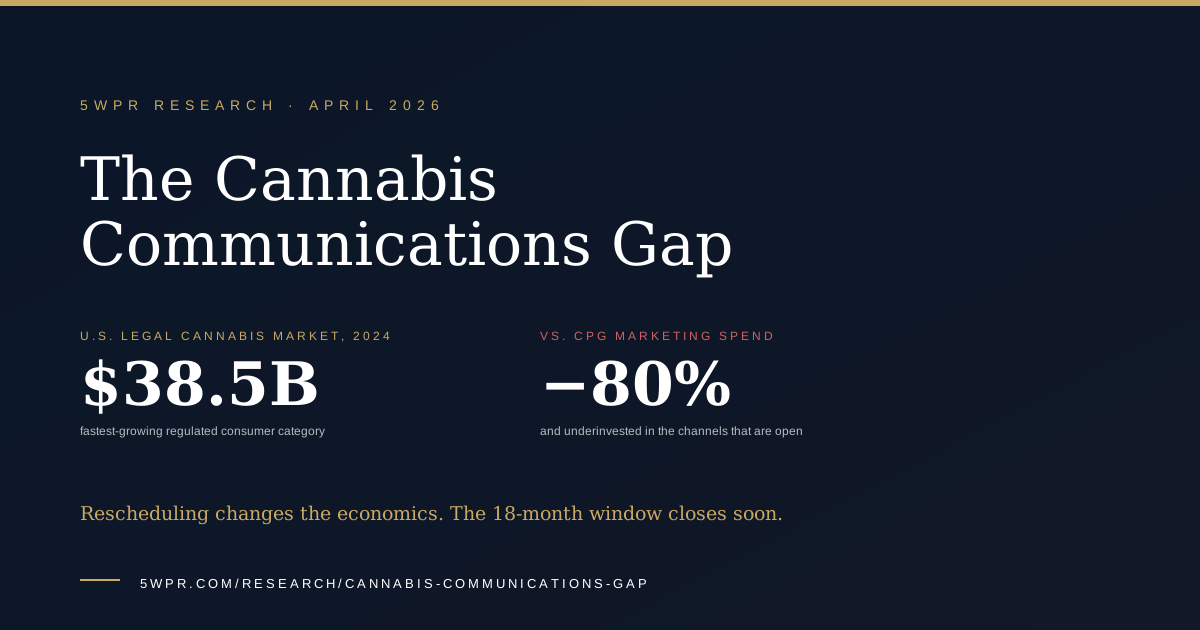
Cannabis brands are banned from Google, Facebook, Instagram, television, and radio. They spend 80% less on marketing than CPG competitors. And most still haven't invested in the channels where they have no restrictions at all. 5WPR's 2026 report documents the gap, the rescheduling inflection point that changes the economics, and the specific investments that produce competitive advantage.
The U.S. legal cannabis market generated $38.5 billion in 2024. It is the fastest-growing regulated consumer category in American business history — and it operates with the weakest communications infrastructure of any major consumer category in the country. This report covers the advertising blackout and its strategic implications, the December 2025 executive order on rescheduling and what 280E elimination means for communications investment, the celebrity and athlete endorsement market and what the performance data actually shows, the MSO earned media gap, the FTC enforcement environment for influencer strategy, and the five priority investments for 2026.
Frequently Asked Questions
What is the Cannabis Communications Gap?
The Cannabis Communications Gap refers to the structural mismatch between the size and growth of the legal cannabis industry and the limited communications infrastructure supporting it. Despite being a multi-billion-dollar industry, cannabis brands operate with significantly restricted access to traditional marketing and media channels.
How large is the legal cannabis industry?
The U.S. legal cannabis market generated approximately $38.5 billion in revenue in 2024, making it one of the fastest-growing consumer industries in the country.
Why can't cannabis brands advertise like other industries?
Cannabis brands are restricted from advertising on major platforms such as Google, Facebook, Instagram, TikTok, YouTube, television, and radio due to federal regulations. These limitations prevent brands from using the primary acquisition channels available to most consumer companies.
How much do cannabis companies spend on marketing compared to other industries?
Cannabis companies spend roughly 80% less on marketing as a percentage of revenue compared to traditional consumer packaged goods (CPG) brands, highlighting a major underinvestment in communications.
What are the most effective channels for cannabis marketing?
Because paid media channels are restricted, the most effective strategies for cannabis brands include earned media, public relations, SEO, GEO (AI search visibility), and owned content. These channels are not restricted and offer higher long-term return on investment.
What role does regulation play in the communications gap?
Federal and platform-level regulations are the primary drivers of the communications gap. These rules limit advertising access while also creating compliance risks in influencer marketing and brand promotion, making communications both more difficult and more legally complex.
How does influencer marketing impact cannabis brands?
Influencer marketing is a critical channel for cannabis brands, but it comes with significant legal risk. Updated FTC guidelines impose brand-level liability for influencer content, with penalties reaching over $50,000 per violation, making compliance infrastructure essential.
What is the impact of cannabis rescheduling on marketing strategy?
The expected rescheduling of cannabis from Schedule I to Schedule III is projected to eliminate Section 280E tax burdens, freeing capital for reinvestment. This shift will likely increase investment in communications, PR, and brand-building strategies across the industry.
Why do some celebrity cannabis brands outperform others?
The report shows that performance differences between celebrity cannabis brands are driven more by authenticity and communications strategy than awareness alone. Even well-known figures can underperform without strong brand positioning and messaging alignment.
How can cannabis companies close the communications gap?
Companies can close the gap by reallocating budgets toward PR, earned media, SEO, GEO, and owned content, while building compliant influencer strategies and long-term media relationships. Strategic investment in communications infrastructure is critical to long-term growth.
Contact Us with All of Your Communication and PR Needs
Thanks for reaching out
We've received your message and look forward to connecting with you soon.
-The 5W Team
April 2026 - 5W Public Relations 5wpr.com/cannabis-communications-gap
Published by 5WPR Research. 5wpr.com. Email us at [email protected]