5W AI Visibility Report Canonical Methodology v1.0 · May 2026

How 5W Measures
AI Visibility

The permanent methodology page for all 5W AI Visibility Reports — covering the AI Visibility Index, The 5W AI Trust Map of America, and forthcoming category reports. Prompt design, modeling logic, engine consistency, tie-breaking, limitations.

5 answer engines 12 prompts per state 60 data points per state 3,000 data points per volume Modeled & directional
01

What 5W Measures

5W measures AI citation share — the frequency with which a brand, institution, or named entity is surfaced as the first or strongest recommendation by AI answer engines for a given category and geographic frame.

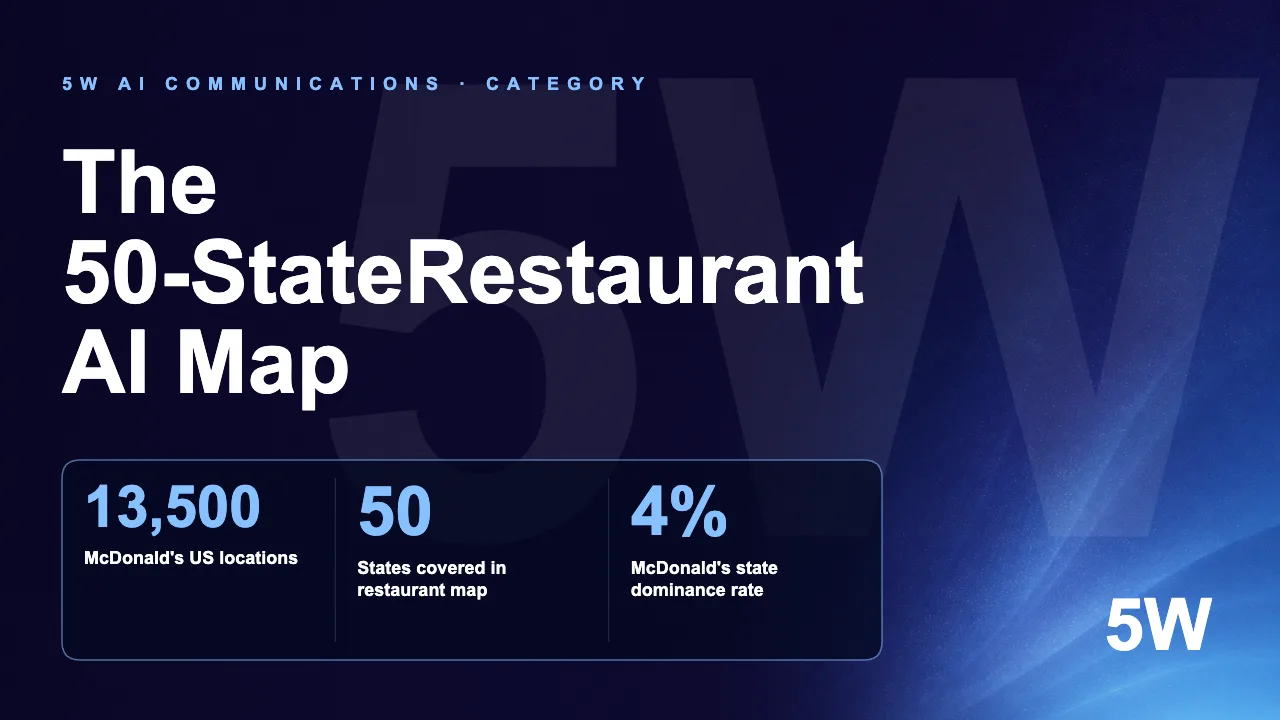
Citation share is distinct from market share. Market share measures revenue, customers, or units sold. Citation share measures whether an AI answer engine surfaces the brand as the answer when a person asks a question. The two are not the same. They are sometimes inversely correlated — which is why a 5W AI Visibility Report can show a regional cult chain holding the dominant AI recommendation in a state where the national giant has 50× the market share.

The 5W AI Visibility program measures citation share at two layers:

National citation share (Indexes).
How brands rank against each other in answer engines at the US-national level. Published as periodic indexes by category — the inaugural US Grocery Retail AI Visibility Index 2026 opened the program in April 2026.
State-level citation share (Trust Maps).
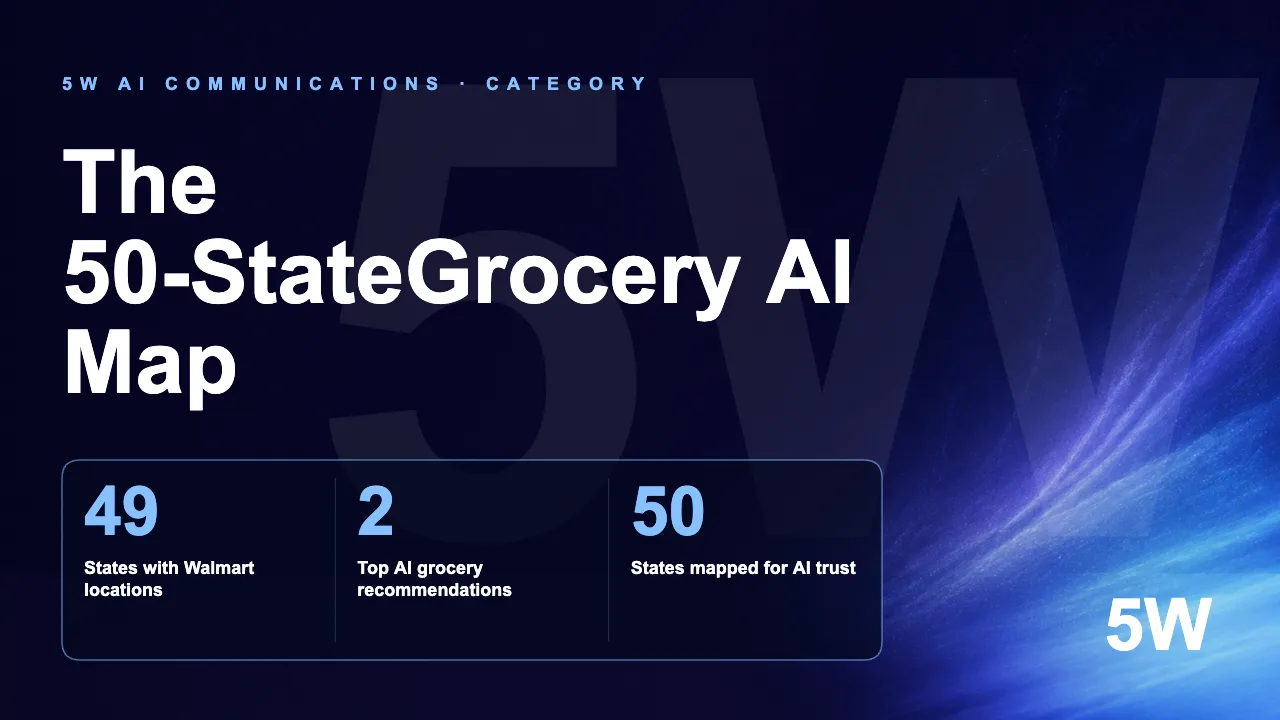
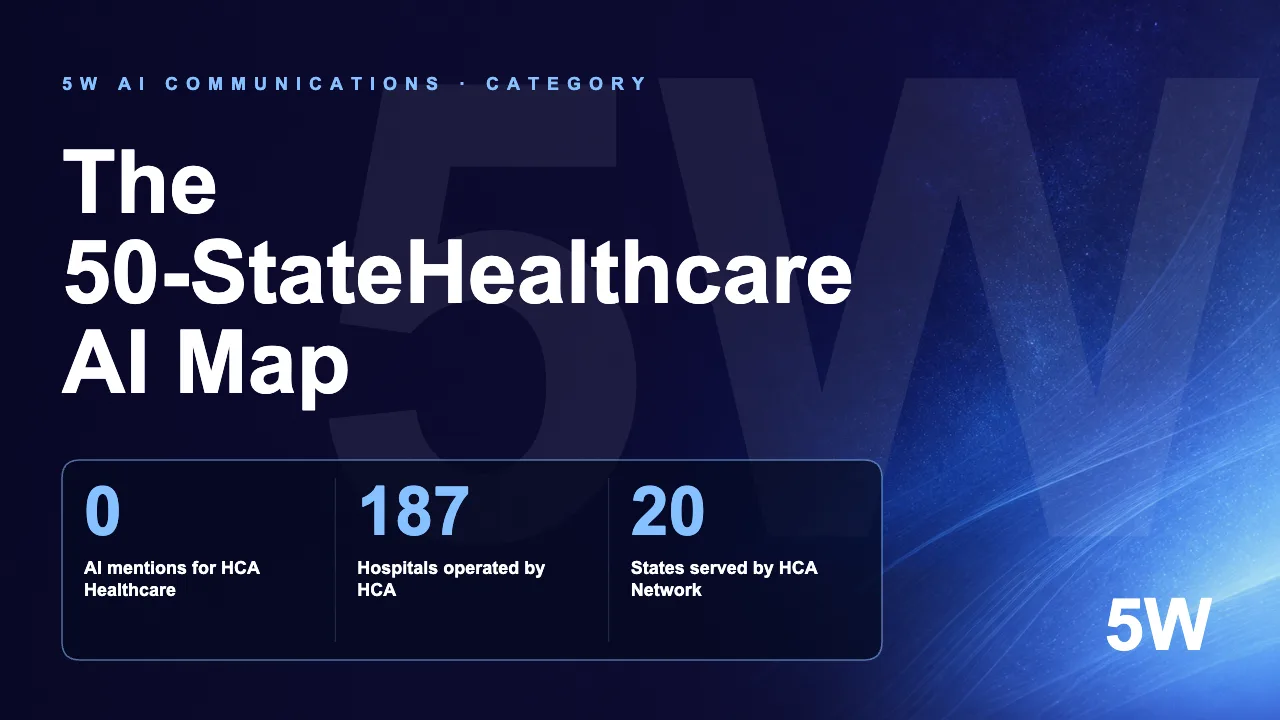
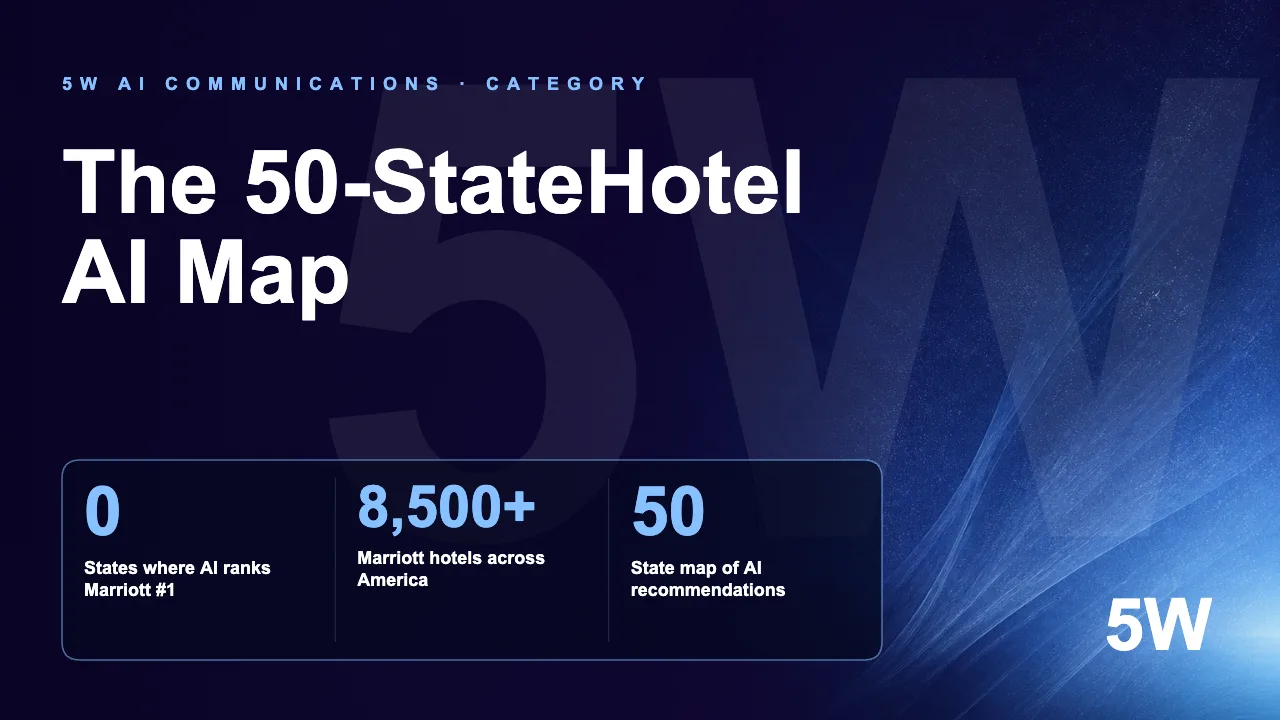
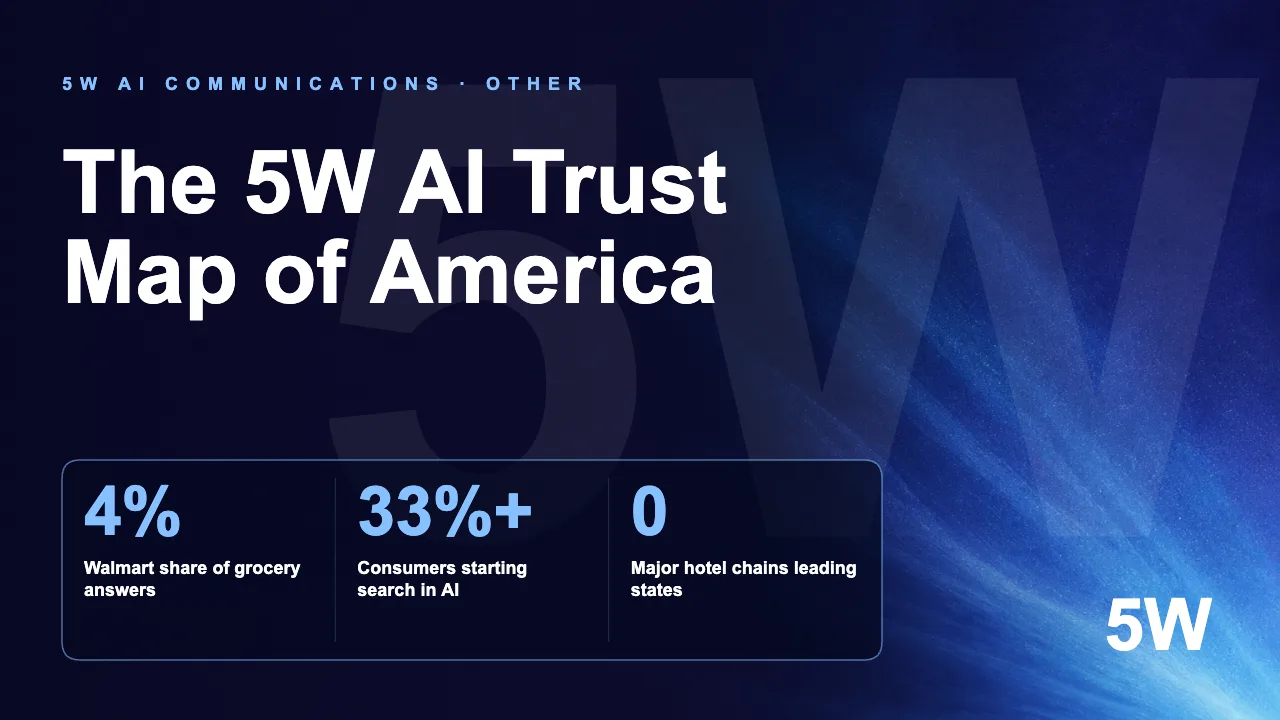
How AI answer engines pick a state-level recommendation for “best [category] in [state]” questions. Published as The 5W AI Trust Map of America — five volumes spanning grocery, restaurants, banking, hotels, and healthcare, modeled in May 2026.
02

The Five Answer Engines

Every 5W AI Visibility Report queries the same five answer engines:

  1. ChatGPT (OpenAI). The largest consumer AI by usage, and the platform where the majority of US adult AI queries originate.
  2. Claude (Anthropic). The fastest-growing enterprise AI; weighted heavily for professional and B2B use cases.
  3. Perplexity. The leading answer-engine-first product; cites sources by default, which makes its recommendations heavily influenced by ranking-organization content (Forbes, US News, Condé Nast).
  4. Gemini (Google). Integrated directly into Google search and Workspace; carries the strongest weighting of traditional SEO signals.
  5. Google AI Overviews. The AI-generated summaries appearing above traditional Google search results; carries the highest user reach of any AI surface today.

Cross-engine consistency — whether all five engines surface the same brand for a given prompt — is weighted more heavily than within-engine frequency. A brand surfaced by all five engines on a single prompt outranks a brand surfaced by one engine across multiple prompts.

03

Prompt Design

Every state and category receives twelve prompts: six general intent prompts and six sub-category prompts tuned to the category being measured. Each prompt runs across all five answer engines, yielding 60 data points per state per category, and 3,000 data points per volume.

Below are example prompts by category. The list is illustrative, not exhaustive.
Grocery (Vol 1)

General intent

  • best grocery store in Texas
  • where should I buy groceries in Ohio
  • top supermarket chain in California

Sub-category

  • best produce in Texas
  • best organic grocery store in Ohio
  • best premium grocery store in California

Restaurants (Vol 2)

General intent

  • best restaurant in Texas
  • where should I eat in Wisconsin
  • top fast food chain in Georgia

Sub-category

  • best burger in California
  • best fried chicken in Tennessee
  • best breakfast in New York

Banking (Vol 3)

General intent

  • best bank in Maine
  • what bank should I use in Texas
  • most-recommended bank in Washington

Sub-category

  • best community bank in Iowa
  • best credit union in Washington
  • best business banking in Texas

Hotels (Vol 4)

General intent

  • best hotel in West Virginia
  • most luxurious hotel in Hawaii
  • iconic hotel in New York

Sub-category

  • best resort in Colorado
  • best boutique hotel in Charleston
  • best weekend-getaway hotel in Tennessee

Healthcare (Vol 5)

General intent

  • best hospital in Minnesota
  • top hospital in Ohio
  • most-recommended hospital in Maryland

Sub-category

  • best cancer hospital in Texas
  • best heart hospital in Ohio
  • best children’s hospital in Pennsylvania
04

Modeling & Tie-Breaking

5W combines results across prompts and engines using a frequency-weighted approach in which cross-engine consistency carries more weight than within-engine frequency. The state winner for any category is the brand most consistently surfaced as the first or strongest recommendation across the full prompt set and engine set.
Cross-engine consistency.
If five engines surface the same brand on the same prompt, that brand receives the highest signal weight available. A brand surfaced by only one engine across multiple prompts is treated as a within-engine outlier and weighted accordingly lower.
Unbranded prompt surfacing.
Prompts written without an existing brand name (e.g., “best grocery store in Texas” rather than “is Walmart the best grocery store in Texas”) carry higher weight. They more accurately model how a real user would ask the question.
Tie-breaking.
When two brands surface at comparable frequencies, ties are broken in favor of (a) the brand with higher cross-engine consistency, then (b) the brand surfaced at higher rates in unbranded prompts. If a tie persists, both brands are noted in the volume’s data table.
Engine drift.
Answer-engine responses drift week to week, which is why 5W treats the underlying patterns — not the specific brand surfaced on any given day — as the durable finding. Structural rankings are stable across measurement windows; exact wording is not.
05

What 5W Does Not Measure

The 5W AI Visibility program is a citation-share measurement. It is not a measure of:

  1. Product quality, clinical outcomes, financial soundness, or customer satisfaction. AI citation share reflects what the open web treats as authoritative. It is not a substitute for ratings, audits, peer-reviewed clinical data, or financial diligence.
  2. Market share or revenue. Citation share and market share frequently diverge — that divergence is the central finding of the program.
  3. Logged-query enumerations. 5W does not have access to query logs from the answer engines themselves. Findings are modeled, directional views — not deterministic rankings.
  4. Future-state predictions. 5W measures the current state of AI citation share at the measurement window. Brands not present in the data may be present in the next measurement window, and vice versa.

Reports in the program do not constitute medical, legal, financial, or investment advice. They are commercial research on the structure of AI-mediated discovery.
06

Update Cadence

Indexes — quarterly.
National AI Visibility Indexes (the inaugural US Grocery Retail AI Visibility Index 2026 being the first) are refreshed every quarter to track citation-share movement at the national level. The Q2 2026 update publishes in July.
Maps — annually.
The 5W AI Trust Map of America is annual infrastructure. The 2026 set publishes through October 2026. The 2027 set publishes between January and June 2027, with the same five categories plus expansion volumes. The 2028 set follows the same cadence.
Longitudinal comparisons.
Beginning with the 2027 maps, each annual edition can be compared against the prior edition to measure AI-layer regional authority migration over time — how trust signals are accumulating, eroding, or shifting across the US consumer economy.
07

Why This Methodology

Most public discussion of AI visibility relies on one of three approaches: (a) a single-engine snapshot, (b) anecdotal observation, or (c) opaque proprietary tools. The 5W methodology was designed to address each:

  1. Multi-engine, not single-engine. Single-engine measurements miss the variance between platforms. ChatGPT and Perplexity often surface different brands for the same prompt; both are real, and the divergence is part of the finding.
  2. Prompt-design transparency. Sample prompts are published in this methodology page. The work is reproducible by any researcher with access to the five engines.
  3. Directional, not deterministic. The program does not claim exact rankings. It claims structural patterns — which institutions hold AI-layer authority, which do not, and how that pattern is changing.

This page is canonical. Every 5W AI Visibility Report links back to it. As the program evolves — new categories, new engines, new methodologies — this page updates while the report-specific methodology sections stay fixed to the version under which each report was modeled.