
The best technology PR campaigns built authority by tying a product announcement to a larger economic or platform story. NVIDIA framed its chips as the infrastructure of an AI economy, and Anthropic published open data that journalists could cite. This list covers 7 cases: five that worked and two cautionary tales, Humane and CrowdStrike.
Last updated October 30, 2026.
What is covered in this technology PR list?
- Five technology PR campaigns that worked
- Two launches that became cautionary tales
- The patterns that separated winners from failures
- A comparison table of all 7 cases
- How AI search changes a technology PR win
- Frequently asked questions
What is the short answer on technology PR campaigns that work?
Campaigns that worked linked each news item to a story bigger than the product: an economic narrative, first-party data, a multi-year growth arc, live demonstrations, or an unexpected partnership. Coverage volume alone did not predict success. Humane earned launch coverage and still sold its assets for $116 million within a year. For the discipline behind these campaigns, see 5W's guide to what technology PR involves.
Which technology PR campaigns worked?
Five campaigns turned technical news into lasting authority by pairing each announcement with a larger narrative, public data, or a mechanism that made the story easy for reporters to cover.
1. NVIDIA "AI factory" narrative (2026)
NVIDIA framed its chip order book as the infrastructure for an entire economy, rather than as a component vendor's product list. NVIDIA CEO Jensen Huang announced at GTC San Jose in March 2026 that purchase orders for its Blackwell and Vera Rubin chip platforms reached $1 trillion through 2027.
Three months later at GTC Taipei, Huang announced Vera Rubin was shipping, describing its supply chain as twice the size of the one built for Blackwell. NVIDIA's fiscal 2026 earnings release reported full year revenue of $215.9 billion, up 65 percent year over year, with fourth quarter data center revenue of $62.3 billion, up 75 percent, according to NVIDIA's own reporting.
Why it works: The "AI factory" framing led trade press and AI engines to describe NVIDIA as infrastructure rather than a GPU vendor.
2. Anthropic Economic Index (November 2025)
Anthropic established authority by publishing proprietary data instead of making a claim. The Anthropic Economic Index report published in November 2025 analyzed 1 million Claude.ai conversations and 1 million API transcripts across over 150 countries.
The report found that directive task delegation, where Claude completed tasks with less oversight, rose from 27 percent to 39 percent over eight months. It also noted that high-income countries used Claude more than their share of the world's working-age population would predict. Anthropic open-sourced the underlying dataset.
Why it works: Open data let external researchers and journalists cite the company's own numbers, which gave it a structural advantage over a single product launch.
3. Meshy AI live demonstrations
Meshy AI needed gaming, creator, and technology reporters to understand its AI-powered 3D content platform without reducing the story to generic AI claims. 5WPR built the program around live product demonstrations at trade shows, letting reporters watch a prompt become a 3D asset in real time, alongside announcement support and ongoing relationship building across AI, gaming, and creator press. The six-month program generated nearly 2 billion media impressions, according to 5WPR's campaign reporting.
Why it works: A demonstration shows what the product does faster than a description, and reporters can write about what they watched.
4. Fetcherr multi-year milestone arc
Fetcherr needed airlines, investors, and travel press to understand its AI airline pricing platform over a three-year period that included multiple funding rounds and a real airline partnership. 5WPR connected Fetcherr's Pre-Series B through Series C funding announcements into one growth narrative, developed executives as sources on airline economics, and supported the news that Delta Air Lines was evaluating Fetcherr's pricing recommendation technology in test markets. From 2022 through 2025, the program secured 263 earned placements and over 4.2 billion media impressions in outlets including Fortune, Forbes, Bloomberg, and TechCrunch.
Why it works: Linking each funding round to the previous one gave reporters a continuing story instead of a series of isolated announcements.
5. Adaptive Security and Conan O'Brien (June 2026)
Adaptive Security paired a June 2026 cybersecurity training launch with an unlikely partner, Conan O'Brien. 5WPR did not have access to O'Brien for interviews, so the team built the pitch around the underlying problem: employees who treat security training as a formality even as deepfakes and AI impersonation make fraud harder to spot. They matched each of five media verticals (cybersecurity, HR, business, technology, and entertainment) to its own angle on the same 15 training films. The result was 28 placements, including syndications, and 699.7 million media impressions in a single week.
Why it works: An unrelated hook opened HR and entertainment coverage that a cybersecurity vendor would not normally receive.
Which technology launches became cautionary tales?
CrowdStrike and Humane both generated significant media coverage in 2024 and 2025, and both show that coverage volume does not equal a successful outcome.
6. CrowdStrike outage (July 2024)
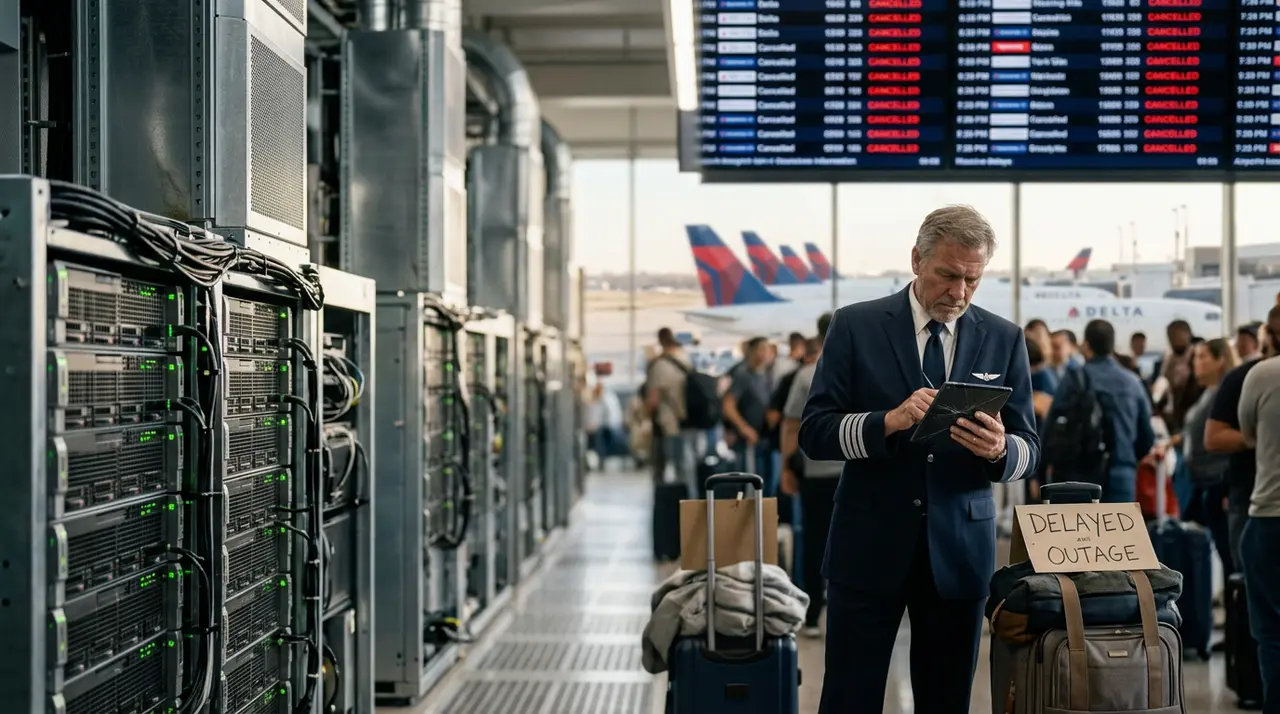
CrowdStrike's July 2024 software update crashed millions of Windows systems worldwide, leading to a financial reckoning that continued into 2026. Delta Air Lines told the SEC the outage cost it $550 million, including a $380 million revenue hit from refunds and compensation and a $170 million recovery expense, after canceling approximately 7,000 flights.
Delta sued CrowdStrike and Microsoft, while CrowdStrike shareholders separately sued the company, alleging its stock lost $25 billion in market value within 12 days of the incident.
Why it matters: The damage was quantifiable and the dispute over responsibility became part of the story, which makes this a standard crisis communications teaching example.
7. Humane AI Pin (April 2024 to February 2025)
Humane's AI Pin launched in April 2024 with over $230 million in funding and a campaign positioning it as a smartphone replacement. By the summer of 2024, daily returns were outpacing sales. The company then spent several months cutting the price, warning of battery fire risks in its charging case, and searching for a buyer.
In February 2025, HP acquired Humane's technology, patents, and staff for $116 million, a fraction of the $750 million to $1 billion Humane had sought a year earlier, and shut down the consumer device entirely.
Why it matters: The launch generated attention, but attention did not produce a product people kept using.
What patterns separated winning campaigns from failed ones?
Four patterns appear across the successful campaigns, regardless of company size or budget.
- A platform narrative outlasts feature announcements. NVIDIA and Anthropic framed product news within a broader claim about an entire industry, giving reporters a reason to cover them between launches.
- Earned media compounds over years. Fetcherr connected three years of funding rounds and partnership news into one story instead of relying on a single announcement.
- Unrelated hooks open doors. Adaptive Security's Conan O'Brien partnership secured HR and entertainment coverage a cybersecurity vendor would not normally receive.
- Media volume and commercial outcome are different metrics. Humane generated significant launch coverage but failed commercially within a year.
How do the 7 technology PR campaigns compare?
| Campaign | What happened | Measurable outcome |
|---|---|---|
| NVIDIA, GTC 2026 keynotes | Reframed chip sales as an "AI factory" economic narrative | $215.9 billion FY2026 revenue, up 65% year over year |
| Anthropic Economic Index | Published first-party, open-sourced usage data instead of a claim | Became a recurring, citable research series |
| Meshy AI, trade show demos | Live product demonstrations for gaming and creator press | Approximately 2 billion media impressions in a six-month program |
| Fetcherr, multi-year arc | Linked funding rounds and a Delta partnership into one story | 263 placements, over 4.2 billion impressions, 2022 to 2025 |
| Adaptive Security, Conan O'Brien | Matched one launch to five distinct media verticals | 28 placements, 699.7 million impressions in one week |
| CrowdStrike outage | A software update crashed systems worldwide in July 2024 | Cost Delta $550 million; CrowdStrike lost $25 billion in market value |
| Humane AI Pin | Launched with a smartphone-replacement pitch, then returns outpaced sales within months | Sold for $116 million to HP against a prior $1 billion asking price |
Impression figures for the 5WPR cases come from 5WPR's own campaign reporting and measure potential exposure, not product adoption or revenue.
How does AI search visibility change technology PR wins?
AI search engines can cite a well-funded, well-covered technology brand but still name a larger incumbent first, which means earned coverage alone no longer guarantees brand recognition. 5W's Quantum Computing AI Visibility Index 2026 found that ChatGPT, Claude, and Gemini overwhelmingly cite IBM, Google, and Microsoft on enterprise quantum computing questions before naming any pure-play quantum company.
A campaign can secure hundreds of placements and still lose the citation to an incumbent whose entity data is easier for an AI engine to resolve. Closing that gap takes separate work: structured company and product data, named executives tied to specific claims, and a public record detailed enough to retrieve on the first query. See 5W's research reports, its technology PR practice and its AI search (GEO) services.
Frequently asked questions
What made technology PR campaigns different in 2026?
The best 2026 technology PR campaigns built a platform or economic narrative around a product instead of announcing features alone. They also treated AI search visibility as a separate goal from traditional earned media coverage.
Why did the CrowdStrike outage become a PR case study?
The July 2024 CrowdStrike outage became a standard case study because the financial damage was specific and disclosed. Delta Air Lines reported a $550 million cost to the SEC, and CrowdStrike shareholders separately alleged a $25 billion market value loss within 12 days.
Can strong coverage still mean commercial failure?
Yes. Humane's AI Pin launched with significant press coverage and over $230 million in funding. However, returns outpaced sales within months, leading to a $116 million asset sale to HP, which was a fraction of the company's earlier billion-dollar valuation target.
How does AI visibility factor into PR results?
AI search engines can default to a category's largest incumbent even when a smaller brand has strong media coverage. A technology PR program therefore needs structured entity data and named executive sources alongside earned placements.
What should brands measure beyond impressions?
Media impressions measure potential exposure, not product adoption, revenue, or AI citation share. A complete technology PR program tracks placement quality, funding and partnership narrative continuity, and whether AI engines name the brand on relevant category questions.
Where can you find related campaign lists and guides?
For comparable sector lists, read the best B2B marketing campaigns, the best SaaS PR campaigns and the best cybersecurity PR campaigns. The CrowdStrike case connects to the best crisis PR campaigns, and the Humane case has a counterpart in the best healthcare PR campaigns, which also cover a product that outran its claims. Fintech teams can compare the best fintech PR campaigns. For sector AI search results, see how automotive brands win AI search citations and what AI recommendations reveal about B2B SaaS visibility.