
We just dropped the CPG Citation Index 2026—a full audit of which consumer brands appear inside ChatGPT, Claude, Gemini, Perplexity, and Google AI Overviews.
The finding is brutal: market share no longer correlates with AI visibility.
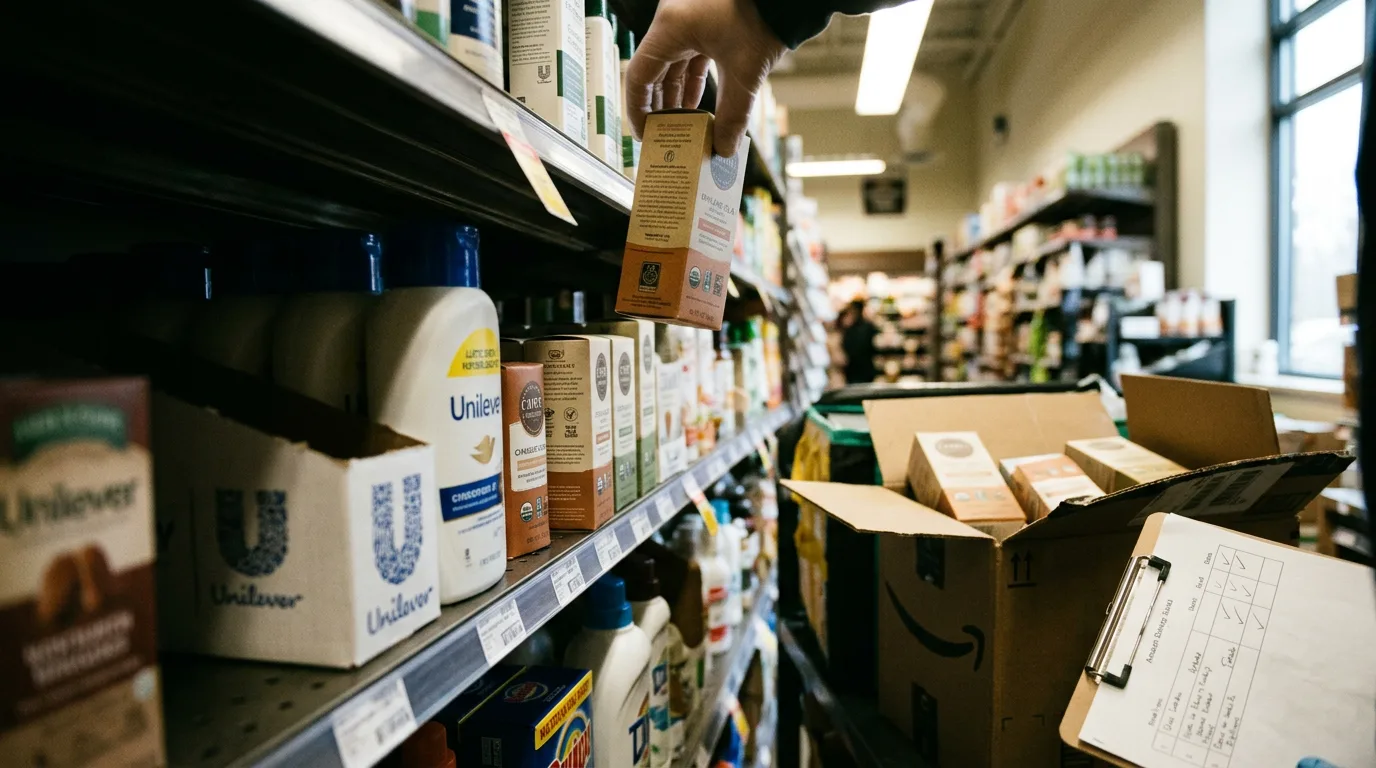
Unilever owns $50 billion in annual revenue. Vaseline appears in 8% of skincare queries across all 5 engines. Lipton appears in 12% of tea searches. Hellmann's in 8% of cooking oil recommendations. TRESemmé in 18% of shampoo queries.
Dove—also Unilever—appears in 68%. Only Unilever brand to break through.
The difference? Dermatology positioning. Dove markets itself as clinical, sensitive-skin-focused. Vaseline markets itself as a heritage cosmetic. Language models trained on clinical literature cite Dove. They ignore Vaseline.
This isn't a Unilever failure. This is a structural shift in how brands win discovery.
Last updated: November 12, 2026
The New Rules
Clinical positioning beats scale. Neutrogena (85%), CeraVe (80%), La Roche-Posay (78%) dominate beauty because dermatology credentials signal authority to LLMs. Same pattern in home care: Henkel's all® free clear hits 80% on a single sensitive-skin claim, matching Tide.
Portfolio breadth creates moat. L'Oréal owns mass (Maybelline 80%), mid (L'Oréal 75%), and prestige (Urban Decay 70%). Competitors choosing one tier become invisible in the others.
Community infrastructure beats heritage. Celsius (75% fitness citations) outranks Gatorade (60%) because it built Reddit sponsorships, YouTube partnerships, Amazon reviews. Gatorade built for retail shelf space. Different infrastructure, different results.
Amazon reviews are a discovery mechanism. Food & Beverage brands citing Amazon appear 38% more frequently. Health & Wellness 35% more. Personal Care 32% more. This isn't marketing; it's discovery infrastructure.
Perplexity is B2B-only. Consumer brands get stripped for industry data. Parent companies and market structure replace brand names in recommendations. Separate engine, separate universe.
What Doesn't Work Anymore
Retail shelf space. TV advertising scale. Brand heritage. Consumer loyalty. Market dominance. All invisible inside AI.
For 30+ years, CPG was about owning retail real estate and building TV reach. That's a distribution problem, not a discovery problem.
Inside AI search, distribution is irrelevant. Discovery mechanism is everything.
What's Next
This is the first of five reports. Beauty Citation Index. Food Citation Index. Home Care. Health & Wellness. Personal Care. Each category has different visibility patterns, different winners, different infrastructure requirements.
Read the full CPG Citation Index 2026 here.
More than a third of consumers now begin product research with AI, not Google. Citation Share is how you measure if you're winning that research.
Frequently asked questions
What is citation share?
Citation share is how often a brand appears in answers from AI engines such as ChatGPT, Claude, Gemini, Perplexity and Google AI Overviews. 5W's CPG Citation Index 2026 uses it to show which consumer brands win discovery inside AI.
Does market share predict AI visibility?
No. The audit found that market share no longer correlates with AI visibility. Unilever's Vaseline appears in 8% of skincare queries while its Dove brand appears in 68%.
Why does Dove outrank other Unilever brands?
The post attributes it to dermatology positioning. Dove markets itself as clinical and sensitive-skin-focused, which language models trained on clinical literature tend to cite, while Vaseline is positioned as a heritage cosmetic.
How does a smaller brand beat a legacy brand in AI answers?
Through clinical positioning, community infrastructure and Amazon reviews. Celsius (75%) outranks Gatorade (60%) because it built Reddit sponsorships, YouTube partnerships and Amazon reviews, while Gatorade built for retail shelf space.
Where can I read the full CPG Citation Index?
The complete methodology and data are in the CPG Citation Index 2026. For help applying the findings, see our consumer and CPG PR practice.