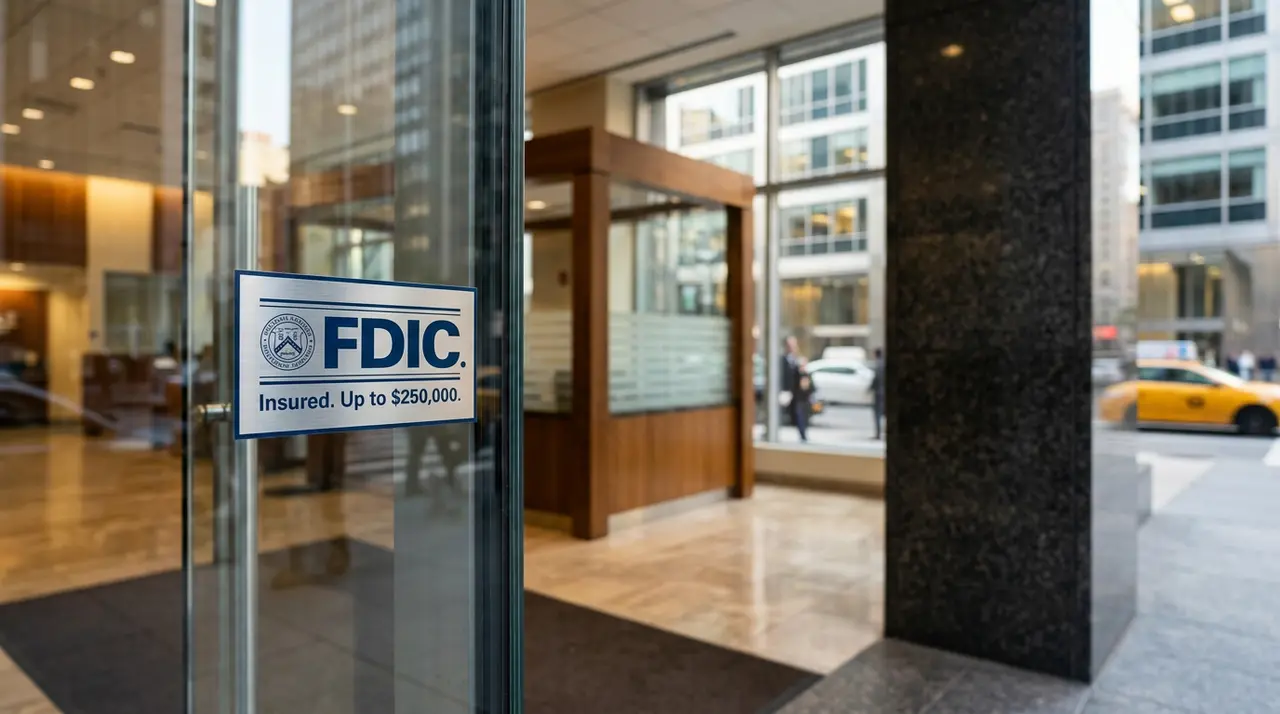
The FDIC's new digital signage rule, effective April 1, 2027, requires banks and fintechs to clearly display FDIC insurance status on websites, mobile apps, and ATMs. This regulation governs how deposit insurance is communicated across digital channels, ensuring consumers can easily identify insured accounts. For public relations teams, compliance with this rule presents a clear opportunity to build customer trust and differentiate their institution.
Last updated: October 24, 2026
In this guide
- What does the FDIC's signage rule require?
- Why was the compliance date delayed three times?
- What changed for ATMs under the final rule?
- Did community banks influence the rule's timeline?
- Why does FDIC signage compliance matter for PR?
- How should fintech-bank partnerships handle compliance?
- Does research show FDIC messaging reduces panic?
- What should PR teams prepare before April 2027?
- FAQ: FDIC signage rule and bank and fintech PR
What Does the FDIC's Signage Rule Require?
The FDIC's final rule, published January 22, 2026, amends signage requirements in 12 CFR 328.4 and 328.5. This amendment offers insured depository institutions greater flexibility in displaying the official FDIC digital sign across various digital deposit-taking channels and ATMs. The rule eliminates prescriptive formatting and focuses display requirements on specific customer-relevant screens. These include homepages, login pages, and account-opening flows, rather than requiring the sign on every page of a banking app or website.
Why Was the Compliance Date Delayed Three Times?
The compliance date for the FDIC's digital signage rule has been delayed three times since the original 2023 rule. It moved from an initial January 1, 2025 deadline to May 1, 2025, then to January 1, 2027, and finally to April 1, 2027, in the January 2026 final rule. The FDIC stated that provisions governing digital deposit-taking channels and ATM signage generated implementation questions and had the potential to cause consumer confusion. Therefore, the agency chose to delay compliance further. This allowed time to develop a less prescriptive final version of the rule instead of enforcing the original, more rigid 2023 design requirements.
What Changed for ATMs Under the Final Rule?
ATMs and similar devices placed into service before the April 1, 2027 compliance date, or those that do not offer non-deposit products, now qualify for a limited exception. These devices may display the traditional physical FDIC official sign instead of the newer digital sign format. The FDIC aligned the "placed into service" date for this exception directly with the April 1, 2027 compliance date. This means a bank's ATM fleet timeline and its signage compliance timeline now operate on the same schedule, simplifying what were two separate dates under the earlier proposed rule.
Did Community Banks Influence the Rule's Timeline?
Yes, community banks pushed back on the original timeline. The Independent Community Bankers of America (ICBA) flagged a specific scheduling conflict during the rule's comment period. The ICBA noted that the 2023 final rule's compliance date of March 1, 2026, and the newly proposed rule's January 1, 2027 date would have required community banks to implement signage changes twice within a short period. ICBA asked the FDIC to resolve that overlap by extending the earlier deadline until the new rule was finalized. The FDIC ultimately aligned both the effective date and the compliance date in the final rule published in January 2026.
Why Does FDIC Signage Compliance Matter for PR?
FDIC signage compliance matters as a public relations story because deposit insurance clarity has become a competitive trust signal. Banking increasingly moves through digital-first channels and fintech partnerships where customers may never see a physical branch sign. A bank or fintech that completes its signage compliance ahead of the April 2027 deadline, and communicates this publicly, provides customers and reporters with a concrete, verifiable trust signal. This differentiates it from a general statement about security or reliability. The specific requirement for the FDIC sign to appear on screens customers use to open accounts and check deposit status conveys a clear message: "we show you clearly when your money is FDIC-insured, before you even ask."
How Should Fintech-Bank Partnerships Handle Compliance?
Fintech companies that partner with an FDIC-insured bank to offer deposit products share the signage obligation. The rule covers digital deposit-taking channels regardless of whether the customer-facing brand is the bank itself or a fintech partner. A fintech public relations team should confirm with its banking partner, in writing, which entity is responsible for displaying the FDIC signage on the fintech's app or website. A gap in this responsibility represents the kind of implementation confusion the FDIC cited for delaying the rule three times.
Public relations teams at both banks and fintech partners should treat early, voluntary compliance as a differentiator. They should not wait until the April 2027 deadline. A fintech or community bank that can state its signage already meets the 2027 standard, more than a year ahead of the requirement, possesses a specific proof point for a trust-focused press release or executive byline. This distinguishes it from the generic security and trust messaging common among financial brands.
Does Research Show FDIC Messaging Reduces Panic?
Yes, research shows FDIC messaging reduces panic. Evidence comes directly from the 2023 regional banking crisis that followed Silicon Valley Bank's collapse. Silicon Valley Bank failed on March 10, 2023, after a bank run that withdrew $42 billion in deposits in a single day. Academic researchers surveyed US households afterward and found many were poorly informed about FDIC deposit insurance. Clear public communication from trusted institutions measurably reduced households' stated propensity to run on their own bank, according to the research. The same research found that reassurance from an independent institution, such as the Federal Reserve, carried more weight with depositors than statements from political leaders, whose comments influenced only their political base.
Public statements following SVB's failure illustrate this pattern. President Biden stated on March 13, 2023, that "Americans can have confidence that the banking system is safe. Your deposits will be there when you need them." Federal Reserve Chair Jerome Powell separately stated on March 22, 2023, that "our banking system is sound and resilient, with strong capital and liquidity." Both statements named the specific reassurance consumers needed: deposit safety and institutional soundness. They did not offer vague, general statements of confidence.
The practical lesson for bank and fintech public relations teams is that clear, specific, visible deposit-insurance communication is not just a regulatory checkbox. It is a measurable tool for maintaining depositor confidence during sector-wide stress. A bank that has made its FDIC signage clear and consistent across digital channels, ahead of the April 2027 deadline, has a head start on the communication infrastructure that mattered most during the 2023 banking crisis. Households searching for reassurance needed to find clear deposit-insurance information immediately.
What Should PR Teams Prepare Before April 2027?
Public relations teams should coordinate with compliance and product teams now to confirm the exact screens and pages requiring the updated FDIC digital sign under the final rule. The requirement is now narrower and more specific than the original 2023 design, covering homepages, login pages, account-opening flows, and the initial transaction screen of ATMs and similar devices. It does not cover every page of a banking app. A public relations team that understands this specific, narrowed scope can draft an accurate compliance announcement. This avoids an overbroad announcement that might invite a reporter or compliance-focused trade publication to point out inaccuracies.
Banks and fintechs should also prepare a public explanation for why the rule changed, not just that it changed. The FDIC's own stated reasoning, reducing consumer confusion and compliance burden while preserving clarity about deposit insurance, provides public relations teams with a ready-made, regulator-sourced justification. This eliminates the need to construct their own rationale. A compliance announcement that cites the FDIC's own January 2026 final rule language directly carries more credibility with trade reporters. It allows the publication to verify the claim against the primary source in a single step.
FAQ: FDIC Signage Rule and Bank and Fintech PR
When must banks comply with the new FDIC signage rule?
Banks and insured depository institutions must comply with the FDIC's updated digital deposit-channel and ATM signage requirements by April 1, 2027.
How many times was this FDIC compliance deadline delayed?
The compliance deadline was delayed three times since the FDIC's original 2023 rule. It moved from January 1, 2025, to May 1, 2025, then January 1, 2027, and finally April 1, 2027.
What pages require the FDIC digital sign under the final rule?
The rule focuses the digital sign requirement on homepages, login pages, account-opening flows, and the initial transaction screen of ATMs and similar devices. It does not require the sign on every page of a banking app or website.
Can ATMs display the physical sign instead of the digital sign?
Yes, ATMs and similar devices placed into service before April 1, 2027, that do not offer non-deposit products qualify for a limited exception. They may display the traditional physical FDIC sign.
Does this rule apply to fintech companies partnering with banks?
Yes, the signage requirement covers digital deposit-taking channels regardless of whether the customer-facing brand is the bank itself or a fintech partner. Fintech-bank partnerships need a clear agreement on which party handles compliance.
Did public FDIC messaging help during the 2023 banking crisis?
Yes, academic research on households surveyed after Silicon Valley Bank's collapse found that clear public communication about FDIC deposit insurance measurably reduced depositors' stated propensity to run on their own bank. This was especially true when reassurance came from an independent institution like the Federal Reserve.
Related Reading
For broader financial services trust and regulatory messaging, see Financial Services PR: Regulation, Trust and Leadership. For fintechs announcing bank partnerships specifically, see the Fintech PR Playbook: Funding Rounds and Partnerships, and for the practice behind this work see 5W's financial services and fintech practice.