
Credible hotel sustainability PR leans on named, verifiable corporate programs and third-party frameworks rather than a general "eco-friendly" label, and increasingly has to cover more than energy and water: labor practices, sourcing, and community investment now sit alongside environmental claims. Consumer research backs the stakes — a global study commissioned by IHG Hotels & Resorts found most travelers value responsible hotels, and a Hilton survey found a third of guests, and 44% of those under 25, research a hotel's environmental and social practices before booking.
What Are the Major Hotel ESG Frameworks Worth Citing?
Naming the actual corporate framework behind a claim gives a journalist something to verify. Marriott's Serve 360: Doing Good in Every Direction, launched in 2017, organizes its work around four pillars: Nurture Our World, Sustain Responsible Operations, Empower Through Opportunity, and Welcome All and Advance Human Rights, and the company tracks portfolio-wide environmental data through an internal platform called MESH (Marriott Environmental Sustainability Hub). Marriott has committed to net-zero carbon impact by 2050, with interim 2025 targets (against a 2016 baseline) including a 15% reduction in water intensity, a 30% reduction in carbon intensity, a 45% reduction in waste to landfill, and a 50% reduction in food waste per occupied room.
Hilton was the first major hotel company to set science-based carbon targets aligned with the Paris Agreement, and its LightStay system, rolled out in 2009, tracks environmental performance across its portfolio; the company has since halved carbon emissions intensity for its managed hotels and cut it 43% across all hotels. IHG's Green Engage system, used across all IHG hotels, lets properties measure and manage energy, water, and waste, and IHG was the first hotel company to commit to eliminating single-use toiletries across all its brands, announced in 2019, followed by a 2021 commitment to eliminate or replace single-use items across the guest stay by 2030. Hyatt publishes its own 2030 Environmental Goals, and Accor's Planet 21 program targets a 46% reduction in carbon emissions by 2030 and net-zero by 2050, aligned with Science Based Targets initiative criteria.
Which Certifications Carry Real Weight With Press and Guests?
A hotel's own claims carry more weight when backed by an outside body's assessment rather than self-reported figures alone. LEED certification for the building itself, Green Key certification (widely used across the hospitality industry), and alignment with the Global Sustainable Tourism Council (GSTC) Criteria are the frameworks a journalist covering hospitality ESG is most likely to recognize. A property citing one of these, or participation in a major brand's own tracking system (LightStay, Green Engage, MESH), gives a reporter an external reference point rather than asking them to take a claim on faith.
How Should PR Cover Energy and Water Operations?
Specific, named infrastructure beats a general statement every time. Rather than describing a property as "energy efficient," name the actual system — a solar installation, a greywater recycling program, a linen and towel reuse initiative — and tie it to the brand-level framework it reports into. A single hotel's water-saving initiative is a stronger story when it's presented as part of Marriott's tracked water-intensity target or IHG's Green Engage system than as an isolated, one-off claim.
How Should PR Address Supply Chain and Sourcing?
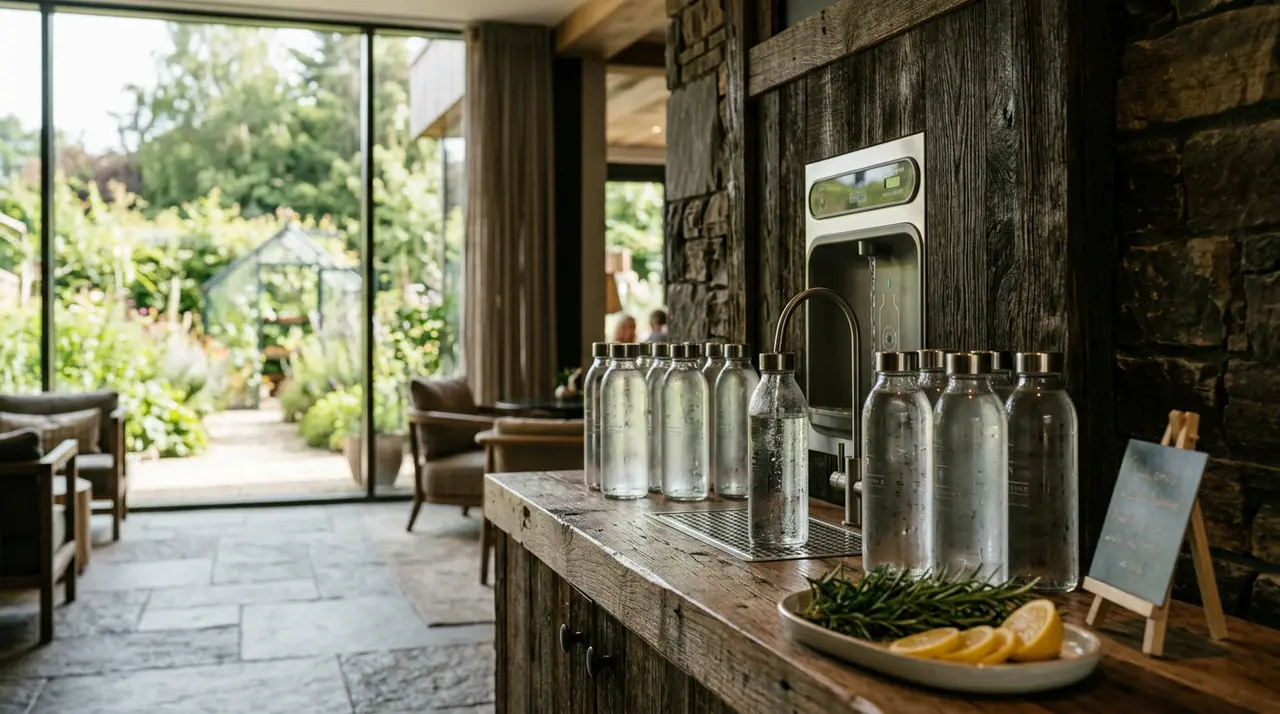
Amenity waste is one of the most visible sustainability signals to an actual guest, which is why IHG's single-use toiletry elimination became a widely cited industry story rather than a footnote — it was something a guest could see in the room. Local and sustainable food and beverage sourcing, refillable amenity dispensers in place of individual bottles, and vetted vendor partnerships all give PR a concrete story that doesn't require the guest to trust an abstract claim; they can observe it directly during the stay.
What Role Do Labor Practices and Community Investment Play?
Hotel ESG carries a dimension that a ski resort or water park's sustainability story typically doesn't have to address as directly: a large, often multi-property workforce and a physical presence embedded in a local community. Fair wage commitments, local hiring practices, and community investment programs are legitimate ESG stories in their own right, and Marriott's Serve 360 pillar structure — which explicitly separates "Sustain Responsible Operations" from "Empower Through Opportunity" and "Welcome All and Advance Human Rights" — reflects that these are distinct workstreams, not one undifferentiated sustainability narrative.
How Should Hotels Talk to Guests About Sustainability?
In-room signage, app-based information, and opt-in housekeeping programs (skip a cleaning, save water) let a guest engage with a property's sustainability program at their own pace rather than being lectured on arrival. The most effective guest-facing communication states what the program does and what the guest's choice actually saves or supports, without moralizing about it — the data point does the persuading, not the tone.
How Can Hotels Avoid Greenwashing Accusations?
Name the specific practice, certification, or program rather than reaching for "eco-friendly," "green," or "sustainable" as a standalone adjective. A journalist who covers hospitality ESG regularly has seen enough vague claims to be skeptical by default; a claim tied to LEED, Green Key, GSTC Criteria, or one of the major brands' own named tracking systems is far harder to wave off as marketing language, because it points to something a reporter can independently check.
How Should Hotels Measure Sustainability and ESG PR Effectiveness?
Track earned coverage of specific named programs and certifications (not generic "green hotel" mentions), guest survey data on awareness of the property's sustainability commitments, and whether outside press or advocacy organizations reference the hotel's own sustainability content independently. Given that a meaningful share of guests — particularly those under 25, per Hilton's own research — actively research a hotel's practices before booking, tracking whether that research surfaces accurate, current information is itself a useful PR health check.
Hotel sustainability PR works the same way the rest of a property's launch and ongoing communications should: name the specific program, cite the framework it reports into, and let a reporter verify the claim independently rather than taking a brand's word for it. For the pre-launch timeline this fits into, see 5W's hotel opening PR guide, and for ongoing reputation work once a property is running, see the hotel PR and crisis guide.