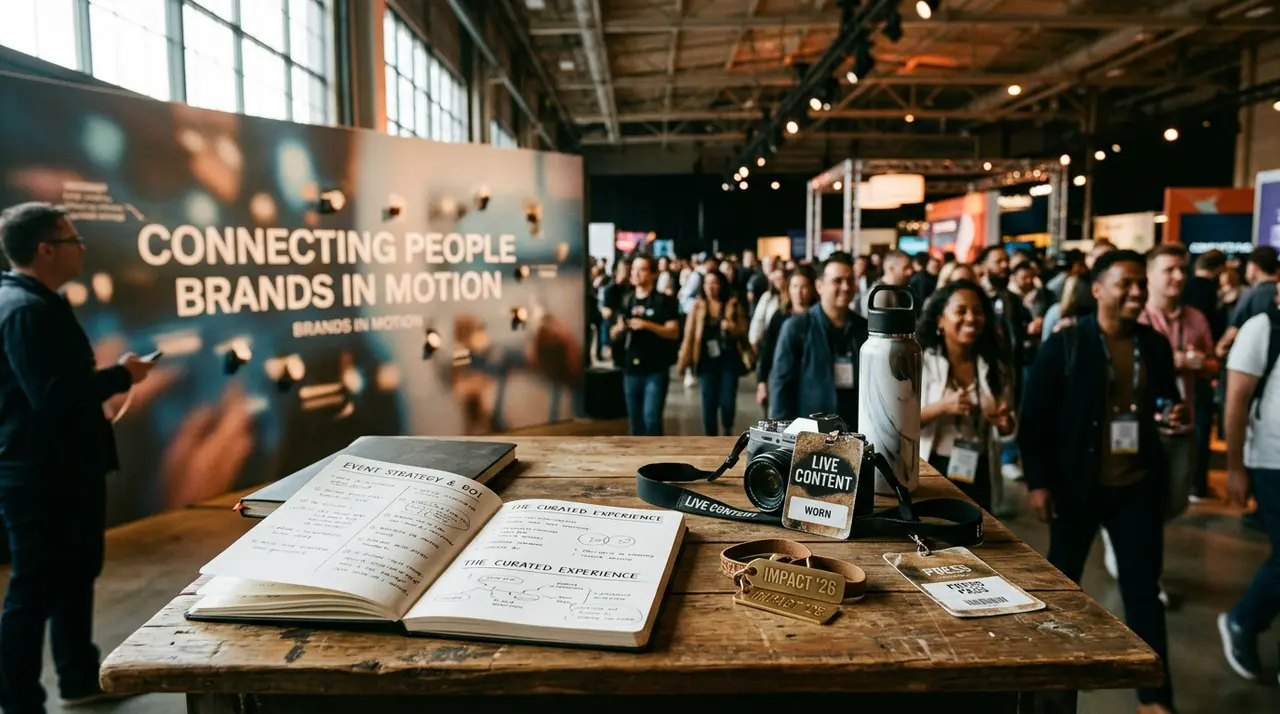
Event marketing is a strategy that promotes a brand through a live gathering, whether a conference, activation, or hybrid broadcast, instead of a paid ad. It works by giving attendees a direct experience with a product or story, then extending that experience through social content and press coverage. Allied Market Research projected the global events industry would grow from $1.14 trillion in 2019 to $1.55 trillion by 2028.
How Is Event Marketing Different From Traditional Marketing?
Event marketing replaces a passive ad view with direct participation. An attendee tests a product, joins a session, or interacts with a brand in person, rather than simply watching a message. That participation is what produces shareable content and press coverage a paid ad cannot generate on its own. It is a close cousin of experiential marketing, which puts the same emphasis on live, in-person interaction over a broadcast message.
EventTrack's 2026 benchmark study, based on a survey of more than 1,000 U.S. corporate marketers, found that lead and data capture, not attendance alone, is now the leading metric marketers use to judge an event's success.
What Makes an Event Marketing Campaign Immersive and Personalized?
An immersive event lets attendees interact with a product before it reaches the market, rather than only viewing it. Apple's WWDC developer conference uses this approach. It lets attendees explore new products hands-on ahead of a public release.
Personalization works the same way at a smaller scale. An agenda, session recommendation, or networking introduction gets tailored to an individual attendee's role and interests. It replaces a single agenda built for everyone in the room.
How Does Gamification Improve Event Marketing?
Gamification improves event marketing by turning passive attendance into active participation. Docker's "Docker Dash" at DockerCon 2017 is a documented example. It was a live, 5,000-person multiplayer game where attendees physically steered a giant controller to guide an on-screen character through Docker's product story.
The mechanic works because competition and shared achievement hold attention longer than a standard keynote. When game objectives are built around a brand's actual product story, the game becomes the message instead of a distraction from it.
How Do Multi-Sensory and Hybrid Formats Extend an Event's Reach?
Multi-sensory design extends a story beyond sight and sound. The Museum of Ice Cream built its entire ticketed experience around touch, taste, and smell. That includes a pool of sprinkles visitors can enter and scratch-and-sniff surfaces throughout the space.
Hybrid formats extend reach differently, by adding a virtual audience alongside an in-person one. The risk is treating virtual attendees as an afterthought. A hybrid event succeeds when virtual participants get their own interactive sessions and networking access, not just a livestream of the main stage. RevAir's in-person Reverse Air Dryer demonstrations tied to two stops on Beyoncé's Renaissance Tour show the same principle applied to a beauty brand activation.
How Does Event Marketing Work for Fintech, Wellness, and AdTech Brands?
The core playbook stays the same across industries, but each sector leans on a different lever. A brand that plans an event around its own buyers, sponsors, and press contacts gets more from it than one that runs a generic program. Related background is available on event and celebrity PR.
Fintech conferences and summits
Fintech events win by promoting a specific format and a specific buyer persona rather than vague networking. Compliance officers and product managers want different things, so segmented outreach on LinkedIn tends to beat a single email blast. Sponsors renew when post-event reports quantify leads, meetings booked, and media mentions, and press attention follows proprietary research or announcements timed to the event. Virtual fintech events also need recording consent, privacy protocols, and a platform with proven security. For the sector context, see financial services and fintech PR.
Wellness and fitness studios
Wellness and fitness events pay off when they convert attendees into members, not just fill a room. Promotion typically starts six to eight weeks out through paid social, email, and local search. On the day, staff should hold real conversations with prospects and offer an event-only membership promotion. Afterward, follow-up should segment by the interest each attendee showed, and conversion should be tracked by channel and event type.
AdTech and Martech
AdTech and Martech brands use events as news moments rather than booths. Preparation usually begins three to four months ahead, with briefings booked for key journalists weeks before the show. Product launches, partnership announcements, and data releases give reporters a story to cover on site, and speaking slots tend to earn more durable coverage than a press release. Informal coffee meetings and a follow-up within 48 hours do more for media relationships than formal briefings. For the sector context, see AdTech and big data PR.
What Are the Risks or Limitations of Event Marketing?
Event marketing's main limitation is reach relative to cost. A single event caps attendance by venue size and travel radius. A paid digital ad, by contrast, can scale to millions of impressions for the same budget.
EventTrack's 2026 study found that reported ROI on well-designed campaigns commonly falls between 3:1 and 5:1. The study labels that range a directional benchmark, not a measured average. Immersive technology and gamification also carry a quality bar. A VR demo or game added only because a competitor used one typically falls flat. The tactic needs to serve the event's actual story, not stand in for one. The same discipline applies to content marketing and influencer marketing: a tactic only works when it carries the brand's actual message.
Frequently Asked Questions About Event Marketing
What is an example of event marketing?
Docker's "Docker Dash" game at DockerCon 2017 is a documented example. It turned a 5,000-person audience into active players in a live, physically controlled multiplayer game built around Docker's product story.
How is event marketing measured?
Event marketing is measured primarily through lead and data capture rather than attendance. EventTrack's 2026 study found that data capture has replaced foot traffic as the leading success metric marketers use for consumer and corporate events.
Is event marketing growing in 2026?
Event marketing is growing. Allied Market Research projected the global events industry would reach $1.55 trillion by 2028, up from $1.14 trillion in 2019. EventTrack's 2026 study found that most U.S. corporate marketers plan to increase event spending this year.
What makes a hybrid event work well?
A hybrid event works well when virtual attendees get their own interactive sessions, networking access, and content. That is different from only a livestream of the in-person stage. Treating virtual participation as a first-class experience is what separates a successful hybrid format from a failed one.
Does gamification actually improve event engagement?
Gamification improves event engagement when it is built around the brand's real story rather than added as a novelty. Docker's DockerCon game succeeded because the game mechanics themselves communicated Docker's product value. That turned attendees into active participants instead of passive observers.