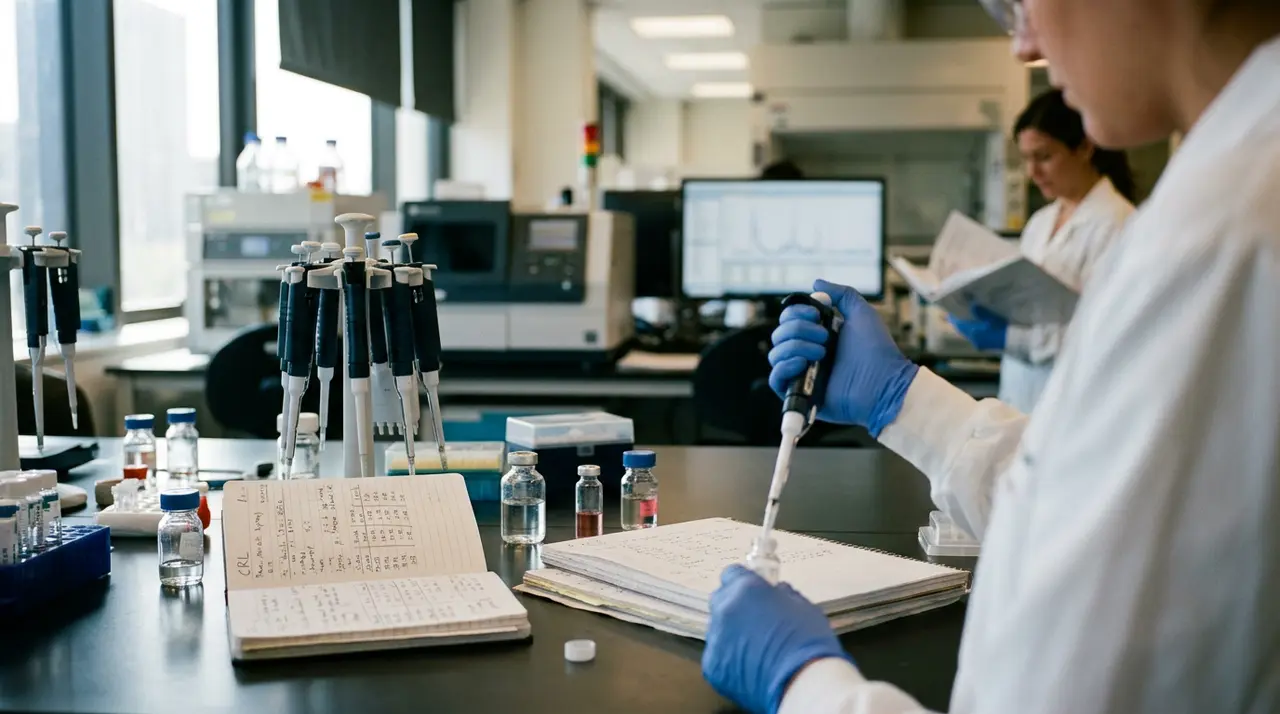
The FDA’s public disclosure of Complete Response Letters (CRLs) means biotech public relations teams must manage rejection news in near real time. Since July 2025, the FDA has published CRLs for unapproved drugs, and a proposed October 2026 rule aims to formalize this practice. For biotech companies, a drug rejection is no longer a private regulatory setback, but a public document accessible to the market immediately.
Last updated: October 24, 2026
In this guide
- What is a Complete Response Letter?
- When did the FDA start publicly disclosing CRLs?
- How severely can a published CRL affect biotech stock?
- What is the FDA's proposed October 2026 rule for CRLs?
- Why did a company challenge the CRL disclosure policy?
- How should a biotech respond to a published CRL?
- Does CRL disclosure overlap with securities rules?
- What should biotech PR teams prepare now?
- FAQ: FDA CRL disclosure and biotech PR
What is a Complete Response Letter?
A Complete Response Letter (CRL) is the FDA's formal notification that a new drug or biologics license application cannot be approved in its current form. These letters typically identify specific deficiencies related to safety, efficacy, statistical analysis, product quality, or manufacturing compliance. Historically, CRLs for unapproved products were confidential commercial information under the Trade Secrets Act, meaning the public and investors learned of rejections only through a company's voluntary disclosure. The FDA's new transparency policy removes this information gap by publishing the letters directly.
When did FDA Start Publicly Disclosing CRLs?
The FDA first published Complete Response Letters publicly on July 10, 2025, releasing over 200 letters for applications submitted between 2020 and 2024. This action was part of an internal policy called "radical transparency." A second batch of 89 additional letters was published on September 4, 2025, and the agency announced that future CRLs would include company names instead of being anonymized. As of August 13, 2026, the FDA's database reported 458 total CRL records via its public API.
The FDA paused real-time publication in April 2026 after an unnamed pharmaceutical company, represented by Covington & Burling, filed a citizen petition. This petition challenged the legal basis for releasing letters tied to unapproved products. Publication resumed on July 10, 2026, after approximately three months, with 14 additional letters covering rejections dating back to April 23, 2026. These included Grace Therapeutics' injectable nimodipine and a third rejection of a combination therapy from Hengrui Pharma and Elevar Therapeutics.
How Severely Can a Published CRL Affect Biotech Stock?
A published Complete Response Letter can cause a biotech stock to move anywhere from a few percentage points to over 70% in a single trading session. The impact depends on the severity of the cited deficiencies and how exposed the company's valuation is to that single drug's approval. For example, Aldeyra Therapeutics shares fell from $4.23 to a 52-week low of $1.07 on March 17, 2026, a 75% decline, after the FDA issued a third CRL for its dry-eye drug reproxalap. Grace Therapeutics shares fell 58% on April 23, 2026, after a CRL for its aneurysmal subarachnoid hemorrhage treatment GTx-104. RegenxBio fell 21% on February 9, 2026, after a CRL for its RGX-121 gene therapy for Hunter syndrome.
Not every CRL results in a severe stock reaction. AbbVie shares eased only 2% on April 23, 2026, after a CRL for trenibotulinumtoxinE, which cited a need for additional manufacturing information. This was a far smaller decline than those experienced by single-drug biotechs, reflecting AbbVie's broader, diversified drug portfolio. The size of the market reaction correlates closely with how concentrated a company's value is in the rejected product, which PR teams should consider when calibrating a public response.
What is FDA's Proposed October 2026 Rule for CRLs?
The FDA's proposed rule, expected in October 2026, would formally eliminate the presumption that a marketing application's mere existence constitutes confidential commercial information. This change, according to the agency's regulatory agenda, would allow the FDA to proactively disclose CRLs for unapproved products as standard practice. Redactions would be limited to genuine trade secrets and personal private information, rather than treating the rejection letter itself as presumptively confidential. The rule formalizes a practice the FDA has followed informally since July 2025, giving the policy a more durable legal foundation that a citizen petition would find harder to challenge again.
Why Did a Company Challenge the CRL Disclosure Policy?
An unnamed pharmaceutical company filed a citizen petition on April 20, 2026, arguing that public disclosure of Complete Response Letters for unapproved products could expose confidential commercial information and proprietary development strategy. This challenge claimed conflict with the FDA's longstanding treatment of unapproved applications as confidential by default. The petition successfully paused publication for approximately three months, demonstrating that formal legal challenges to this policy can delay disclosure, even against an agency committed to transparency.
This historical event is important for PR teams at any company facing an unfavorable CRL. A citizen petition or comment on the pending October 2026 rule is an available, legitimate channel to argue for narrower disclosure. This channel is separate from how a company manages its public statement about the letter's substance. PR teams should coordinate closely with regulatory counsel to determine if a legal challenge to disclosure timing is worth pursuing, as the April 2026 petition shows this option is real.
How Should a Biotech Respond to a Published CRL?
A biotech company should prepare its public statement in parallel with the FDA's publication timeline, not after the letter appears in the public database. The letter's existence will likely be visible to investors and reporters before the company issues its own statement. Companies covered by the FDA's published CRL database, such as Ultragenyx for its Sanfilippo syndrome type A gene therapy, Capricor Therapeutics for its Duchenne muscular dystrophy cell therapy, and Replimune for its melanoma candidate, became public record via a regulatory database entry. Reporters and investors can find this information directly, independent of any company press release.
A company's statement should name the specific deficiency category the FDA cited, matching the letter's own language. Avoid vague references to "feedback" or "questions" from the agency. Investors and biotech trade reporters increasingly cross-reference a company's statement against the published letter text directly. Therefore, a statement that undersells or mischaracterizes the FDA's reasoning is easily verifiable and can quickly become a secondary story.
Does CRL Disclosure Overlap with Securities Rules?
Complete Response Letter disclosure now directly intersects with securities disclosure and Director and Officer (D&O) liability risk. A public company's failure to promptly disclose a known CRL, once the FDA's database makes the letter public, can become a securities law question independent of the underlying regulatory setback. Legal analysts note that the FDA's proactive disclosure effectively removes a company's ability to control the timing of when a rejection becomes public. This shifts the practical question from whether to disclose to how quickly the company's own statement follows the FDA's.
This shift raises the stakes for coordinating legal, investor relations, and PR functions on CRL response. A delay between the FDA's public posting and a company's statement can be perceived as evasive. This is true even when the company's underlying disclosure obligations under securities law are technically satisfied. A biotech PR team should treat the FDA's publication timeline as the effective disclosure clock. They should not rely solely on standard securities-disclosure timing norms developed before the FDA began publishing CRLs directly.
What Should Biotech PR Teams Prepare Now?
Public relations teams should establish a standing Complete Response Letter response protocol immediately. The FDA's disclosure policy is moving toward a permanent rule rather than remaining an informal, potentially reversible practice. The protocol should include a pre-drafted statement template adaptable quickly to the specific deficiency category the FDA cites. The time between a CRL entering the public database and the first investor or reporter inquiry is now measured in hours, not days.
PR teams should also prepare investor-facing talking points distinct from the public press statement. These points should address the resubmission pathway and timeline typically outlined in the FDA's letter. Stock reactions in cases like Aldeyra and RegenxBio were driven as much by uncertainty about next steps as by the rejection itself. A company that immediately communicates a specific, credible resubmission plan alongside its acknowledgment of the CRL gives the market a reason to moderate its initial reaction rather than pricing in worst-case uncertainty.
FAQ: FDA CRL Disclosure and Biotech PR
When did FDA start publishing Complete Response Letters?
The FDA first published Complete Response Letters publicly on July 10, 2025, releasing over 200 letters. The agency added 89 more in September 2025, with a policy to include company names in future releases.
Why did FDA pause CRL publication in 2026?
The FDA paused publication in April 2026 after an unnamed pharmaceutical company filed a citizen petition. This petition challenged the legal basis for disclosing letters tied to unapproved drug applications.
What is FDA's proposed October 2026 CRL rule?
The proposed rule would eliminate the presumption that an unapproved drug application is automatically confidential. It would formally authorize the FDA to proactively disclose Complete Response Letters for unapproved products going forward.
How much can a stock drop after a published CRL?
Stock reactions vary widely. Aldeyra Therapeutics fell 75% after a March 2026 CRL, while AbbVie fell only 2% after an April 2026 CRL. The size of the reaction ties to how concentrated the company's value is in the rejected drug.
How many CRLs has FDA published as of mid-2026?
The FDA's public database reported 458 total Complete Response Letter records as of August 13, 2026, according to the agency's own API.
Related Reading
For FDA enforcement on the advertising side, see the pharma ad PR and FDA enforcement guide, and for the practice that supports these programs, see 5W's healthcare PR practice. For organizations preparing a broader crisis response plan, see how much crisis PR costs and how to choose a firm. For reputation management after a negative regulatory finding becomes public, see online reputation repair: what can be removed.