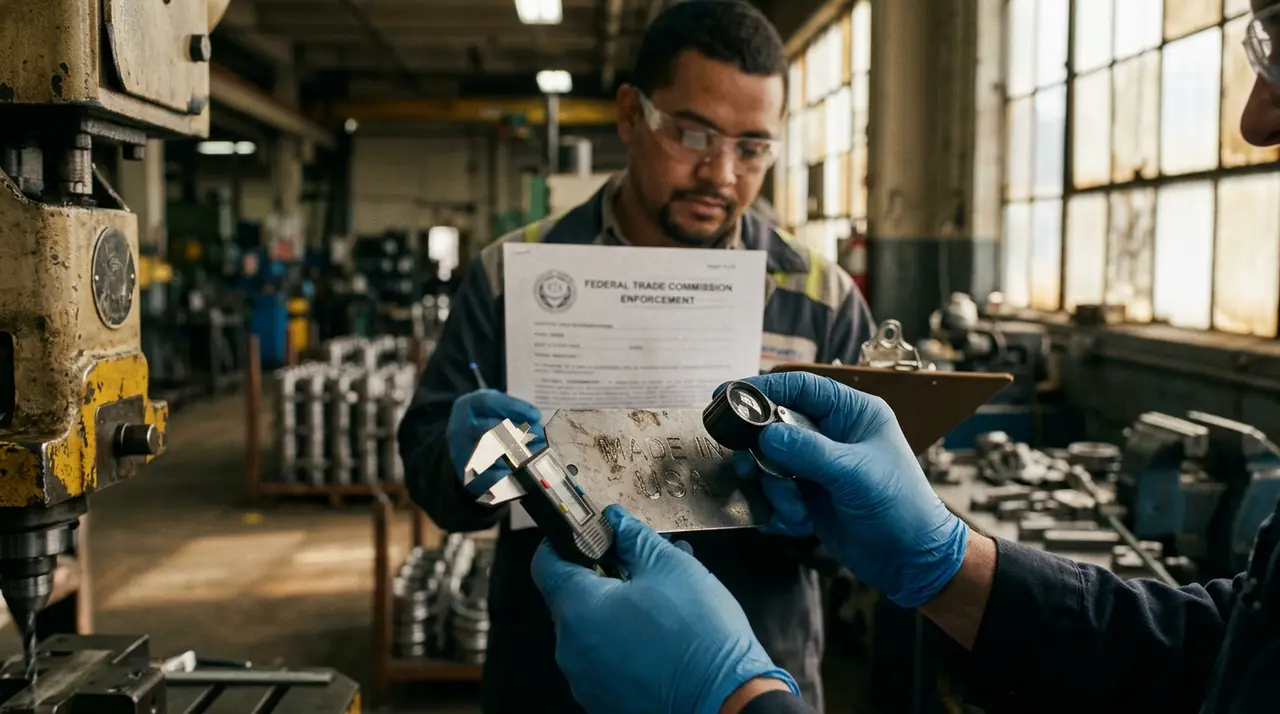
Made in USA PR now carries real financial risk, because the FTC treats an origin claim in a press release, website or ad like a product label. On April 14, 2026 the FTC announced a sweep with three settlements, led by $625,000 from TouchTunes, the largest redress in a Made in USA Labeling Rule case to date. The sweep followed a March 13, 2026 executive order directing the agency to prioritize these claims.
Last updated: October 24, 2026. This article is communications guidance, not legal advice. Counsel should review any origin claim.
In this guide
- What triggered the current enforcement push?
- What happened in the FTC's April 2026 sweep?
- What do the closing letters show?
- Does private litigation add risk?
- What should PR teams do before publishing an origin claim?
- How should a brand respond to an FTC warning letter?
- How should a brand announce a corrected claim?
- Frequently asked questions
What triggered the current enforcement push?
A March 13, 2026 executive order titled "Ensuring Truthful Advertising of Products Claiming to be Made in America" directed the FTC to prioritize enforcement against false or unsubstantiated U.S.-origin claims. The order did not change the legal standard: an unqualified Made in USA claim requires a product to be "all or virtually all" made in the United States. It made enforcement of that standard an explicit agency priority.
The FTC had already signaled this direction. In July 2025 it issued warning letters to companies, and two of those companies, Americana Liberty and Oak Street, later faced enforcement actions.
What happened in the FTC's April 2026 sweep?
The FTC announced three law enforcement actions on April 14, 2026, according to its press release. The table summarizes each one.
| Company | Products | Allegation | Redress |
|---|---|---|---|
| TouchTunes Music Company | Electronic dartboards | Claimed "Made in the USA" although essential components such as computer chips, cameras and flatscreen monitors were made abroad, even though final assembly was in the U.S. | $625,000, the largest in a Made in USA Labeling Rule case to date |
| Americana Liberty, Three Nations and principals | American flags and patriotic flag products | Claimed products were made in the USA when several were wholly imported from China and others had essential Chinese components; also Textile Act violations | $167,743 |
| Oak Street Manufacturing (Oak Street Bootmakers) | Boots, loafers and moccasins | Claimed "handcrafted 100%" in the U.S. while using a Dominican Republic factory for uppers and Brazilian outsoles | $75,000 |
Each order also prohibits misleading or unsubstantiated country-of-origin claims, and the TouchTunes and Americana Liberty orders require notice to consumers of the settlement.
What do the closing letters show?
The FTC also issued closing letters to two companies, Marketing Holders LLC and Lamar Trailers, Inc. After being contacted by FTC staff, each agreed to remediate certain "Made in USA" representations, and staff closed the investigations. The agency warned both that it reserves the right to monitor and take further action. The lesson for PR teams is that prompt, documented correction can end an investigation without a public settlement.
Does private litigation add risk?
Private class actions add a parallel risk, because plaintiffs' lawyers do not need an FTC investigation to bring a Made in USA claim. State consumer protection laws can apply different standards from the federal test. An origin-claims audit built only around the FTC standard may miss claims a private plaintiff could challenge, so counsel should check state law for every state where the product is sold.
What should PR teams do before publishing an origin claim?
- Treat every origin claim in a press release, product page or social post like a label claim, and verify it before publishing.
- Check for any significant imported component, since the TouchTunes case turned on chips, cameras and monitors even with U.S. final assembly.
- Review marketplace listings and distributor copy, not only your own site.
- Prepare a qualified alternative claim for products that cannot meet "all or virtually all," such as a stated percentage of U.S. content or the specific domestic assembly step.
- Keep country-of-origin documentation for every named component.
How should a brand respond to an FTC warning letter?
A brand should treat a warning letter as a time-sensitive compliance matter, not a routine inquiry or a PR holding-statement moment. Americana Liberty and Oak Street both received July 2025 warning letters and still faced actions, while the two closing-letter companies corrected their claims after contact from staff. A fast, substantive and documented correction is the better path.
How should a brand announce a corrected claim?
A brand should state plainly what claim it changed and what the new, accurate language is, instead of quietly editing a label or page. The TouchTunes and Americana Liberty orders require consumer notice of the settlements, so the correction can become public whether or not the brand controls the message. Get ahead of that with a specific, first-person explanation, and confirm that the replacement claim is itself substantiated before publishing it.
Frequently asked questions
What triggered the 2026 Made in USA enforcement sweep?
A March 13, 2026 executive order directed the FTC to prioritize enforcement against false or unsubstantiated Made in USA claims. The FTC announced three actions and two closing letters on April 14, 2026.
What was the largest Made in USA settlement in the sweep?
TouchTunes agreed to $625,000 in consumer redress, the largest in a Made in USA Labeling Rule case to date, over electronic dartboards with imported components.
What is the legal standard for an unqualified Made in USA claim?
A product must be "all or virtually all" made in the United States.
Can a company avoid risk by rewording an origin claim?
Not reliably. The FTC evaluates the net impression of a claim, so rewording that still suggests U.S. origin can carry the same risk. Counsel should review any wording.
Related Reading
For brands managing a labeling or advertising controversy, see how much crisis PR costs and how to choose a firm. For consumer brand campaign structures that withstand scrutiny, see 18 best B2B marketing campaigns.