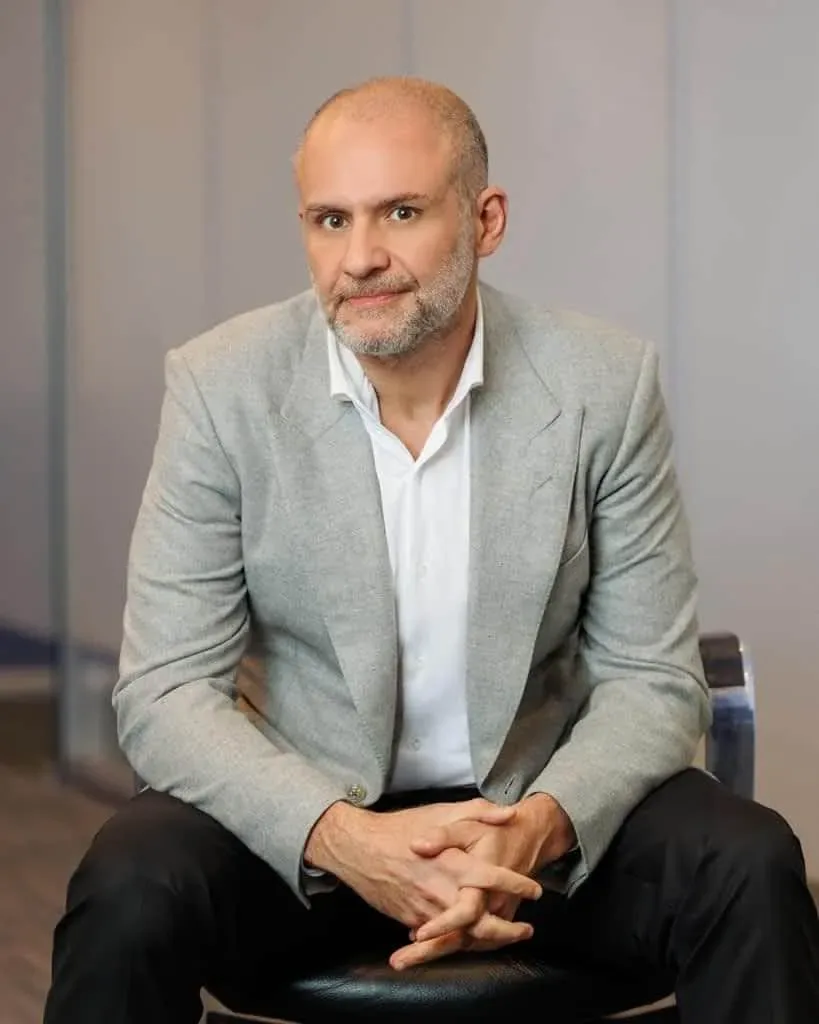
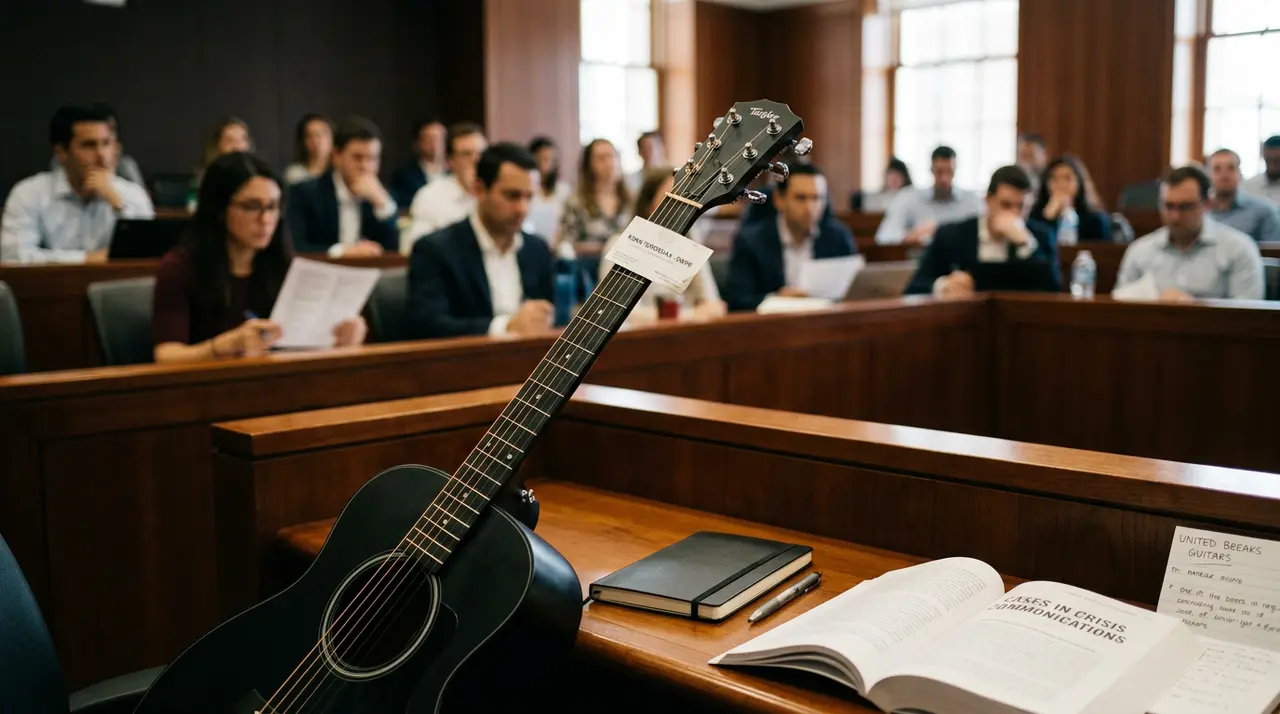
Ronn Torossian, founder and CEO of 5W Public Relations, guest-lectured at Harvard Business School in 2019 and taught the "United Breaks Guitars" crisis case to two MBA classes. The session showed how a slow response to one customer complaint became a global reputation problem, and it closed with student questions on Nike's Colin Kaepernick campaign and the power of social media. Torossian is one of the rare PR entrepreneurs invited to lecture at HBS.
Key Takeaways From the Harvard Business School Lecture
- Ronn Torossian taught the "United Breaks Guitars" case to two Harvard Business School MBA classes in 2019.
- The case shows that a crisis is often a small, ignored problem that a company failed to fix while it was still small.
- Torossian's core message: a crisis does not care about birthdays, vacations or weekends, so a company must be ready with an authentic, genuine response.
- Students also asked about Nike's Kaepernick campaign and how social media gives consumers a public voice.
What Is in This Article?
- What happened at the Harvard Business School lecture?
- What is the United Breaks Guitars case?
- Why did United's response turn a complaint into a crisis?
- What did Ronn Torossian tell students about crisis preparation?
- What did students ask about Nike and Colin Kaepernick?
- How does social media change crisis communications?
- Which lessons from the case apply to companies today?
- Why does a Harvard lecture matter for a crisis PR firm?
- How does 5W approach crisis communications?
- Frequently asked questions
What Happened at the Harvard Business School Lecture?
In 2019, Harvard Business School invited Ronn Torossian to guest-lecture on crisis communications. Torossian is the founder and CEO of 5W Public Relations, and he is the author of the PR book For Immediate Release. He led a case study session on United Airlines and the "United Breaks Guitars" incident in front of two MBA classes.
The session was a case study discussion. It focused on mechanics: what United's communications team did, what went wrong, and how a better response could have limited the damage. A student Q&A followed. Students asked about brand crises in general, about Nike's Colin Kaepernick campaign, and about the growing role of social media in shaping corporate reputation.
Torossian said afterward that Harvard Business School is known for educating the best and the brightest, and that the quality of the students' insight and analysis was evident. He said he was proud to present at HBS and looked forward to returning.
What Is the United Breaks Guitars Case?
"United Breaks Guitars" is one of the most widely studied examples of a social media crisis. Canadian musician Dave Carroll was traveling with his band on United Airlines when baggage handlers damaged his Taylor guitar. After about a year of unsuccessful attempts to get compensation through United's normal channels, Carroll wrote a song about the experience, produced a music video and posted it on YouTube.
Harvard Business School itself later turned the incident into a teaching case. The case, titled "United Breaks Guitars," was written by professors John Deighton and Leora Kornfeld and published in January 2010.
| Date | Event |
|---|---|
| March 31, 2008 | Carroll's guitar is damaged during a United flight on the way to a week-long tour. |
| 2008 to mid-2009 | About a year of unsuccessful attempts to get United to accept responsibility and compensate him. |
| July 6, 2009 | Carroll posts the "United Breaks Guitars" music video on YouTube. |
| Within 4 days | The video passes 1 million views, with heavy blog and news pickup. |
| First week | Views pass 3 million, and CNN, The Wall Street Journal, the BBC and CBS cover the story. |
| August 2009 and March 2010 | Carroll releases songs two and three of the series. |
| By November 2009 | United executives meet with Carroll and promise to do better. |
| January 2010 | Harvard Business School publishes the "United Breaks Guitars" case study. |
| Mid-2010 | The first video alone passes 8.7 million views. |
Stock-loss figures for the episode circulate online but are disputed. The reliable lesson is about attention. A single unresolved complaint produced millions of views, a global news cycle and a search results page that kept repeating the story long after the news faded.
Why Did United's Response Turn a Complaint Into a Crisis?
The case is useful because the crisis was not caused by the broken guitar. It was caused by what happened next. By Carroll's account, United refused to accept responsibility for a routine claim, and the dispute stayed private until he made it public. By the time United responded in public, the video had already framed the story.
Ronn Torossian guided the two HBS classes through the case mechanics and discussed what United's crisis communications team did, what went wrong and how a better response could have limited the damage. The case points to five lessons:
- Escalate complaints beyond customer service. A dispute handled only as a claims issue never reaches the people who can see the reputational risk.
- Listen before saying no. Repeated denials give an unhappy customer a story and a motive.
- Respond before the narrative is set. Once a video has millions of views, a company is answering a story rather than shaping one.
- Use a human tone. People respond to humans, not policy language. A song is personal. A form letter is not.
- Plan for creative, non-traditional attacks. Most crisis plans cover recalls, lawsuits and executive misconduct. Few cover a musician with a camera.
A reader who wants the full planning framework can use the 5W guide to what a crisis communications plan should include.
What Did Ronn Torossian Tell Students About Crisis Preparation?
Torossian's central message to the class was about readiness. He told students that companies must be prepared with an authentic and genuine approach when a crisis occurs. In his words, "Crisis doesn't care whether it's your birthday, your vacation, the weekend. When it occurs, the company must be prepared with an authentic and genuine approach."
He noted that United Airlines failed significantly in handling this and other crisis PR issues. That framing matters for MBA students, many of whom will one day sit in the room where a crisis decision is made. Three ideas sit inside the quote:
- Timing is not negotiable. Crises arrive on weekends and holidays, and the first hours decide how the story is framed. A plan that only works on a Tuesday morning is not a plan.
- Preparation comes before the crisis. Holding statements, decision-makers, approval paths and spokespeople need to be identified in advance, not assembled during the event.
- Authenticity is a requirement. A response that sounds like a legal memo reads as evasion.
The same principles appear in the 5W overview of what crisis PR is and how to manage a PR crisis and in the guide to the key principles of crisis management.
What Did Students Ask About Nike and Colin Kaepernick?
During the Q&A, students asked about Nike's campaign featuring Colin Kaepernick. The question was timely. Nike launched the campaign on September 3, 2018, with a close-up of Kaepernick and the line "Believe in something. Even if it means sacrificing everything."
The reaction was immediate and loud. Some consumers posted videos of themselves burning Nike products, and Nike's stock closed down about 3 percent the next day. But the commercial results moved the other way. Edison Trends, a digital commerce research firm, reported that Nike's online sales rose 31 percent from Sunday through Tuesday of Labor Day weekend 2018, compared with a 17 percent rise over the same period in 2017.
The Nike example is useful next to United because it shows two sides of the same pressure:
| Factor | United Breaks Guitars | Nike and Kaepernick |
|---|---|---|
| Who started it | A customer, without warning | The company, on purpose |
| Public reaction | Widespread sympathy for the customer | Boycott calls and strong support |
| Business result | Lasting reputational damage | Short stock dip, sales gain |
| Main lesson | Fix small problems before they go public | Know your audience before you take a stand |
How Does Social Media Change Crisis Communications?
Students also asked about the growing role of social media in shaping brand reputation. Torossian explained that companies need to understand how social platforms give consumers a voice, which allows notable individuals to have a significant impact. He added that a recommendation from the Kardashians might be as valuable as, or more valuable than, a Super Bowl commercial today, and that this trend will continue.
The point applies to crises as much as to marketing. The same reach that makes an influencer valuable to a brand makes a single critic dangerous to it. Two shifts matter most:
- Speed. A complaint can go from one post to a national story in days, as the United video did.
- Format. Video and music travel farther than a written complaint, and the best ones are built to be shared.
This is why modern crisis teams combine media relations with monitoring and rapid response. The 5W article on how to apologize publicly covers what an effective statement looks like once the story is out.
Which Lessons From the Case Apply to Companies Today?
More than a decade after the video, the United case still works as a checklist for leaders. Companies of any size can apply the following steps:
- Treat repeated complaints as a signal. If a customer escalates more than once, send it to communications and leadership.
- Build a fast approval path. The people who can approve a statement should be named in advance, with backups.
- Respond in the same channel. If the problem is public on YouTube or social media, the first reply should be public too.
- Lead with the human answer. Apologize, explain the fix and say who is accountable.
- Fix the cause, not only the case. Customers and reporters look for evidence that the process changed.
Other recall and corporate cases reinforce the same pattern. The 5W case study of the Toyota 2009 recall shows what executive silence costs, and the list of the best crisis PR campaigns shows what a strong response looks like, from Tylenol in 1982 to more recent cases.
Why Does a Harvard Business School Guest Lecture Matter for a Crisis PR Firm?
An invitation to teach at Harvard Business School signals recognition of a communications executive's expertise in crisis PR. HBS is one of the leading business schools in the world, and its faculty choose guest speakers because their experience helps students understand real decisions. Business schools study cases like "United Breaks Guitars" alongside practitioners who have managed similar situations, because modern crises can affect stock prices, lead to executive changes and cause long-term brand damage.
Torossian is one of the rare public relations entrepreneurs to have lectured at Harvard. Public relations is a field where many leaders are known to clients and journalists but rarely appear in a classroom, so an HBS invitation stands out. It also matters to clients. A firm whose founder is asked to teach crisis response to future executives has expertise that is recognized beyond its own client list.
How Does 5W Approach Crisis Communications?
5W is a PR, creative and AI Visibility agency headquartered in Miami, with offices in New York, Miami and Tampa. Its crisis practice applies the same ideas taught in the HBS case: early escalation, clear ownership of decisions, public and human responses, and a plan that works at any hour. All of the work is done in house, including media outreach and content.
Readers who want to learn more can review the 5W crisis PR practice or read how crisis PR costs are structured, including retainers and emergency fees.
Frequently Asked Questions
Did Ronn Torossian really lecture at Harvard Business School?
Yes. Ronn Torossian, founder and CEO of 5W Public Relations, guest-lectured at Harvard Business School in 2019. He taught the "United Breaks Guitars" case study to two MBA classes and took student questions on brand crises and social media.
What is the United Breaks Guitars case study?
It is a case about how United Airlines handled a damaged guitar claim from musician Dave Carroll, who responded with a viral music video in July 2009. Harvard Business School published a case on the incident in January 2010, written by professors John Deighton and Leora Kornfeld.
What did Ronn Torossian say about crisis preparation?
He told the students that a crisis does not care whether it is a birthday, a vacation or a weekend, and that a company must be prepared with an authentic and genuine approach when one occurs.
Why did students ask about Nike and Colin Kaepernick?
The Nike campaign was a recent and well-known example of a brand taking a public stand. It raised questions about risk, audience and reputation that connect directly to crisis communications, including how a company absorbs controversy.
How can a company prepare for a social media crisis?
Companies should name decision-makers in advance, write holding statements, monitor news and social channels, escalate repeated complaints and rehearse the plan. The 5W crisis communications plan guide lists the full set of elements.
Does 5W handle crisis communications for clients?
Yes. 5W runs a crisis PR practice that covers planning, monitoring and active response, with all work done in house. More detail is on the crisis PR practice page.