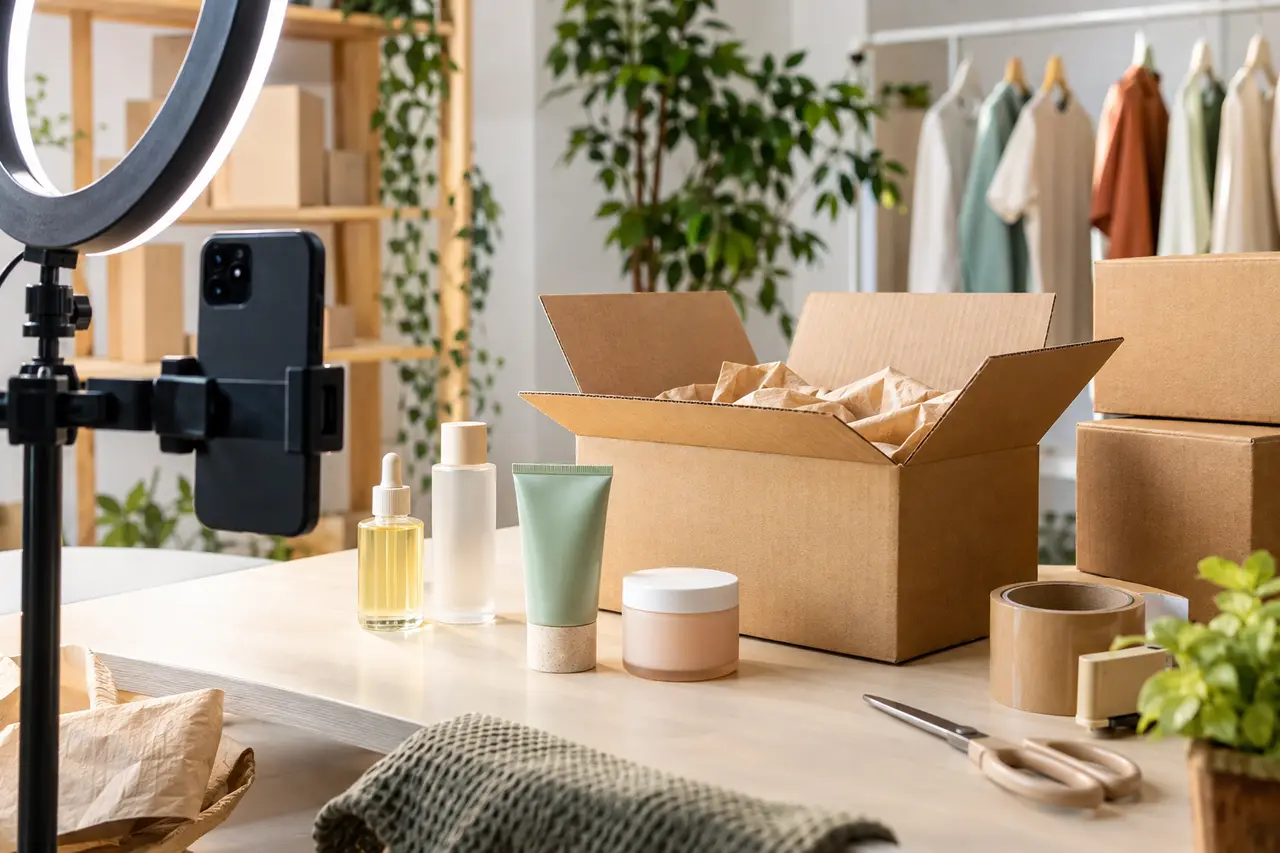
TikTok Shop creator seeding means sending products to creators through the Affiliate Center so they can test them and post content that sells. Brands choose Open Collaboration for broad testing or Target Collaboration for chosen creators, offer free or refundable samples, set clear content deadlines and make sure every creator discloses a gifted product.
Last updated: November 26, 2026. Program rules below come from TikTok's seller help pages, which change often, so confirm current terms in Seller Center. This guide uses TikTok's published rules and the FTC's endorsement guidance, and it does not rely on any third-party creator count or benchmark.
In this guide
- What TikTok Shop creator seeding is
- Open or Target Collaboration
- Free and refundable samples
- Deadlines that shape the program
- Who can request samples
- How to choose creators to seed
- Campaign-level seeding
- Disclosure rules
- What a creator brief includes
- Mistakes that slow a seeding program
- Six steps to launch
- Frequently asked questions
- Sources
What is TikTok Shop creator seeding?
TikTok Shop creator seeding is the practice of giving creators products, through TikTok's own sample tools, so they publish videos or LIVE sessions that drive orders.
TikTok's seller help says sellers can offer product samples to creators so they can test, review and make content designed to generate more orders. Sellers manage the whole workflow in the Affiliate Center, including sample requests, approvals and performance tracking. Seeding on TikTok Shop is closer to a managed program than to a mailing list, because the platform tracks who requested what and what they posted afterward. The creator seeding guide for AI visibility explains how the same content can also reach AI engines, and the creator selection analysis covers who to pick.
Should a brand use Open or Target Collaboration?
A brand should use Open Collaboration to test products with any creator, and Target Collaboration to invite specific creators it has chosen.
TikTok describes Target Collaboration as inviting selected creators for selected products, and Open Collaboration as exposing products to all creators. TikTok also states that target settings override open settings. In its Affiliate course, TikTok recommends Open Collaboration for broad testing and discovery, and Target Collaboration for curated, higher-touch partnerships. A common pattern is to start open with a hero product, review which creators perform, then invite those creators into a target program with better terms and more support.
What is the difference between free and refundable samples?
Free samples cost the creator nothing, while refundable samples are bought first and refunded after the creator reaches a sales goal.
TikTok's creator help says refundable samples require one to three qualifying orders within 120 days, and that free samples are available to creators who generated TikTok Shop sales in the last 120 days. For sellers, TikTok's samples page says free samples suit building strong partnerships and encouraging confident content. A seller can also register for auto-approved free sample campaigns, in which TikTok Shop-selected creators claim samples from the seller's inventory without manual review.
Manual approval gives a brand control over who receives product. Auto approval saves time and suits campaigns where reach matters more than selection. Brands should pick one by product and by how many samples they can ship. TikTok's pages note that some terms cannot be changed after they are sent, so brands should set quantities and content requirements carefully.
Which deadlines shape a seeding program?
Sellers must review free-sample requests within 7 days and ship within 7 days of approval, while creators must post within 14 days of delivery.
According to TikTok's seller help, free-sample creators must post within 14 days of delivery. Refundable samples must meet their criteria within 90 days or become regular purchases, according to the same page. The creator-facing guide gives the qualifying window as 120 days, so the two pages describe different windows, and brands should check the current rule in Seller Center before they plan. TikTok's creator guide also says that missed deadlines or excessive requests can reduce a creator's access to samples.
These deadlines affect PR planning. A brand that wants a wave of posts before a launch date or a holiday should approve requests and ship early enough that the 14-day posting window ends before the event.
Who can request samples on TikTok Shop?
Creators in TikTok Shop's Creator Center can request samples if they meet entry requirements and recent sales conditions.
TikTok says Creator Center is for affiliates with at least 5,000 followers who are 18 or older, accept the terms and set up bank information. Creators can request up to five samples at a time. Free samples require sales in the last 120 days, and a creator can request one of a specific item per seller, once, in a sample campaign. For brands, these rules shape who can be seeded. A brand that wants to work with brand-new creators needs a different route, such as a direct invitation or a paid partnership outside the sample tools.
How should a brand choose which creators to seed?
A brand should choose creators by category fit and recent sales activity, because TikTok's own rules already limit who can request free samples.
Start with fit. A creator whose audience already buys the category will make content that reads as natural, and a poor fit wastes a sample and a posting window. Then check activity. Because free samples require sales in the last 120 days, creators who qualify have recent selling experience on the platform, which is useful when a brand needs content on a deadline.
Use the two collaboration modes together. Open Collaboration shows which creators respond to the product without any prior relationship. Target Collaboration then lets the brand invite the best performers into a curated program. Keep a simple record of each creator's request date, delivery date, post date and result, so that decisions about who to invite again rest on what happened and not on follower counts alone. Brands that want help sourcing and managing creators can read about the influencer marketing services.
How does seeding work inside big sale events?
Sellers can add event-specific creator incentives to major promotions through an affiliate campaign in Seller Center.
TikTok describes the affiliate campaign as a sub-campaign inside major promotional events such as Black Friday. Sellers register products under Promotion and then Campaigns, and can set free samples or refundable samples for the campaign period. TikTok's page also says some campaign settings can only be changed upward after launch. Brands planning for a sale should set campaign-level seeding before the event starts, so creators have time to receive product and post.
What disclosure rules apply to gifted products?
Creators must clearly disclose a gifted product, and brands should tell them how to do it.
The FTC revised its Endorsement Guides in 2023. FTC staff say that a company sending influencers a free unsolicited product should still ask them to clearly and conspicuously disclose the gift in any resulting posts and tell them how. The FTC's guidance for influencers says a material connection includes a financial relationship, such as free or discounted products. Seeding briefs should state the disclosure requirement, offer sample wording and prohibit claims the brand cannot support.
Enforcement is real. Arnold & Porter notes that the FTC put more than 700 companies on notice of potential civil penalties in 2021 and filed over 25 cases involving deceptive endorsement or review practices in the five years before the 2023 revision. In November 2023, the FTC sent warning letters to two trade associations and 12 online health influencers, and Keller and Heckman reports that the letters warned of fines of up to $50,120 per violation. Penalty amounts are adjusted over time, so counsel should confirm the current figure.
What should a creator brief include?
A creator brief should include approved product facts, the disclosure instruction, claims to avoid and the posting deadline, on a page a creator can read in a minute.
Approved facts cover what the product is, who it is for and what it does, using only statements the brand can support. The disclosure line follows the FTC guidance above: tell the creator to disclose the gift clearly, and show how. Claims to avoid should name the specific statements the brand cannot support, such as health or performance promises.
The posting deadline needs the most care. TikTok's seller help sets a 14-day window for free-sample creators, counted from delivery, so the brief should repeat that date in plain terms. Keeping the brief short and specific makes it easier for a creator to meet the deadline, and it gives the brand a record of exactly what it asked every creator to do.
What mistakes slow a TikTok Shop seeding program?
The most common mistakes are late approvals, unclear briefs, wrong creator fit and terms set without checking what cannot be changed later.
Late approvals come first. Sellers are expected to review free-sample requests within 7 days and ship within 7 days of approval, and every day lost shortens the time before a launch or sale. Set a named owner for the request queue.
Unclear briefs come second. A creator who is unsure what to say or how to disclose will either post late or post something the brand cannot use. The short brief described above avoids both.
Wrong fit comes third, and it is expensive because each sample is a product the brand has to supply. Finally, brands sometimes set quantities or content requirements in a hurry. TikTok's pages say some terms cannot be changed after they are sent, so check them before confirming. Brands in regulated categories should also review claims with counsel, and the longevity claims rules show how that review works.
What are six steps to launch a seeding program?
A brand can launch a TikTok Shop seeding program in six steps.
- Choose one or two hero products and confirm stock for samples.
- Decide on Open Collaboration for testing or Target Collaboration for selected creators.
- Pick free or refundable samples and manual or automatic approval.
- Set content requirements and deadlines, and check the current rules in Seller Center.
- Send creators a short brief with approved facts, disclosure wording and claims to avoid.
- Track results in Affiliate Center and move top performers into a target program.
The influencer marketing services page and the guide to choosing a TikTok Shop agency cover agency support. Brands that pair seeding with live events can read the live shopping PR guide.
Frequently asked questions
What are TikTok Shop samples?
Samples are products that sellers give creators to test and promote. They can be free, or refundable after a sales goal, according to TikTok's seller and creator help.
How long do creators have to post after a free sample?
TikTok's seller help says free-sample creators must post within 14 days of delivery.
What is the difference between Open and Target Collaboration?
Open Collaboration exposes products to all creators. Target Collaboration invites selected creators for selected products, and its settings override open settings.
Do creators have to disclose free products?
Yes. The FTC says free products count as material connections and should be clearly disclosed.
Who can request free samples on TikTok Shop?
TikTok says Creator Center is for affiliates with at least 5,000 followers who are 18 or older, and free samples require sales in the last 120 days.
Where do these findings come from?
- TikTok Seller University, How to set up and manage samples
- TikTok Seller University, Setting Up Affiliate Collaborations
- TikTok Seller University, Guide to Samples
- TikTok Seller University, Creator Center
- TikTok Seller University, Affiliate campaign
- TikTok Seller University, Auto-approved free samples
- FTC, Endorsement Guides: What People Are Asking
- FTC, Disclosures 101 for Social Media Influencers
- Arnold & Porter, FTC endorsement guides advisory
- Keller and Heckman, FTC warning letters to influencers