AI Models Help 1 in 3 Brands Choose Creators. We break down who gets found, how, and share why it’s not always the biggest names.
This post breaks down recent data and explains how AI is changing how brands evaluate and choose creators. Most brands use AI features in creator platforms like CreatorIQ and Modash, while fewer, such as Kosterina, ask general-purpose models like Claude for recommendations.
CreatorIQ's 2025–2026 global survey of 1,723 brands, agencies, and creators found that 95% of brands and 97% of agencies used AI in marketing last year.
Notably, 35% of brands and 36% of agencies used AI models to discover creators, vet them, or to validate alignment.
IAB's U.S. study of 450+ decision-makers found that ~75% use or plan to use AI for creator marketing, while one-third of brands say that identifying the right talent remains their primary challenge.
Evidence for general-purpose AI usage is largely qualitative: Digiday reported that olive-oil brand Kosterina initiates partnership searches in Claude, while agencies audit the LLM citations of creators.
Meanwhile, specialist platforms like CreatorIQ and Sprout Social offer established semantic search and AI recommendations, with Dentsu integrating proprietary audience data directly into CreatorIQ in June 2026.
AI discovery evaluates different sources from social feeds. A creator prominent on TikTok or Instagram often lacks a strong search presence, while smaller creators rank well when authoritative web content cites them.
Rank Prompt's 2026 study of 29,635 YouTube citations revealed 86% of AI-cited videos were not in YouTube's top 10 for the same queries; the median cited video had only ~2,100 views from channels with ~13,700 subscribers.
Effective discoverability levers focus on crawlability, clear text evidence of expertise, semantic query alignment, earned media, consistent cross-platform identity, and rich long-form content.
An October 2026 preprint (158k answers, 468k citations) showed semantic query matching drove citations far more than page features like structured data. Additionally, Muck Rack's analysis of 25M+ links found 84% of LLM citations stemmed from earned media (27% journalism).
AI search is noisy, but it’s clear that social algorithms are no longer the sole discovery mechanism for creator partnerships. Brands and agencies increasingly rely on AI to shortlist talent, making a creator's AI visibility presence critical for partnership discoverability.
Impact on 5W Programs: 5W's influencer practice vets creators through follower authentication, engagement audits, audience overlap, brand safety, and competitor checks. AI discovery adds a new parameter: evaluating a creator's and brand's web-wide footprint in AI citations and recommendations. 5W integrates these insights into its digital marketing and GEO optimization services.
How AI moved into creator selection
AI adoption in creator discovery addresses a high-stakes, operationally complex process. IAB projects U.S. creator ad spend will grow from $37B in 2025 to $44B in 2026. Nearly half of buyers view creators as essential, while roughly one-third cite finding the right talent as their top hurdle.
Industry surveys highlight rapid AI adoption. CreatorIQ's 2024–2025 report indicated 91% of brands used AI in creator marketing. Its 2025–2026 study showed ~1 in 3 marketers used AI specifically for discovery and vetting.
By 2026–2027, 47% noted AI increased daily workflow complexity, while 41% of brands expanding creator budgets cited AI efficiencies as a driver.
Comparative evidence base
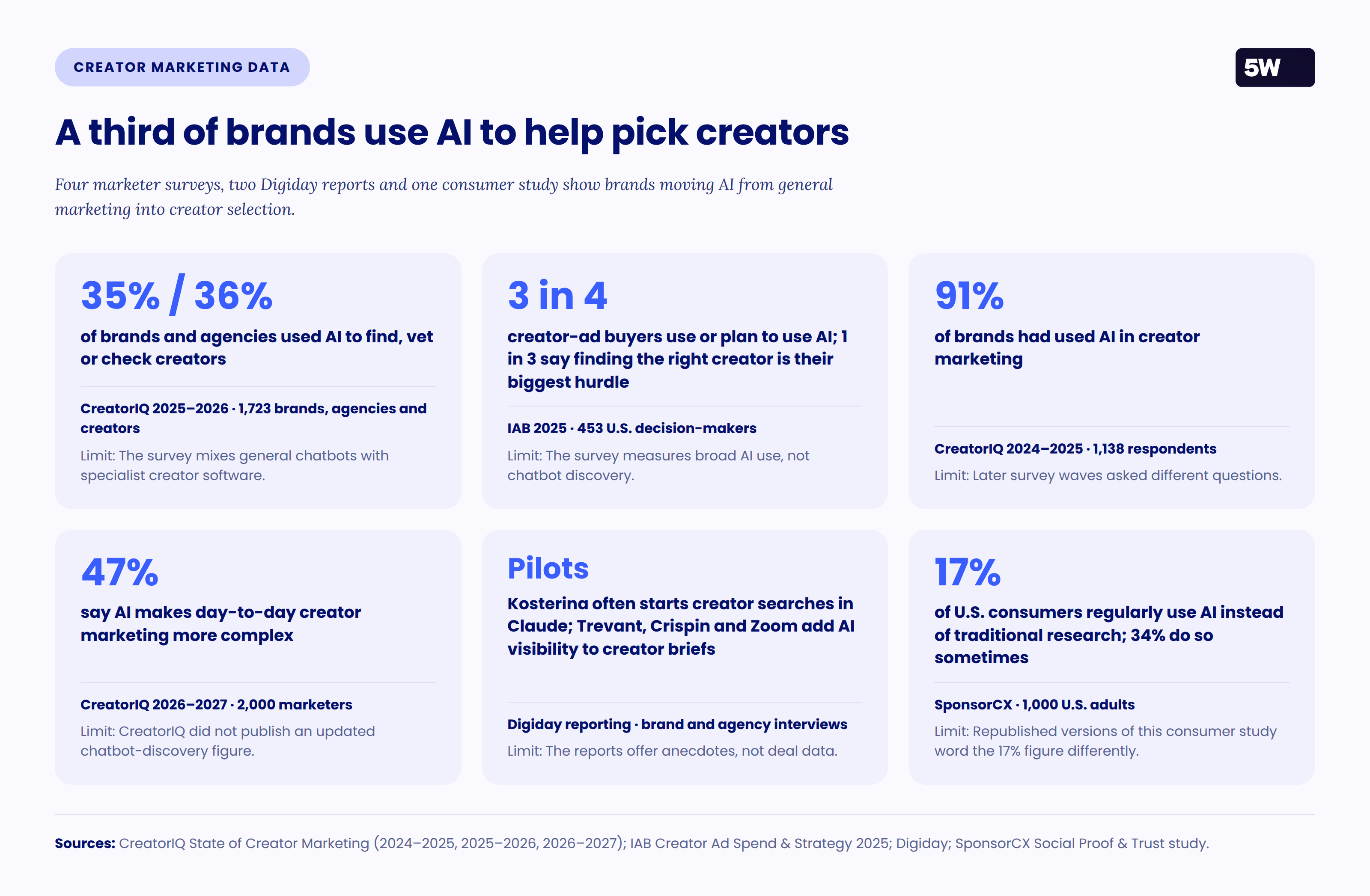
Figure 1. Sources: CreatorIQ 2025–2026, 2024–2025 and 2026–2027 State of Creator Marketing reports; IAB Creator Ad Spend & Strategy 2025; Digiday on creator AI discovery and AI-visibility briefs; SponsorCX Social Proof & Trust study.
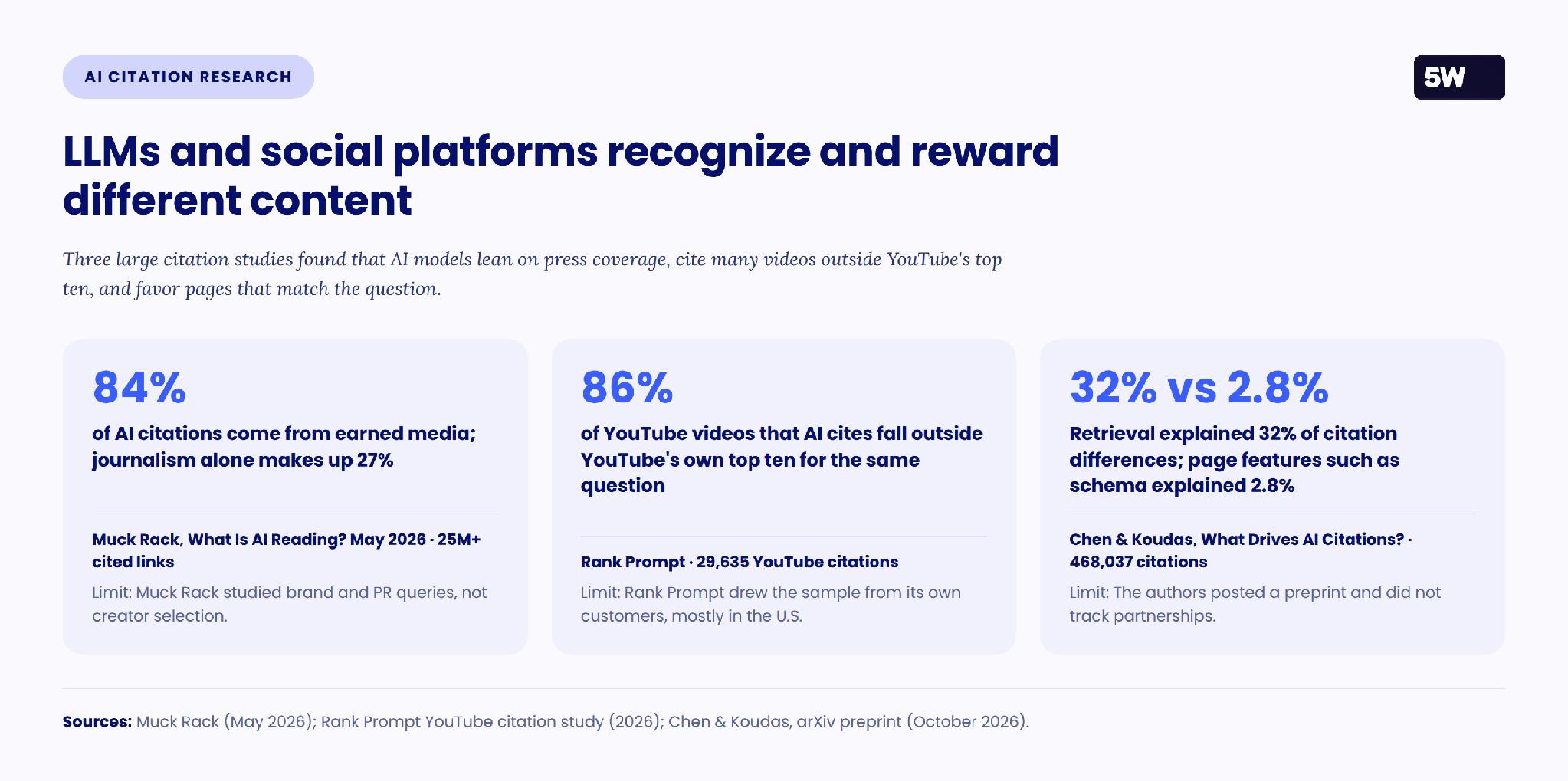
Figure 2. Sources: Muck Rack, What Is AI Reading? (May 2026); Rank Prompt YouTube citation study; Chen & Koudas, What Drives AI Citations?.
Demand-side trends reinforce this transition. IAB (2026) found consumers want AI shopping assistants to include creator perspectives. Conversely, CreatorIQ's 2026 creator survey (5,095 respondents) revealed that while 72% use AI for content production, almost none monitor their visibility in LLM recommendations.
There’s also a notable data gap: no study isolates general-purpose LLM usage (e.g., ChatGPT, Claude) from specialist creator platforms.
Two distinct AI discovery systems are emerging
General-purpose AI models
Marketers query AI assistants directly for creator recommendations based on web-retrieved evidence. Examples include Kosterina searching in Claude (Digiday) and Colin Rocker discovering that LinkedIn and podcasts drove his Claude citations.
Creators compete with entities that have verifiable online evidence of expertise. As Chen & Koudas (2026) show, ChatGPT citations depend heavily on semantic relevance during internal retrieval steps.
General-purpose systems remain an emerging workflow, with agencies noting that revenue attribution remains difficult (Digiday).
Specialist creator-intelligence AI
Specialist creator tools are far more established. CreatorIQ utilizes AI recommendations, content analysis, and automated brand mention detection, integrated with YouTube viewership data (March 2026).
Sprout Social offers semantic creator search, while Dentsu's integration with CreatorIQ (June 2026) matches audience attributes to creator followers.
Business Insider (Oct 2026) documented practical applications: Goodwipes used Modash to streamline search, FiveTwoNine deployed Billion Dollar Boy's Companion, and Mars Pet Nutrition used AI to broaden initial talent pools while relying on human evaluation for final selection.
Human oversight remains critical. IAB reported 95% of advertisers expressed concern over AI in creator marketing, primarily citing loss of human connection. Similarly, Poppi noted that AI tools fell short in identifying culturally relevant creators, requiring manual social discovery.
5W balances AI analytics (authenticity scoring, engagement checks) with strategist review, as detailed in its insight on AI in influencer marketing and playbooks for CPG and Beauty.
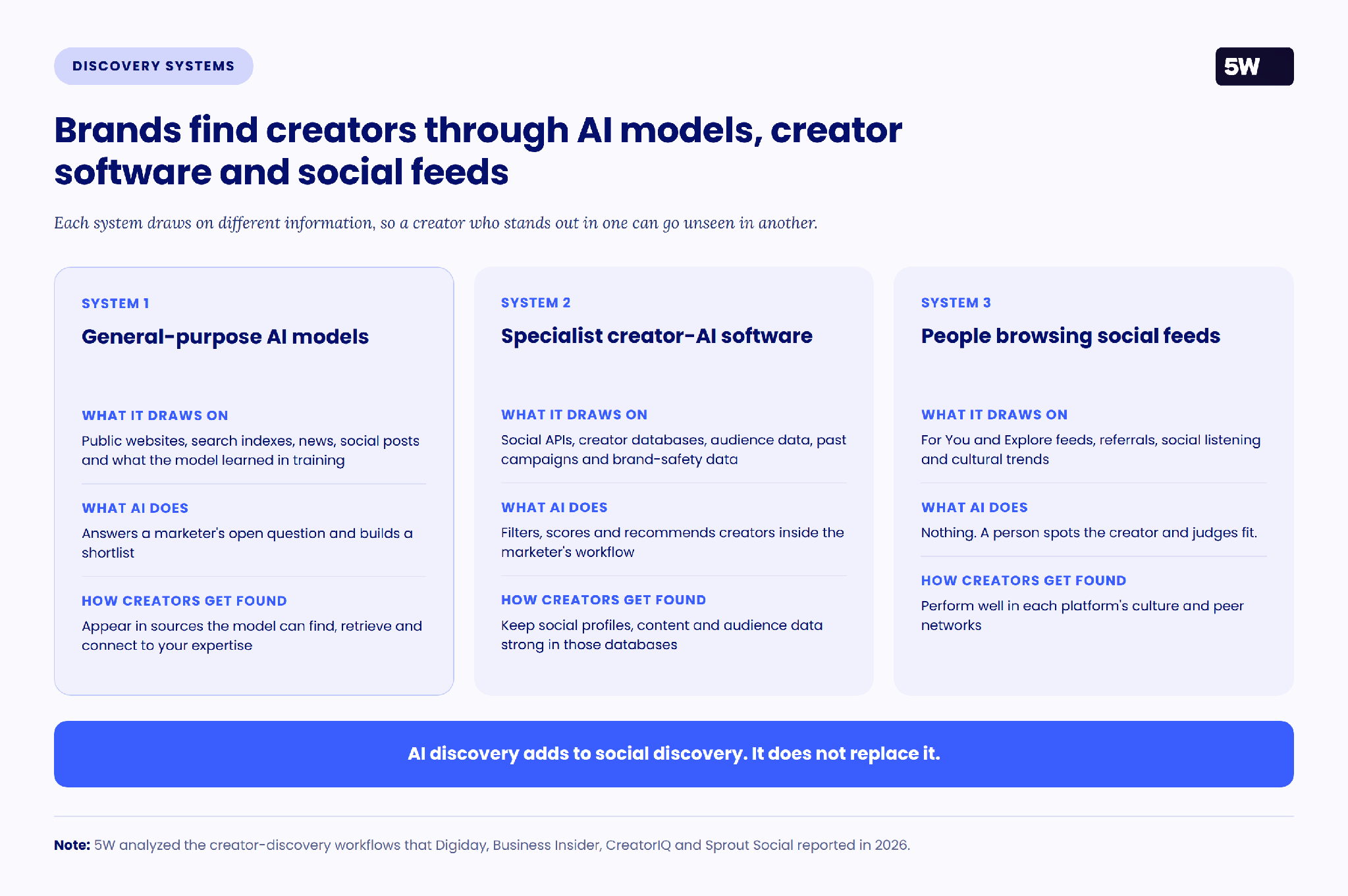
Figure 3. 5W analyzed the workflows that Digiday, Business Insider, Crea,torIQ and Sprout Social reported.
What appears to make a creator discoverable to AI
Crawlable, text-accessible owned pages: high confidence
Today, websites serve as a source of truth and an entity anchor. Google recommends accessible, text-based content. OpenAI and Anthropic advise that bot-acess (OAI-SearchBot, Claude-SearchBot) is necessary for search visibility.
Courtney Johnson's AEO site converted social media content to text articles, resulting in an 18.7% MoM rise in Google Search impressions (June-July 2026) and 10,766 cumulative impressions.
Caveat: This data demonstrates crawler activity and standard SEO growth, not confirmed LLM citations or brand deals.
Content that explicitly answers buyer-like questions: high-to-moderate confidence
Chen & Koudas confirmed that pages that semantically matched user queries achieve higher citation rates within domains, whereas page-level GEO tweaks had minimal impact.
For creators, publishing substantive text (articles, transcripts) around core expertise improves discoverability.
Independent earned media: high confidence as an AI-source signal, moderate confidence for creator selection
Muck Rack found 84% of AI citations were earned media (27% journalism). Industry-trend prompts cited journalism in 46% of responses.
This supports Colin Rocker's earned-media focus, after his Claude audit revealed AI models recommended him via LinkedIn and podcast appearances.
Today, 5W helps clients build campaigns that compound media visibility and machine retrieval.
For Medicube, 5W secured 420+ placements in under two years and 2.5B impressions from a Hailey Bieber feature. (Medicube case study).
For essence Makeup, a 20-creator video campaign generated a 76% increase in media coverage and 40% growth in social coverage, aligning with 5W's digital PR practice.
Long-form video, podcasts, and transcripts: moderate confidence
Rank Prompt showed that 86% of AI-cited YouTube videos were outside YouTube's top 10 ranks for the same prompt, with channels under 100k subscribers driving the most citations.
This data shows that reach doesn't dictate AI recommendations, supporting strategies to create structured long-form content and transcripts. Google advises providing text representations alongside video.
5W's VIZIO campaign generated 11 YouTube videos (2.5M views, 29.9M reach)
Similarly, mid-tier creator programs for SMEG (300+ posts, 6.5% engagement) and Nations Photo Lab (4.8% engagement) demonstrate the value of niche creator assets, which 5W's content team makes retrievable and recommendable.
Structured data: useful hygiene, weak evidence as a direct AI lever
Google notes structured data helps standard search, but it isn’t required for generative search, and no special AI schema exists.Chen & Koudas (2026) confirmed that the schema impact disappears when comparing pages within the same domain.
Use the standard schema (ProfilePage, Person) as general hygiene, not an AI growth hack.
How platform algorithms differ.
Muck Rack (May 2026) found: ChatGPT cited sources in 96% of responses (avg 5 citations); Gemini cited in 82% (avg 8); Claude cited in 55% (avg 13 when present). Top domains varied by platform (Wikipedia for ChatGPT, PubMed Central for Claude, Reddit for Gemini).
Profound's 3.25B citation analysis measured social source shares: 15.3% in Google AI Overviews, 14.5% in Google AI Mode, 11.3% in Perplexity, 9.1% in ChatGPT, 4.3% in Copilot, 3.99% in Claude, and 3.6% in Gemini.
Query language also altered citation sources.
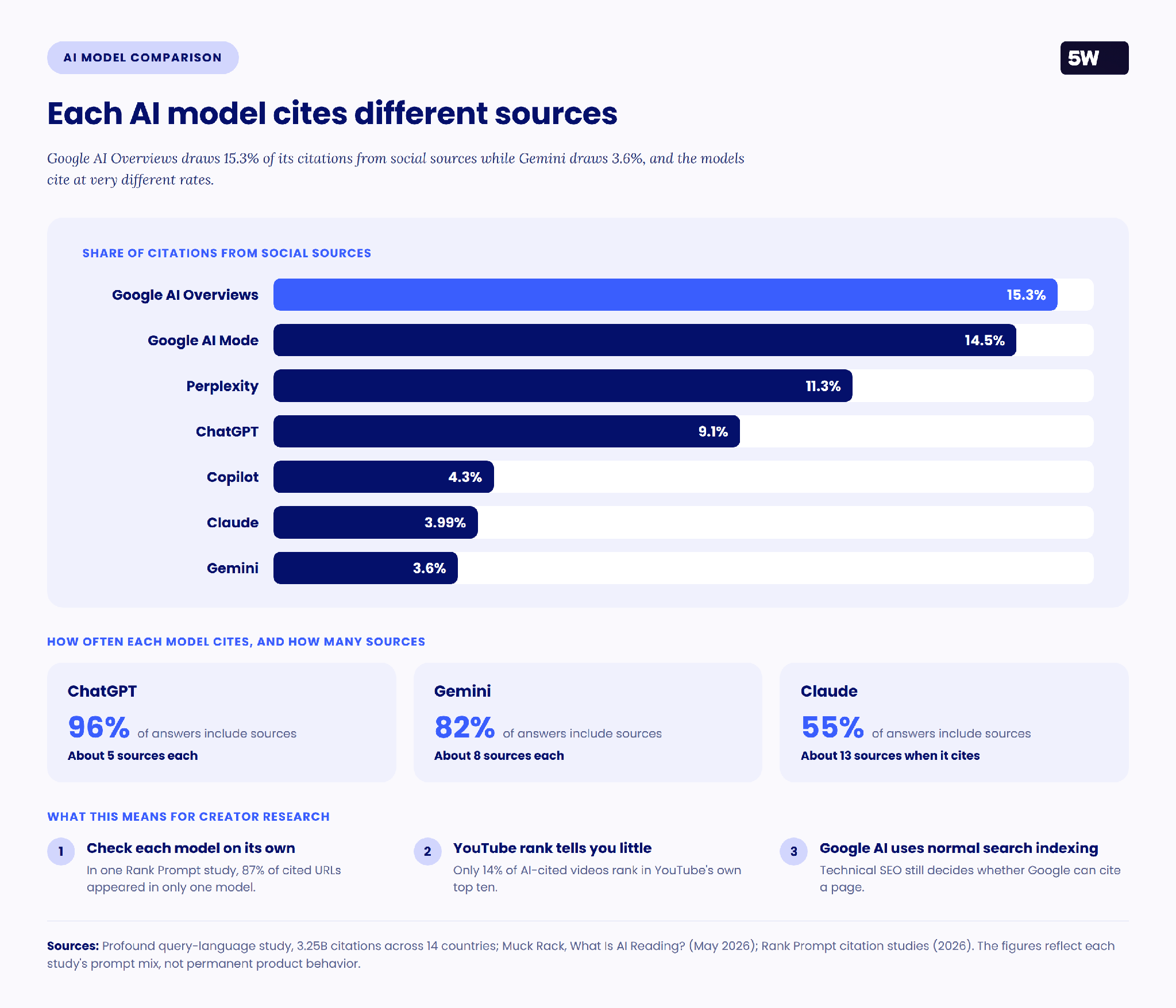
Figure 4. Sources: Profound query-language study; Muck Rack (May 2026); Rank Prompt YouTube citation study and AI visibility measurement study.
Rank Prompt recorded mean citations per prompt ranging from 25.5 (Grok) to 4.2 (ChatGPT Search). Notably, 87.45% of cited URLs appeared in only one model.
Profound notes that social citation rates drop in non-English markets, suggesting geography and language affect model retrieval.
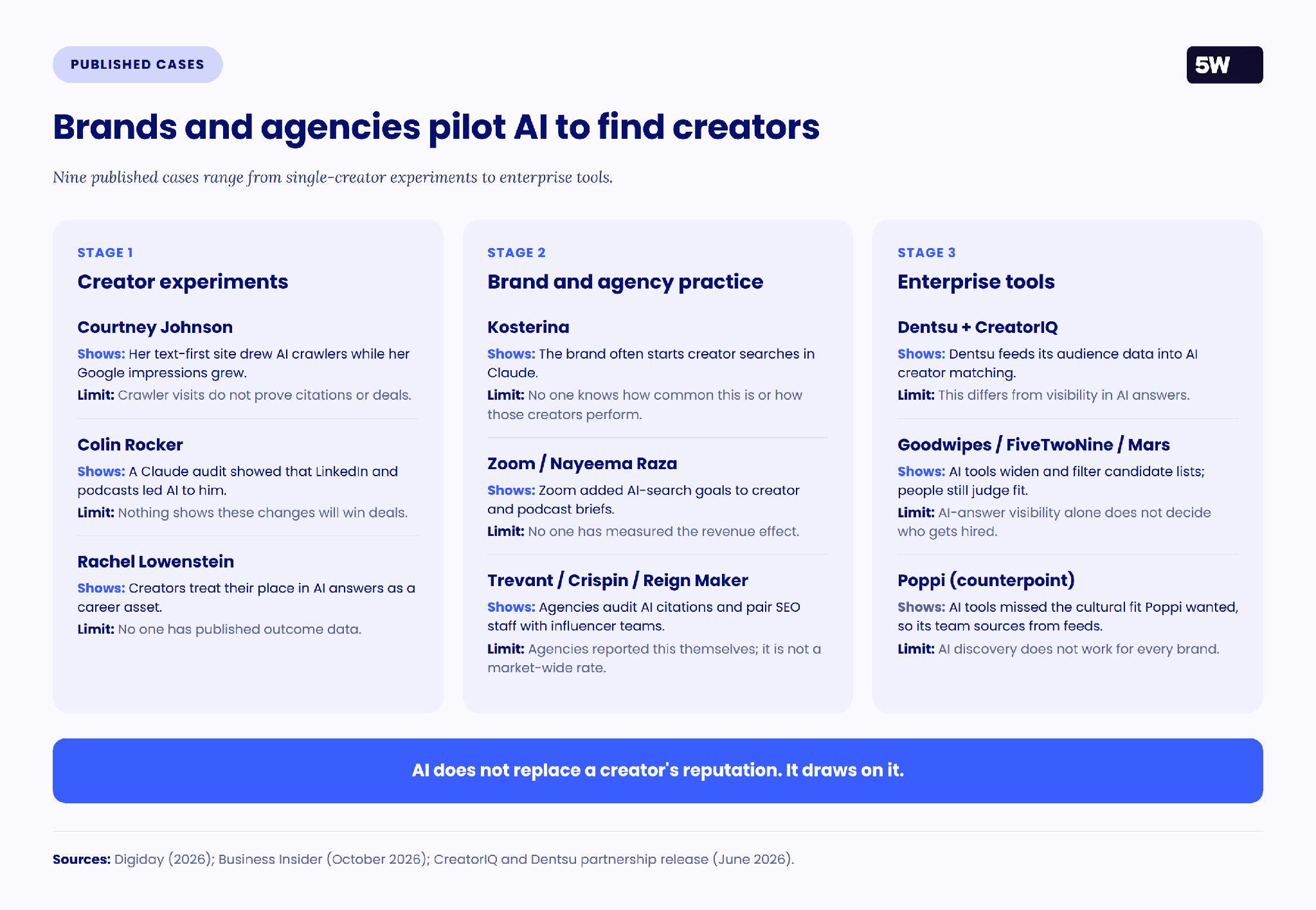
Figure 5. Sources: Digiday on creators, Zoom and agency briefs; CreatorIQ and Dentsu release; Business Insider on creator discovery tools and Poppi.
5W case studies: creator programs that leave readable evidence
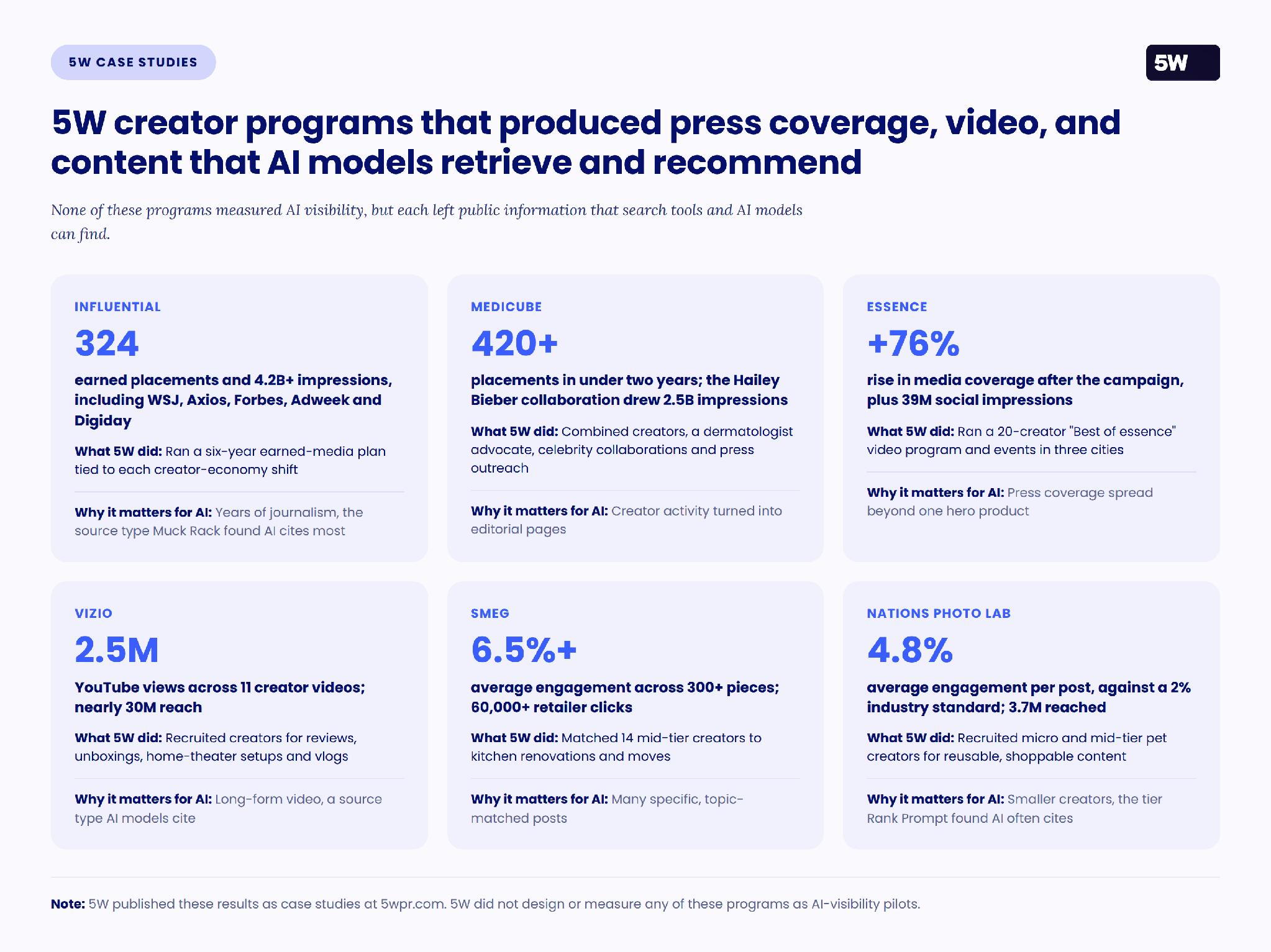
Figure 6. Source: 5W case studies for Influential, Medicube, essence, VIZIO, SMEG and Nations Photo Lab.
Measurement limits: where the thesis can be overstated
Crawler visit ≠ citation: Bot requests signify access, not inclusion. OpenAI separates training (GPTBot), search (OAI-SearchBot), and user bots.
Citation ≠ recommendation: Cited sources may be referenced without receiving an endorsement. Chen & Koudas noted known brands are often named via parametric memory without explicit link citations.
Recommendation ≠ partnership: Marketers filter LLM recommendations against rates, safety, and fit (Mars Pet Nutrition).
Output volatility: Single-prompt snapshots are unreliable because outputs are probabilistic (Muck Rack, Rank Prompt).
Citation decay:Profound found the median page lost half its peak citation share within 11 days (78% within two weeks).
Measurement improved as of August 31, 2026, when Google Search Console launched Generative AI performance reports globally, exposing impression metrics for generative features.
A proposed creator AI-discoverability audit
A controlled pilot framework tests whether public evidence updates drive AI citations and partnership deals. The 5W's AI Visibility Audit maps category prompts across major platforms (ChatGPT, Claude, Perplexity, Gemini, Google AI Overviews) to benchmark share and source reliance.
Assumptions to leave open
The baseline framework evaluates U.S.-English across three verticals and varying creator tiers. Given Profound's findings on language shifts, international expansions require native-language testing.
Experimental design
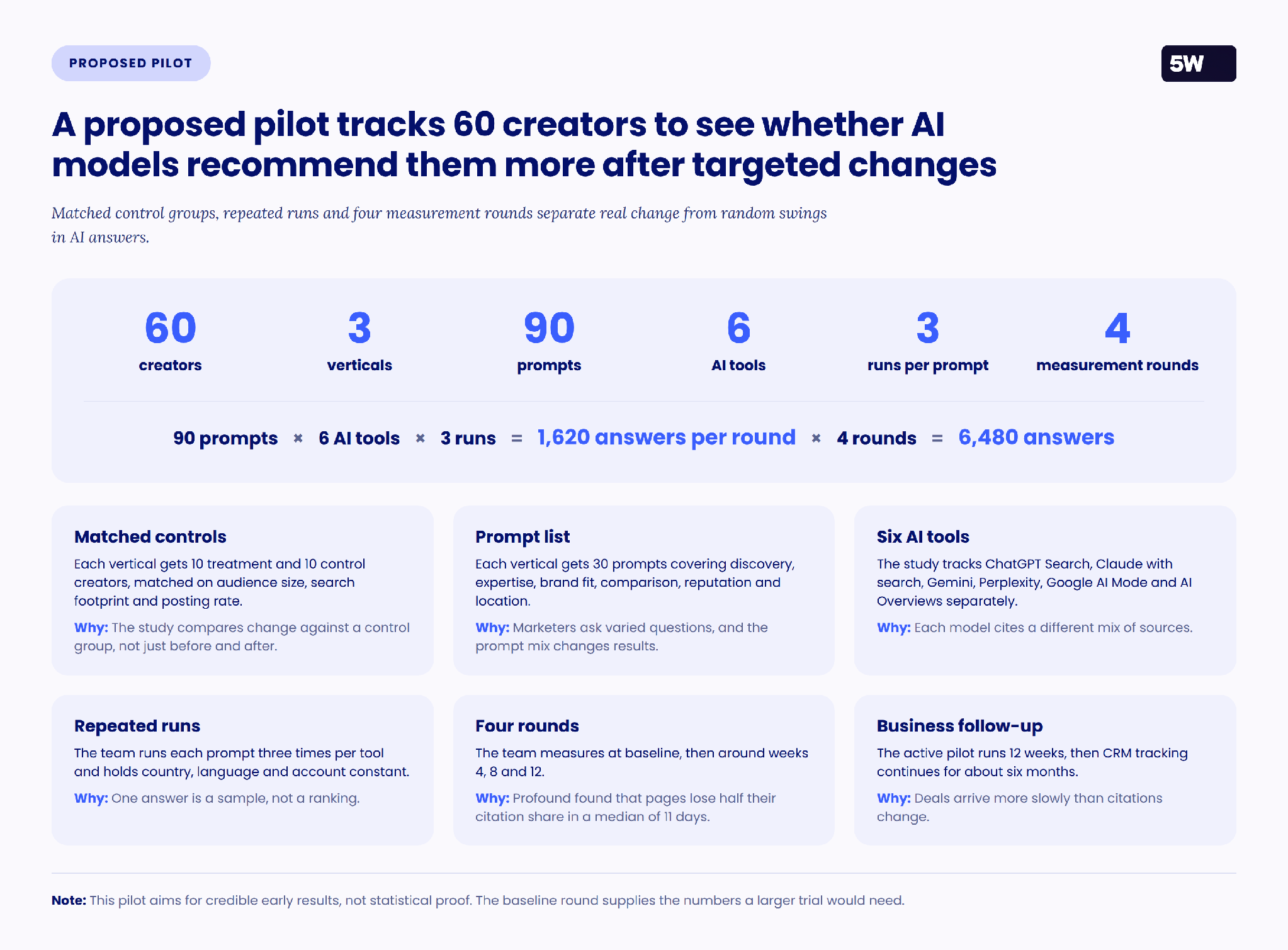
Figure 7. Proposed 5W pilot design. Supporting research: Rank Prompt on prompt variation; Profound on citation half-life.
This 60-creator pilot provides parameters for future powered experiments.
Treatment bundle
The intervention includes upgrading owned websites for crawler accessibility (OpenAI, Anthropic, Google), converting top video assets into transcripts/articles (Google guidance), and securing targeted earned media placements (Muck Rack). llms.txt is excluded as a factor based on Google's position.
Audit workflow
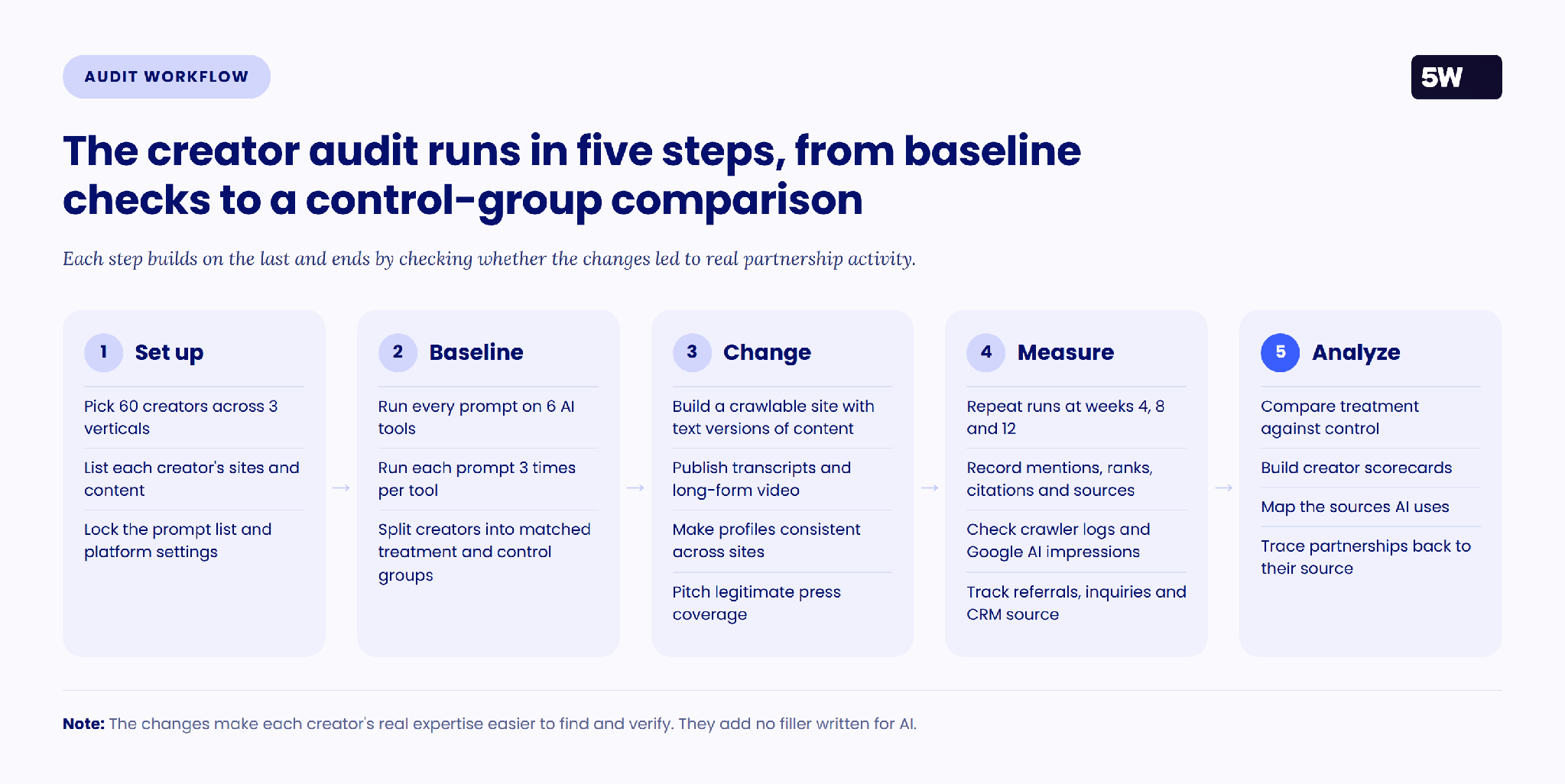
Figure 8. Proposed audit workflow. The brand-side version is 5W's AI Visibility Audit.
Metrics that should stay separate
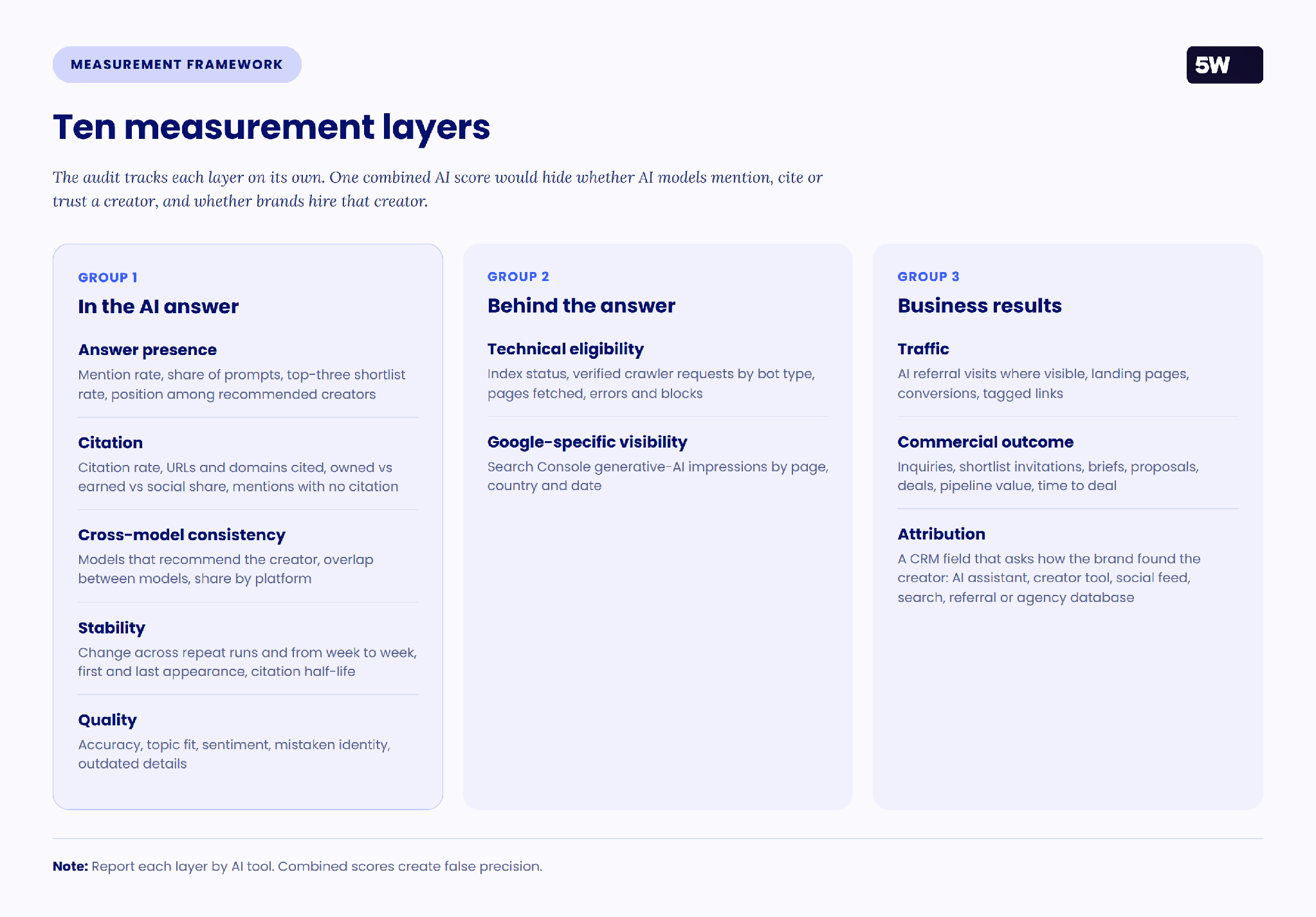
Figure 9. Proposed measurement framework. Google data from Search Console generative AI reports.
Analysis evaluates change from baseline in treatment versus control creators across disaggregated platform metrics. Unprompted discovery ("Which creators cover X?") serves as the primary benchmark.
Data-source entity relationship

Figure 10. Simplified data model for the proposed audit.
Illustrative timeline

Figure 11. Proposed pilot timeline. The week numbers are planning estimates.
This body of research supports how brands use AI for discovery (CreatorIQ) and that AI retrieval differs from social media algorithms. The unproven frontier remains the causal sequence between the two: Creator AI discoverability work → Greater LLM visibility → Inclusion on shortlists → Incremental deals.
Creator discovery spans social feeds, discovery platforms, and AI models. Brands requiring cross-system visibility need programs that produce retrievable, authoritative information (press, videos, transcripts). 5W engagements include influencer marketing, digital marketing, and AI visibility audits, supported by case studies like Influential and Medicube.
5W employs a specialized team of practitioners to execute GEO programs to build machine-readable authority for our clients. Start a conversation with us today to learn more.