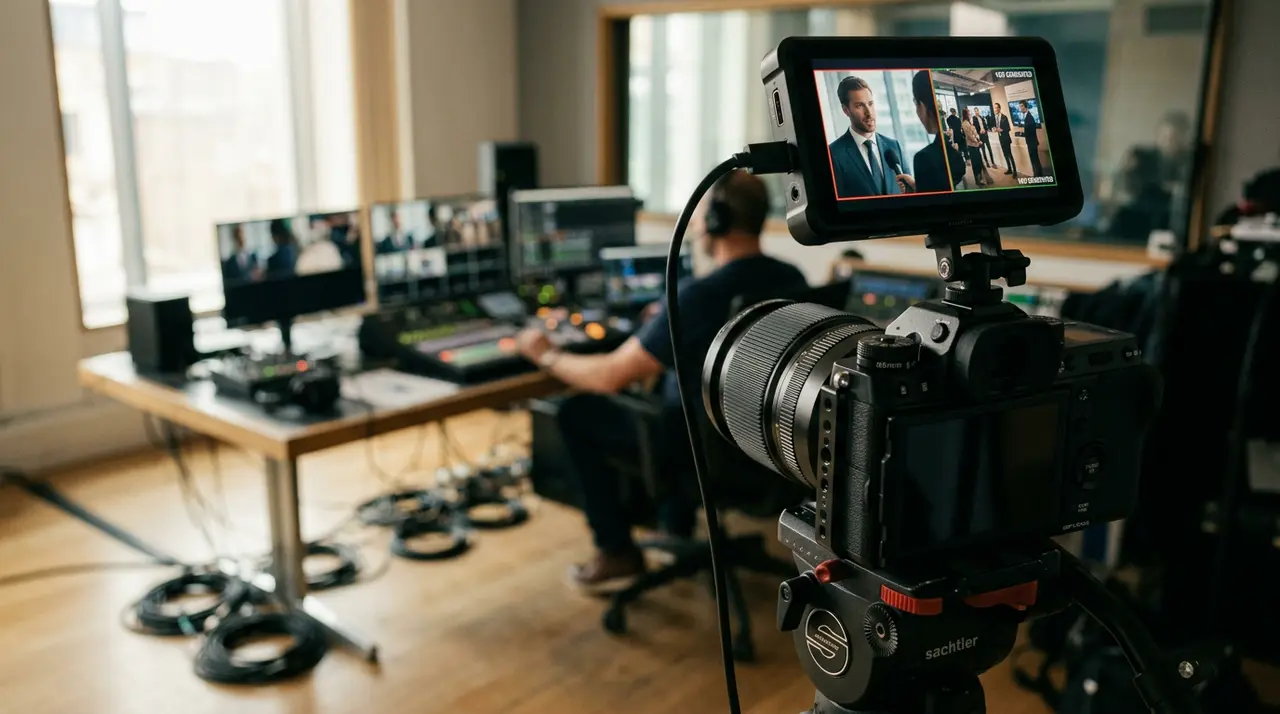
Veo is Google DeepMind's AI video generation model, now on version 3.1 with native 4K output and synced audio in a single generation pass. Marketing and PR teams use Veo to produce campaign video, executive statements and rapid-response social clips without a production crew.
What is Veo?
Veo is Google DeepMind's video generation model, and version 3.1 added true 4K resolution, native audio generation including dialogue and ambient sound, and vertical 9:16 output for Shorts and Reels, after launching in October 2025 and receiving its 4K upgrade in January 2026, according to an independent review of the model's specifications.
Google now offers Veo in three tiers: Veo 3.1 Lite for budget, high-volume use, Veo 3.1 Fast for most applications, and Veo 3.1 Pro for premium creative and enterprise work, with access through Google AI Pro, Google AI Ultra, Google Flow, the Gemini API and Vertex AI.
How does synced audio change what marketing teams can produce?
Synced audio changes production because Veo generates dialogue, lip movement and ambient sound in the same pass as the video, instead of a separate voiceover or sound-design step layered on afterward.
Why it works: Veo's architecture models physics, lighting and audio jointly rather than generating video first and audio second, which is the specific reason a generated spokesperson clip has matching lip sync out of the model instead of needing a post-production audio pass, per Google DeepMind's own Veo product page. That collapses a production step that traditionally required a separate sound engineer and syncing pass in a video edit suite.
How are brands actually using Veo for marketing right now?
Taxfix, a European tax filing platform, ran a large-scale 2025 experiment with Google testing Veo-generated spots against human-produced and hybrid variants across multiple languages, with production timelines dropping from six to eight weeks down to days, according to Google's own account of the partnership.
That case shows the specific mechanism marketing teams are testing: instead of reshooting a campaign for each market, a team generates one master concept in Veo and produces market-specific versions with localized dialogue and on-screen text, cutting the reshoot step out of a multi-market launch.
How does Veo compare to other AI video models brands test?
Veo competes most directly with OpenAI's Sora and Runway's Gen-4.5, and the comparison PR and marketing teams care about is native audio: Veo generates dialogue and ambient sound in the same pass as the video, while several competing models still require a separate audio or dubbing step layered on afterward, according to a 2026 comparison of leading AI video generators.
That comparison placed Veo 3.1 alongside MiniMax H3, Runway Gen-4.5, Kling AI 3.0, Vidu Q3, Pika and PixVerse as one of the models brands evaluate side by side rather than a single default choice, which means a marketing team's decision often comes down to which platform its existing production tools already integrate with, since Google has built Veo into Flow, Google Vids, the Gemini API and Vertex AI, giving it a wider footprint across a brand's existing Google-based workflow than a standalone competitor would have.
What creative controls does Google Flow add to Veo?
Google Flow adds camera controls and first-frame-to-last-frame guidance on top of raw Veo generation, letting a creative director specify how a shot starts and ends rather than accepting whatever framing the model chooses on a single text prompt.
Flow's upscaling tiers are split by subscription level: 1080p video upscaling is available to Plus, Pro and Ultra subscribers, while 4K upscaling is reserved for Ultra subscribers only, according to the same 2026 review cited above, a distinction worth noting because a brand's finished 4K deliverable depends on which Flow tier the team is subscribed to, not solely on which underlying Veo model generated the original clip.
For a marketing team producing a multi-shot campaign, Flow's frame-specific generation is the practical tool that keeps a spokesperson's appearance and a product's packaging consistent from the opening shot to the closing shot, addressing part of the consistency-drift problem that shows up when a longer video is built from several chained clips rather than one continuous generation.
What are the real limits of Veo for brand video?
Veo generates base clips of four to eight seconds, so anything longer requires scene chaining, and each additional linked clip introduces a chance of a visible consistency break in the subject's appearance or the background, according to a 2026 comparative review of AI video generators.
Veo also lacks multi-keyframe precision for detailed timing control and does not export in HDR or EXR formats needed by professional post-production pipelines, which means a brand running a high-end broadcast campaign still needs a traditional production partner for the final cut, even if Veo generates the early concept pass.
What does Veo access cost, and who can use it?
Veo access runs through consumer and developer tiers at different price points: Google AI Pro at 19.99 USD per month includes the faster Veo 3.1 Fast model, while Google AI Ultra at 249.99 USD per month includes the full-quality model, according to the same 2026 technical review. Developers building Veo into an internal tool instead pay per second through the Vertex AI API, at 0.50 USD per second for video without audio and 0.75 USD per second with audio generated.
That tiered pricing means a marketing team testing Veo for a single campaign can start on the consumer Pro tier, while an agency building repeatable video generation into a client workflow moves to the API and budgets per second of finished output, a materially different cost model than a day-rate production crew.
Every video Veo generates carries Google's SynthID watermark embedded in the frames, which gives a brand a built-in, checkable answer if a journalist, regulator or platform asks whether a specific clip was AI-generated, a question marketing and legal teams are fielding with increasing frequency as AI video output becomes harder to distinguish from footage shot on camera.
| Use case | Veo capability applied | Trade-off to plan for |
|---|---|---|
| Rapid-response social video | Text-to-video with native audio in one pass | Base clips run four to eight seconds before chaining is needed |
| Multi-market ad localization | Reference-image direction with localized dialogue per market | Consistency can drift across chained scene extensions |
| Executive statement video | Camera controls and first and last frame guidance via Google Flow | No HDR or EXR export for broadcast-grade post-production |
What Should Marketing Teams Take From Veo?
Veo's native audio generation removed a real production step, the separate sound and sync pass, and brands like Taxfix are already using that to cut localization time across markets. The clip-length ceiling and consistency drift across chained scenes mean Veo fits rapid-turn and social-length video today, with a traditional production partner still handling the highest-stakes broadcast work.