
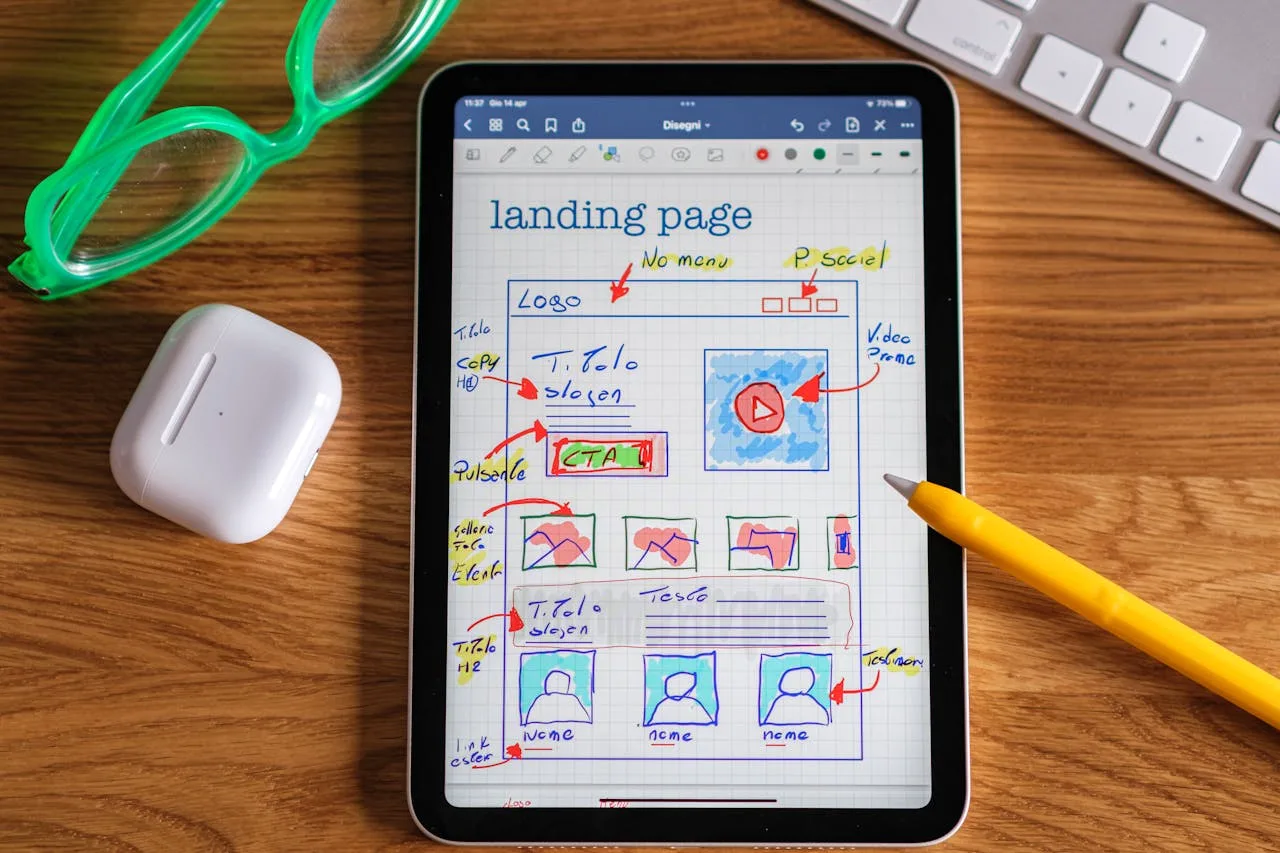
Landing page optimization raises conversions by matching one offer to one audience, loading fast, and using plain language. Unbounce's 2024 Conversion Benchmark Report, built on 41,000 landing pages and 57 million conversions, puts the median conversion rate at 6.6 percent. Pages written at a fifth-to-seventh grade reading level convert at 11.1 percent, against 5.3 percent for college-level copy.
What Is a Good Landing Page Conversion Rate?
A good landing page conversion rate is one that beats the median for your industry and traffic source, which Unbounce's 2024 Conversion Benchmark Report measures at 6.6 percent across all industries. SaaS landing pages sit lower at a 3.8 percent median, and pages fed by email convert at an average of 19.3 percent because the audience already knows the sender.
| Benchmark | Conversion rate | What it tells you |
|---|---|---|
| Median, all industries | 6.6% | The baseline to beat |
| Median, SaaS | 3.8% | Complex offers convert lower |
| Average, email traffic | 19.3% | Warm audiences convert highest |
| Median, fifth-to-seventh grade copy | 11.1% | Plain language wins |
| Median, college-level copy | 5.3% | Dense copy costs conversions |
Compare your page to the row that matches its offer and traffic source, not to a single industry-wide figure.
How Does Reading Level Change Conversion Rate?
Lower reading difficulty correlates with more conversions: Unbounce found fifth-to-seventh grade copy converts at 11.1 percent and college-level copy at 5.3 percent. Rewrite headlines and body copy in short sentences with everyday words before touching button color or layout.
Test the change on the page that already gets the most traffic, since a plain-language rewrite costs nothing and shows results fastest.
How Do You Write a Call to Action That Converts?
A call to action converts when it names one action, starts with a verb, and matches the offer the visitor clicked to get. "Get the pricing guide" works because the button repeats the promise on the ad or email that sent the visitor.
Keep one primary button per page and make every secondary link visually quieter. Use urgency only when it is real, such as a closing registration date, because invented scarcity damages trust.
How Fast Should a Landing Page Load?
A landing page should meet Google's "good" Core Web Vitals thresholds: Largest Contentful Paint at or under 2.5 seconds, Interaction to Next Paint at or under 200 milliseconds, and Cumulative Layout Shift at or under 0.1. Slow pages lose visitors before the headline renders, which means the offer never gets a chance.
Three fixes cover most pages: compress hero images and serve them in a modern format such as WebP, remove third-party scripts that do not support the conversion goal, and set image dimensions so the layout does not jump. Check results in Google's PageSpeed Insights.
How Should You Run A/B Tests on Landing Pages?
Run A/B tests by changing one element at a time and setting the sample size before the test starts, so a result reflects the change and not chance. Use a sample size calculator to find how many visitors each version needs.
| Phase | Action | Output |
|---|---|---|
| Hypothesis | Name one change and the reason it should lift conversions | A written prediction |
| Setup | Split traffic evenly and fix the required sample size | A test plan with an end date |
| Run | Leave the test untouched until it reaches that sample | A clean data set |
| Segment | Break results out by traffic source and device | Winners by audience |
| Decide | Ship the winner and log the result | A testing record for the next round |
Does Mobile or Desktop Convert Better?
Desktop converts slightly better, but mobile delivers most of the traffic. Unbounce found 82.9 percent of landing page visitors arrive on a mobile device, while desktop visitors convert at an average of 12.1 percent against 11.2 percent on mobile.
Design the mobile version first: put the headline, proof, and button above the fold, use full-width tap targets, and cut any paragraph that a phone screen turns into a wall of text.
Which Metrics Show Whether Optimization Is Working?
Three metrics show whether landing page optimization is working: conversion rate against the benchmark for your offer, cost per conversion, and conversion rate by traffic source. Bounce rate and time on page help diagnose problems but do not prove an improvement, because a visitor can convert quickly and leave.
Landing Page Optimization FAQ
What is the average landing page conversion rate?
The median landing page conversion rate is 6.6 percent across all industries, according to Unbounce's 2024 Conversion Benchmark Report of 41,000 pages.
Does simpler copy really convert better?
Yes. Unbounce found fifth-to-seventh grade copy converts at an 11.1 percent median, against 5.3 percent for college-level copy.
How many things should I test at once?
Test one element at a time so the result points to one cause, and fix the sample size before the test begins.
Start with the cheapest fix: rewrite the headline and first paragraph in plain language, then test the button copy, then speed. 5W's digital marketing team and marketing technology service build and test landing pages against these benchmarks.