
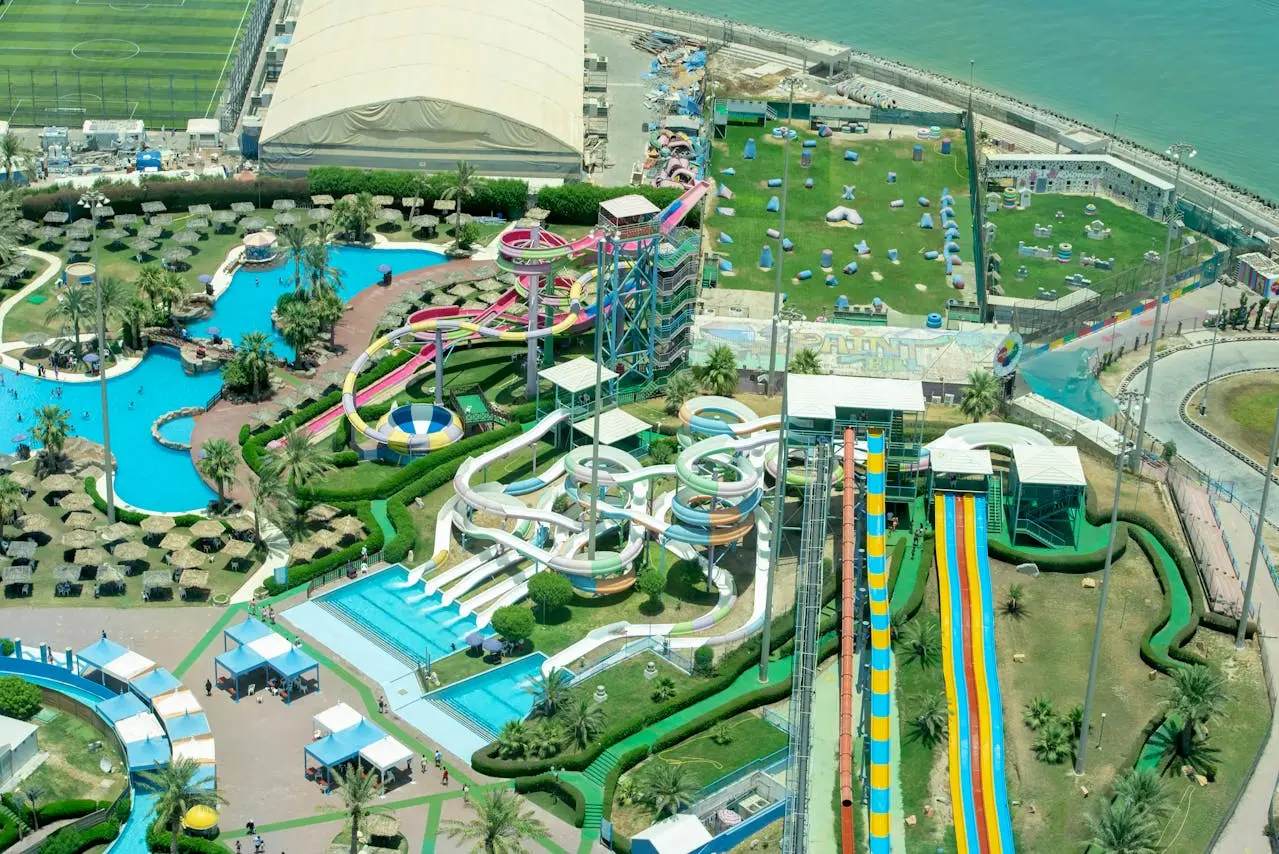
Water parks grow attendance by pairing two things: social content that actually gets shared, and family messaging that speaks to parents and kids at the same time. Families make up roughly 75% of water park visitors, according to the International Association of Amusement Parks and Attractions (IAAPA), so a social strategy built only around thrill-seekers misses most of the audience.
What social media content drives the most engagement for a water park?
Photos and video of real guests on real attractions outperform stock-style marketing images. Hootsuite's Digital Report found posts with images get 2.3x more engagement than text-only posts, and Sprout Social has found live video draws roughly 6x more interaction than standard video. Behind-the-scenes content — lifeguard training, morning opening routines, water-quality checks — builds trust because it shows the operation, not just the slide.
| Content type | Why it works | Best platform |
|---|---|---|
| Action photos/video | Visual, high engagement per Hootsuite data | Instagram, TikTok |
| Behind-the-scenes | Builds trust and transparency | Instagram Stories, Facebook |
| Live coverage | Creates urgency (FOMO) | Instagram Live, Facebook Live |
| User-generated content | 4x higher click-through per TINT research | All platforms, reposted |
How should a water park structure hashtags and photo contests?
A single branded hashtag, used consistently, works better than a rotating set — Track Social found posts with one or two hashtags earn 21% more engagement than posts with none. Photo contests (best action shot, funniest family moment, best sunset) generate user-generated content directly; Stackla research found 79% of people say user-generated content strongly influences their decisions. Keep contest rules simple, credit every entrant, and tier the prizes — season passes, multi-day tickets, merchandise — so more than one family walks away with something.
How can one campaign target both parents and kids?
Visual content should show every age band using the park at once: splash zones for toddlers, mid-intensity slides for school-age kids, thrill rides for teens, and shaded relaxation areas for parents. Media kits built this way give journalists and content partners the range of images they need without a second ask. Instagram carousels — showing multiple age groups in one post — outperform single images (1.92% vs. 1.74% engagement, per Instagram's own reporting).
What family package messaging actually converts?
Price is the deciding factor for most families choosing a vacation activity, according to Travel Industry Association research, so package messaging should lead with clear value: multi-day passes with escalating discounts, meal plans, fast-pass add-ons, and bundled parking or lockers. Real guest testimonials do more to sell a package than adjective-heavy copy — let a parent describe how the day actually went.
Do parenting blogs and influencers actually move attendance?
Influence Central has found 86% of parents look to social media for purchase recommendations, which makes parenting-blog and family-influencer partnerships a direct line to the buying decision-maker. Vet partners on audience fit and content quality, not just follower count — give them early access to new attractions, clear guidelines, and professional photo assets, and track results through referral traffic, promo-code redemptions, and survey feedback rather than vanity metrics alone.
Where does safety messaging fit into family marketing?
Safety is a parent's first filter before excitement is the second. Family content should show trained staff, certifications, and clear age/height guidelines without losing the fun — video tours of ride safety features and staff profiles work better than a wall of rules. The goal is reassurance embedded in the same content that sells the visit, not a separate compliance page nobody reads.
How do you measure whether the campaign is working?
Track engagement rate, follower growth, reach, click-through to the ticketing page, and — most importantly — ticket sales attributed to social channels through promo codes or UTM tracking. Social Media Today puts the average Instagram engagement rate for tourism and recreation businesses at 1.41%; use that as a starting benchmark rather than an industry-wide target, since a park's own history is the more reliable baseline.
CONCLUSION
Attendance-driving social media and family marketing are the same job seen from two angles: show real people of every age enjoying the park, back it with safety and value messaging parents trust, and let user-generated content and family influencers carry the story further than paid media alone can.