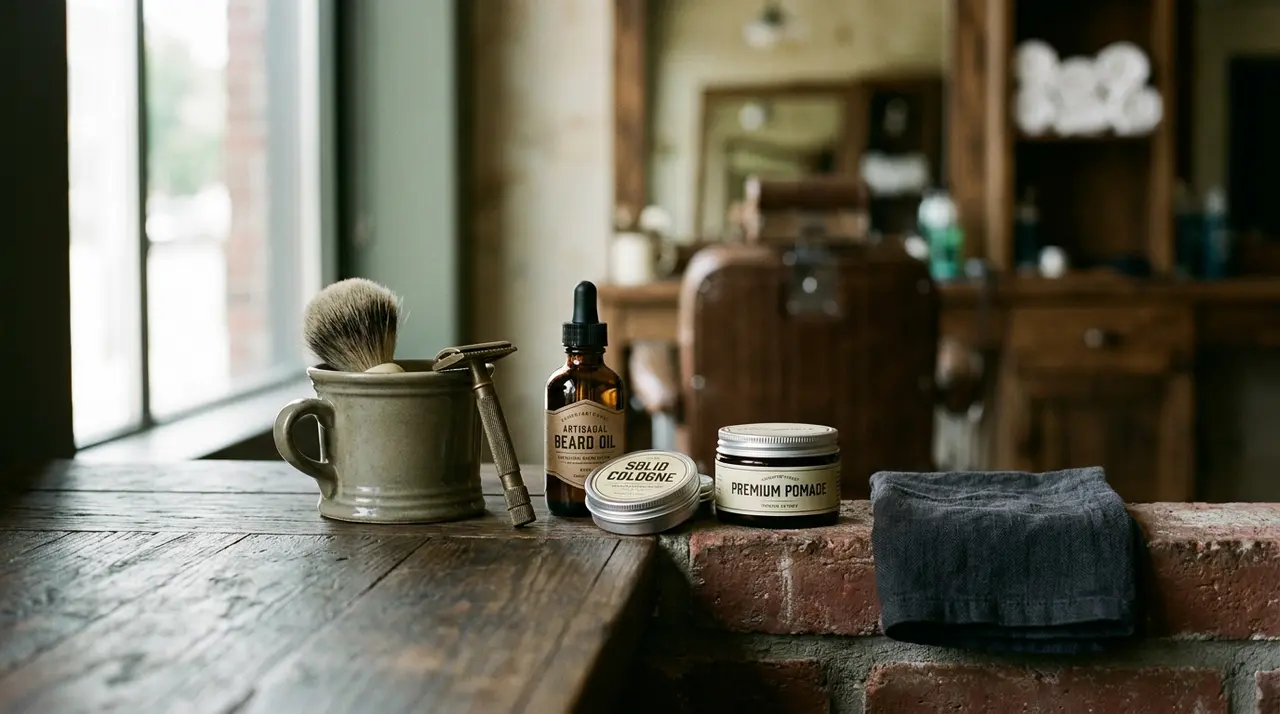
Men's grooming PR builds awareness and trust for hair, beard, skin, shaving and fragrance brands among male shoppers. The global men's grooming products market reached $62.5 billion in 2025 and is projected to reach $85.2 billion by 2030, according to Mordor Intelligence figures cited in 5W's Male Aesthetic Revolution report. This guide covers the shopper cohorts, the program elements and how to choose an agency.
How large is the men's grooming market?
The global men's grooming products market was worth $62.5 billion in 2025, and Mordor Intelligence projects $85.2 billion by 2030, a 6.39 percent compound annual growth rate. Global Market Insights projects $108 billion by 2035, according to the same 5W report.
Skincare is the largest growth segment. Global Market Insights puts skincare at 29 percent of the category, about $19.1 billion in 2025, and describes it as the fastest-growing product segment. The 5W report also notes that US male cosmetic procedures grew 4 percent to 1.6 million in 2024, according to the American Society of Plastic Surgeons, against 1 to 3 percent growth industry-wide.
What is driving male interest in grooming and aesthetics?
Four forces are driving male interest, according to the 5W report, and each one affects how a grooming brand should communicate. Social media removed the stigma, because male celebrities and athletes began discussing hair transplants, neuromodulators and skincare openly.
Remote work changed the feedback loop, because men now see themselves on video calls for hours each day. Professional return on appearance is now cited openly, and the report notes features on executive male routines in Robb Report, Bloomberg, the Wall Street Journal and Forbes between 2023 and 2026. The fourth force is male-specific technique, which the report ties to aesthetic surgery, where practitioners now design procedures to preserve masculine features.
Which male shopper cohorts should a grooming brand plan for?
A grooming brand should plan for five male cohorts, because each one discovers and buys differently. The 5W report built these cohorts for aesthetic practices, and they map onto grooming audiences as well.
| Cohort | Who they are, per the 5W report |
|---|---|
| Executive | C-suite, founder, finance, law and sales professionals who cite appearance as a professional advantage and prefer undetectable results and discretion |
| Dating and re-entry | Men in their 40s and 50s returning to the relationship market, often after a divorce |
| Longevity and optimization | Wellness, fitness and longevity-oriented men who treat appearance as part of a broader optimization routine |
| Public-facing professional | Media, sales leadership and broadcast professionals who are on camera constantly |
| Preventative younger | Men in their late 20s and early 30s who act early on hair and skin |
The younger cohort is growing. The report quotes Mordor Intelligence saying that social platforms have normalized cosmetic procedures, leading adults in their late 20s to see hair transplantation as preventive rather than corrective care. The International Society of Hair Restoration Surgery estimates that 35 million US men have hair loss, and the report cites Towards Healthcare and Fact.MR figures that 67 percent of men experience it in their lifetime and 85 percent by age 50.
What should a men's grooming PR program include?
A men's grooming PR program should combine earned media, expert voices, creators, launch support, AI search checks and measurement. The table lists what each element covers.
| Element | What it covers |
|---|---|
| Earned media | Coverage across hair and beard, skin, shaving and fragrance in lifestyle, grooming and business outlets |
| Expert voices | Dermatologists, barbers and hair restoration specialists who can explain how a product works |
| Creators | Male creators and professionals whose audiences match one of the five cohorts, with paid relationships disclosed |
| Launch support | Product seeding, retail announcements and events timed to a launch |
| Claims review | Substantiation for statements about hair growth, skin effects or hair-loss results before they appear in pitches and posts |
| AI search checks | Regular review of what ChatGPT, Claude, Perplexity and Gemini say when men ask category questions |
| Measurement | Coverage quality, search visibility and sales or signup lift tied to each launch |
Claims review matters most for hair and skin products. A statement that a product regrows hair or treats a skin condition can fall under FDA and FTC rules for health claims, and brands selling hair-focused supplements can use the supplement marketing claims guide as a starting checklist.
How does hair restoration connect to grooming PR?
Hair restoration connects to grooming because the 5W report treats it as the gateway category for male aesthetic care. The American Academy of Facial Plastic and Reconstructive Surgery 2025 survey, released in February 2026, found about twice as many hair restoration treatments in 2025 as in 2024. The global hair transplant market reached $6.42 billion in 2025 and is projected to reach $10.64 billion by 2031, with men driving 78.74 percent of revenue, according to Mordor Intelligence.
The report describes the $62.5 billion grooming market as the funnel that feeds later aesthetic consultations, because the same men buying skincare and grooming products enter practices within about two years. For a grooming brand, that means hair and skin products reach an audience that is already moving toward professional care, and credible expert partnerships help the brand stay part of that path. Brands serving that audience can see the related practice work in dermatology and aesthetics PR.
How should a grooming brand choose a PR agency?
A grooming brand should choose a PR agency by testing category coverage, expert access, claims discipline and AI search work. Five questions help separate agencies.
- Which hair, skin, shaving and fragrance media does the team already work with?
- Which dermatologists, barbers or hair specialists can the team put in front of reporters?
- Who reviews claims about hair growth or skin results before they go out?
- How does the agency check what AI engines say about your category's top shopper questions?
- Which metrics appear in the monthly report, and how do they tie to sales?
What should grooming brands do first?
The first step is to choose which of the five cohorts the brand serves best and write the product story for that cohort alone. A brand that speaks to the executive, the preventative younger man and the longevity seeker with one message reaches none of them well.
5W's beauty and grooming PR practice and beauty and grooming digital marketing cover this work, alongside the skincare, haircare and nail care practice. Related examples include the Fellow Barber case study, the Pacific Shaving case study and the earlier piece on why male beauty PR must change its message.