The SaaS Content Paradox 2026 | 5WPR Research Report

By Ronn Torossian, Founder and Chairman, 5WPR. April 2026.

The SaaS Content Paradox 2026 | 5WPR Research Report<

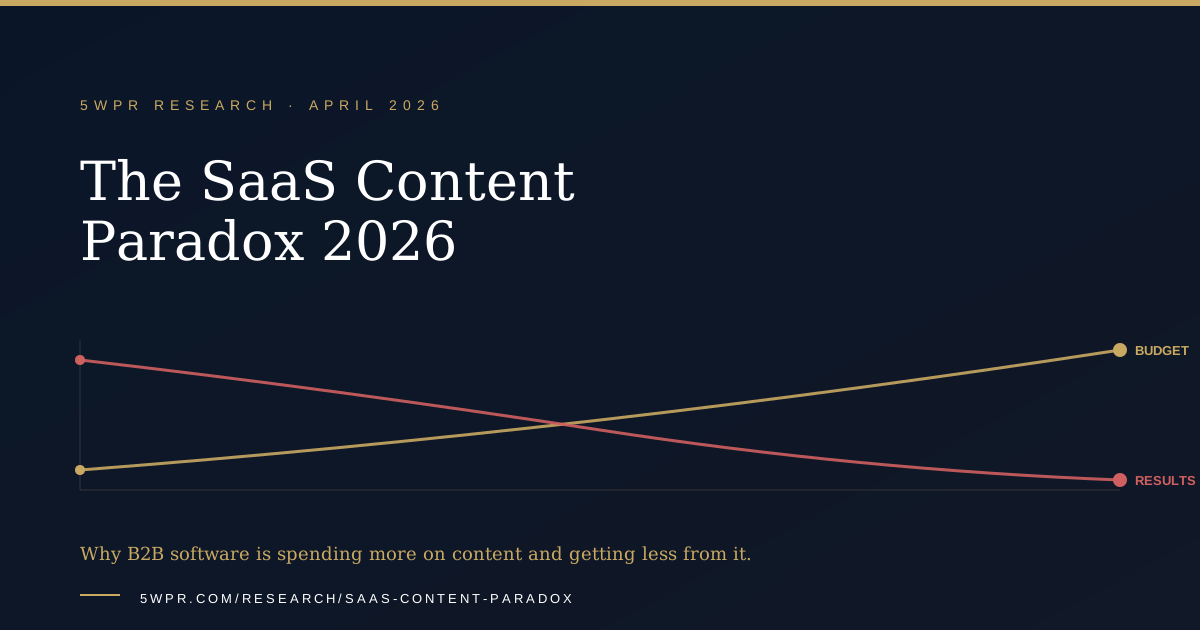
The SaaS Content Paradox 2026: Why B2B Software Companies Are Spending More on Content and Getting Less From It

SaaS companies invest between $342,000 and $1.09 million annually on content marketing. SEO delivers a documented 702% return over three years. Organic search generates 44.6% of all B2B SaaS revenue. The evidence that content marketing works - when executed correctly - is overwhelming. And yet only 29% of SaaS marketing teams rate their content strategy as highly effective. Forty-seven percent do not measure content ROI at all. HubSpot, which invented the modern SaaS content playbook, watched its blog traffic fall nearly 50% in a single month in late 2024. Salesforce spent $12.88 billion on sales and marketing last year. The budgets keep growing. The results, for most companies, do not. The SaaS Content Paradox 2026 is 5WPR's analysis of why. The report draws on case studies from HubSpot, Zapier, Ahrefs, Intercom, Salesforce, Slack, and Atlassian - alongside detailed budget benchmarks and research from more than a dozen industry sources - to identify the five structural failures that consistently prevent SaaS content investment from delivering the returns it demonstrably can. If your content program is not performing at the level the channel is capable of, this report explains specifically why - and what to do about it.

Frequently Asked Questions

What is the SaaS Content Paradox?

The SaaS Content Paradox refers to the growing gap between how effective content marketing can be for SaaS companies and the results most companies actually achieve. While content marketing delivers strong ROI when executed correctly, most SaaS teams invest heavily but fail to generate proportional business impact. :contentReference[oaicite:0]{index=0}

How effective is content marketing for SaaS companies?

Content marketing is one of the highest-performing channels in SaaS, delivering up to 702% ROI over three years and contributing approximately 44.6% of B2B SaaS revenue through organic channels when executed effectively. :contentReference[oaicite:1]{index=1}

Why are most SaaS content strategies underperforming?

Despite its potential, only about 29% of SaaS marketing teams consider their content strategy highly effective, and nearly half do not measure ROI at all. This disconnect is driven by structural execution issues rather than budget limitations. :contentReference[oaicite:2]{index=2}

What are the main causes of the SaaS Content Paradox?

The report identifies five core failures: creating content for algorithms instead of buyers, failing to measure meaningful ROI, focusing too heavily on acquisition over retention and expansion, relying on website-only distribution, and building strategies for a search environment that is rapidly changing. :contentReference[oaicite:3]{index=3}

How is AI changing SaaS content marketing?

AI-powered search is reducing click-through rates for traditional informational content. As of 2025, only about 40% of Google searches result in a click, meaning many users get answers directly from AI interfaces instead of visiting websites. :contentReference[oaicite:4]{index=4}

Why is traditional SEO-driven content becoming less effective?

Traditional SaaS content strategies rely on ranking for informational keywords and converting traffic. However, AI-generated answers are now absorbing that traffic before it reaches company websites, reducing the effectiveness of high-volume blog content. :contentReference[oaicite:5]{index=5}

Are SaaS companies spending too much on content marketing?

Many SaaS companies are spending heavily on content, with some investing up to $1 million annually, yet still failing to achieve strong results. The issue is not total spend, but how that budget is allocated across content types and distribution strategies. :contentReference[oaicite:6]{index=6}

What role does distribution play in SaaS content success?

Distribution is a major gap. Most SaaS companies rely on their own websites, but buyers often build vendor shortlists through peer communities, private networks, and AI-generated summaries before ever visiting a company's site. :contentReference[oaicite:7]{index=7}

What should SaaS companies do differently?

The report recommends shifting focus from high-volume informational content to original research, expert-driven insights, executive thought leadership, and stronger distribution strategies. The solution is compositional-changing how budgets are allocated-rather than simply increasing spend. :contentReference[oaicite:8]{index=8}

How can SaaS companies measure content ROI more effectively?

Companies should move beyond traffic and engagement metrics and focus on pipeline contribution, conversion rates, and revenue impact. For example, SEO-driven leads often convert at significantly higher rates than other channels, making measurement critical to optimization. :contentReference[oaicite:9]{index=9}

Contact Us with All of Your Communication and PR Needs

×

Thanks for reaching out

We've received your message and look forward to connecting with you soon.

-The 5W Team

April 2026 - 5W Public Relations 5wpr.com/saas-content-paradox

Published by 5WPR Research. 5wpr.com. Email us at [email protected]