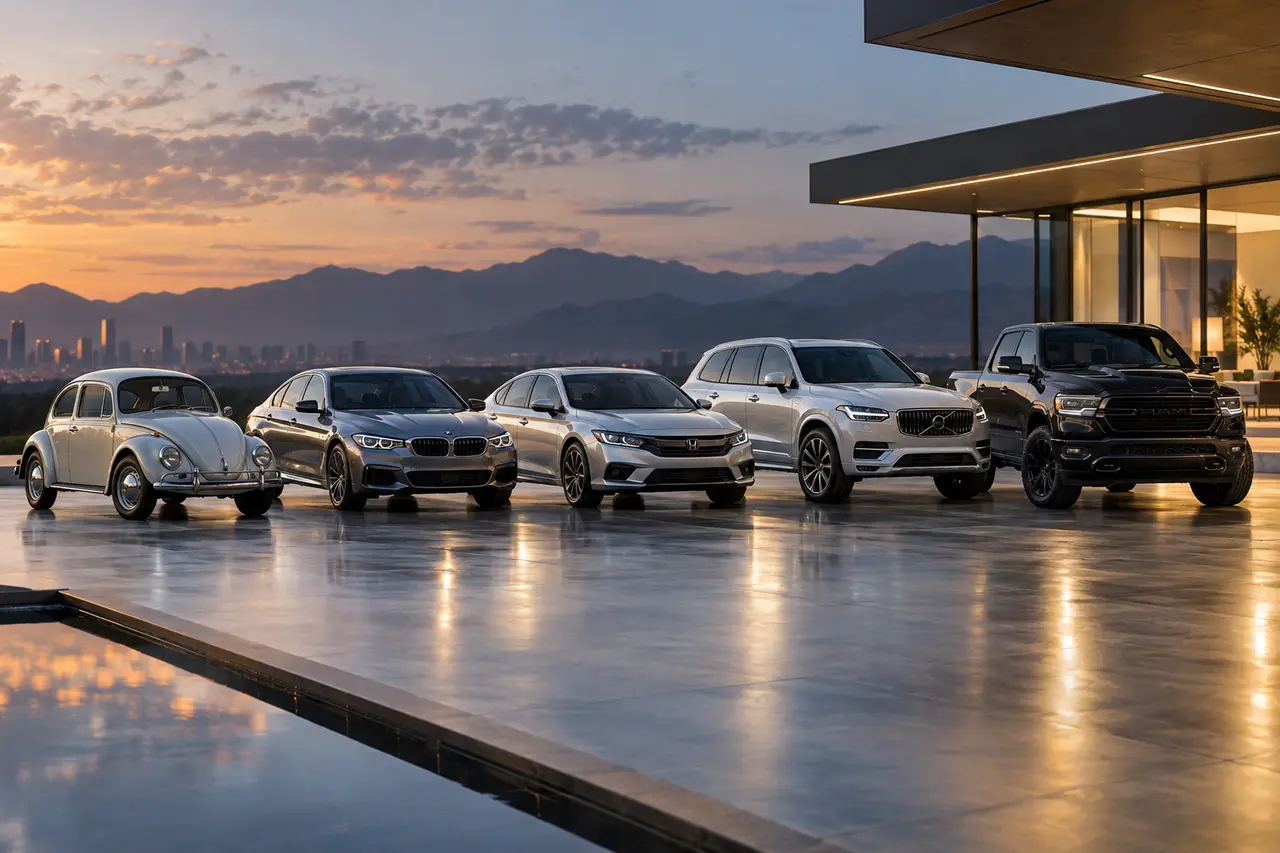
The five best automotive marketing campaigns are Volkswagen's Think Small (1959), BMW Films' The Hire (2001), Honda's Cog (2003), Volvo Trucks' Live Test series with The Epic Split (2013), and Ram's So God Made a Farmer (2013). Each won by doing what other car ads did not: admitting a flaw, making entertainment, proving craft, staging a stunt, or leaving the truck out.
Last updated November 7, 2026.
What Is in This Guide?
- 1. Volkswagen Think Small (1959)
- 2. BMW Films The Hire (2001)
- 3. Honda Cog (2003)
- 4. Volvo Trucks Live Test and The Epic Split (2013)
- 5. Ram So God Made a Farmer (2013)
- What do the five campaigns have in common?
- How can automotive brands apply these lessons today?
- Frequently asked questions
What Are the Key Takeaways?
- Volkswagen's 1959 campaign was named the best advertising campaign of the 20th century by Advertising Age in 1999.
- BMW's online film series reached 11 million views in four months, and BMW says the series passed 100 million views.
- Honda's Cog turned one two-minute ad into a global talking point on a UK television buy.
- Volvo's Live Test films drew 100 million YouTube views and nearly 8 million shares between June 2012 and May 2014.
- Ram's Super Bowl spot barely showed a truck and still became one of the most discussed ads of 2013.
How Do the Five Campaigns Compare?
| Campaign | Year | Agency | Reported result |
|---|---|---|---|
| Volkswagen Think Small | 1959 | Doyle Dane Bernbach | Named best campaign of the 20th century by Advertising Age; VW sales up 37% in 1960 |
| BMW Films The Hire | 2001 to 2002 | Fallon Minneapolis | 11 million views in four months; BMW sales up 12.5% in 2001 and 17.2% in 2002 |
| Honda Cog | 2003 | Wieden+Kennedy London | UK Honda car sales up 47% from 2002 to 2005 |
| Volvo Trucks Live Test | 2012 to 2014 | Forsman & Bodenfors | 100 million YouTube views, nearly 8 million shares |
| Ram So God Made a Farmer | 2013 | The Richards Group | 12 million views in 11 days; best February Ram sales in six years |
Results come from the sources named in each section. Several campaigns ran while other factors also moved sales, so treat the sales figures as signals, not proof of cause.
1. Why Is Volkswagen's Think Small Still the Standard?
Volkswagen's Think Small is still the standard because it sold a car by admitting what buyers already thought of it. Volkswagen moved its US advertising to Doyle Dane Bernbach in 1959, and the agency built a print campaign around the Beetle's small size at a time when American cars were large. Copywriter Julian Koenig and art director Helmut Krone worked under Bill Bernbach, and the follow-up ad used the single word "Lemon."
Advertising Age named the Volkswagen campaign the best advertising campaign of the 20th century in 1999. According to Andrea Hiott's book Thinking Small, Volkswagen's sales rose 37% in 1960 even though overall import sales fell 27% as Detroit launched its own compact cars.
Lesson: A candid flaw, stated plainly, builds more trust than a list of features.
2. How Did BMW Films Turn Advertising Into Entertainment?
BMW Films turned advertising into entertainment by commissioning short films that people sought out. The Hire was a series of eight short films released online in 2001 and 2002, created by Fallon Minneapolis, starring Clive Owen as a driver for hire, and directed by names including Ang Lee, John Woo, Guy Ritchie and John Frankenheimer. David Fincher executive produced.
The first film premiered on BMWFilms.com on April 26, 2001. The films recorded more than 11 million views in four months, according to Shoot, and BMW's own materials say the series passed 100 million views in total, years before YouTube existed. Jalopnik reported BMW sales rising 12.5% from 2000 to 2001 and 17.2% from 2001 to 2002.
The sales claim needs a caveat. Campaign noted that BMW sales were already climbing, and that the clearest effect was a rise in positive brand impressions, especially among younger drivers.
Lesson: Content worth watching earns attention that a spot cannot buy.
3. What Made Honda's Cog Ad So Effective?
Honda's Cog worked because it proved the car's engineering by building a machine from the car itself. Wieden+Kennedy London made a two-minute chain reaction from Accord parts, and it first aired on April 6, 2003, filling a commercial break in ITV's coverage of the Brazilian Grand Prix. The ad itself cost about £1 million to produce, inside a £6 million campaign that also included the pieces Sense and Everyday.
Viewers assumed the film was trick photography, and the buzz was large enough that CNN International showed the full two minutes in a news story. Wieden+Kennedy told Honda to stop advertising products for three years and advertise the company instead.
According to the Mail & Guardian, Honda's UK car sales rose 47%, from 66,981 units in 2002 to 98,500 in 2005. The often-repeated 606 takes figure has been disputed, so we do not rely on it.
Lesson: A demonstration that people cannot stop discussing outperforms a claim.
4. Why Did Volvo Trucks' Epic Split Go Global?
Volvo Trucks' The Epic Split went global because it turned a technical feature into a stunt anyone could understand. Volvo Trucks appointed Forsman & Bodenfors in 2010, ahead of its first major European truck launch in 20 years. The agency made six Live Test films, and the sixth, released in November 2013, showed Jean-Claude Van Damme doing a split between two reversing Volvo FM trucks to demonstrate dynamic steering.
According to Fast Company, the Live Test films generated more than 100 million YouTube views and were shared nearly 8 million times between June 2012 and May 2014. The Epic Split won Best of Show at The One Show in 2014.
Campaign reported a useful nuance: Volvo's own survey found the Van Damme spot was the least effective of the series at making transport companies want to buy, even though the series lifted Volvo's online popularity. Fame and purchase intent are not the same measure.
Lesson: Pick a stunt that demonstrates the real product benefit, then measure purchase intent separately from views.
5. How Did Ram Win the Super Bowl Without Showing Trucks?
Ram won by selling respect for its customers instead of the truck. The Richards Group built a two-minute Super Bowl XLVII spot from photographs by ten photographers, set to Paul Harvey's 1978 "So God Made a Farmer" speech. It ran in the fourth quarter of the game on February 3, 2013, and Ram pledged a donation to the National FFA Organization for every view, download or share, aiming for $1 million.
By February 14, the spot had more than 12 million views on Ram's own YouTube post, according to Farms.com. It ranked third on the USA Today Ad Meter. MediaPost reported Ram's best February sales in six years, up 3%, and Chrysler said Ram pickup sales were up 15% year over year in the first quarter of 2013, while noting other factors also affected sales.
Lesson: A brand that honors its buyers' identity can skip the product shot, but it should still tie the story to a measurable action.
What Do the Five Campaigns Have in Common?
The five campaigns share one move: each replaced a product claim with proof or meaning. They also gave audiences a reason to talk about the work, which is the same reason strong earned media works today.
Volkswagen relied on honesty by admitting the Beetle was small. BMW turned to entertainment by producing films people chose to watch. Honda and Volvo delivered proof by showing engineering instead of describing it. Ram focused on identity by speaking directly to who its buyers are.
How Can Automotive Brands Apply These Lessons Today?
Automotive brands can apply these lessons by pairing one bold idea with measurement across search, social and AI answers. Research on how automotive brands win AI search citations found that AI answers lean on sources such as KBB, Edmunds, NHTSA and IIHS data, not press coverage alone, so campaign facts should be published where those sources can retrieve them.
- Choose the single claim the product can prove.
- Build a demonstration or story around it that is worth sharing.
- Publish the facts in a form journalists and AI engines can cite.
- Measure reach, intent and sales separately.
For crisis-side lessons from the same industry, read the Toyota recall crisis case study. For how AI engines describe car brands, review the EV AI Visibility Index, how AI describes Tesla, and the Tesla Roadster flight claims study.
For an auto parts retail example, see the executive visibility case study. Full service details appear on the automotive PR and marketing agency page. For launch planning, see launch PR.
Frequently Asked Questions
What is the best automotive marketing campaign ever?
Volkswagen's Think Small is the most frequently cited automotive campaign. Advertising Age ranked the Volkswagen campaign the best advertising campaign of the 20th century in 1999.
Which car ad is the most awarded?
Honda's Cog is widely described as one of the most awarded commercials in history, with a Cannes Gold Lion among its honors. Volvo's Epic Split won Best of Show at The One Show in 2014.
Do automotive ad campaigns increase sales?
Automotive ad campaigns can increase sales, but direct cause remains difficult to prove. BMW, Honda and Ram all reported sales gains after their campaigns, and each ran while other factors, such as new models and market conditions, also affected sales.
How much did Honda's Cog cost?
Honda's Cog cost about £1 million to produce, inside a £6 million campaign that also included Sense and Everyday.
How many campaigns are in this list?
This list covers five campaigns: Volkswagen Think Small, BMW Films The Hire, Honda Cog, Volvo Trucks Live Test and The Epic Split, and Ram So God Made a Farmer.