
Corporate Communications

How AI Is Transforming Corporate Communications
Corporate communications teams face mounting pressure to produce more content, respond faster to crises, and deliver personalized messages across an expanding array of channels—all while managing tighter budgets and smaller staffs. Artificial intelligence has emerged not as a futuristic promise but as a practical solution already reshaping how communication professionals work. From automating routine tasks to predicting stakeholder sentiment before issues escalate, AI tools are fundamentally changing the operational DNA of corporate communications departments. The question is no longer whether to adopt these technologies, but how to implement them strategically while maintaining the human judgment and ethical standards that define effective communication.
The most immediate impact of AI on corporate communications comes through workflow automation—eliminating the administrative tasks that consume hours but generate little strategic value. Meeting notetakers powered by AI now transcribe discussions in real-time, identify action items, and assign tasks without human intervention. This technology has matured rapidly; what once required dedicated staff or expensive transcription services now happens automatically during video calls.
Corporate communications teams face mounting pressure to produce more content,...


Data-Driven Corporate Communications: Measure What Matters
The boardroom conversation has shifted. When you present your quarterly communications update, executives no longer nod politely at reach and impressions—they want to know how your work moved the needle on business outcomes. This isn’t a future scenario; it’s happening right now in mid-to-large enterprises where communications leaders face mounting pressure to justify budgets with hard data. The good news? Analytics and AI have matured to the point where proving communications ROI is no longer theoretical. The challenge lies in knowing which metrics actually matter and how to implement the right tools without overwhelming your team.
Traditional PR metrics are dead weight in strategic business discussions. When 65% of corporate communications teams now prioritize stakeholder engagement measurement and 63% focus on understanding stakeholder behavior over website traffic, the industry has spoken: we’re done with vanity metrics. The shift reflects a fundamental truth—communications exists to build relationships that drive business value, not to rack up impressions that mean nothing to the CFO.
The boardroom conversation has shifted. When you present your quarterly...

Marketing Layer-1 vs Layer-2 Chains: How to Stand Out in 2026
The blockchain space has become a battlefield of competing narratives, where every new chain claims to be faster, cheaper, and more scalable than the last. For marketing leaders at Layer-1 and Layer-2 projects, the challenge isn’t just building superior technology—it’s cutting through the noise to communicate what makes your solution genuinely different. After watching dozens of promising projects fail to gain traction despite solid tech, we’ve learned that success hinges on three critical capabilities: articulating scalability claims with precision, translating technical complexity into business value, and telling stories that make developers want to build on your platform. The chains that master these skills don’t just survive—they define categories and capture market share.
Most blockchain projects sabotage themselves with vague scalability claims. Statements like “highly scalable” or “enterprise-grade performance” mean nothing when every competitor uses identical language. The market has grown sophisticated enough to demand specifics, and your messaging must reflect that maturity.
The blockchain space has become a battlefield of competing narratives, where...

Ethical AI in PR: New Standards for Transparency and Compliance
Public relations professionals face a reckoning. As artificial intelligence tools become standard equipment in our industry—from content generation to media monitoring—the question is no longer whether to use AI, but how to use it responsibly. The stakes are high: client trust, professional credibility, and legal compliance all hang in the balance. Recent updates to professional codes of ethics from PRSA, IPRA, and the Global Alliance signal that the industry has moved past experimentation into a phase demanding rigorous standards, transparent practices, and accountable governance.
Transparency starts with disclosure, but knowing when and how to disclose AI involvement requires judgment and clear protocols. PRSA’s 2025 AI Ethics Guidelines establish that disclosure is required when AI significantly influences outcomes, particularly in client deliverables. This means if an AI tool drafts a press release, generates social media content, creates visual assets, or assists in hiring decisions, stakeholders deserve to know.
Public relations professionals face a reckoning. As artificial intelligence...
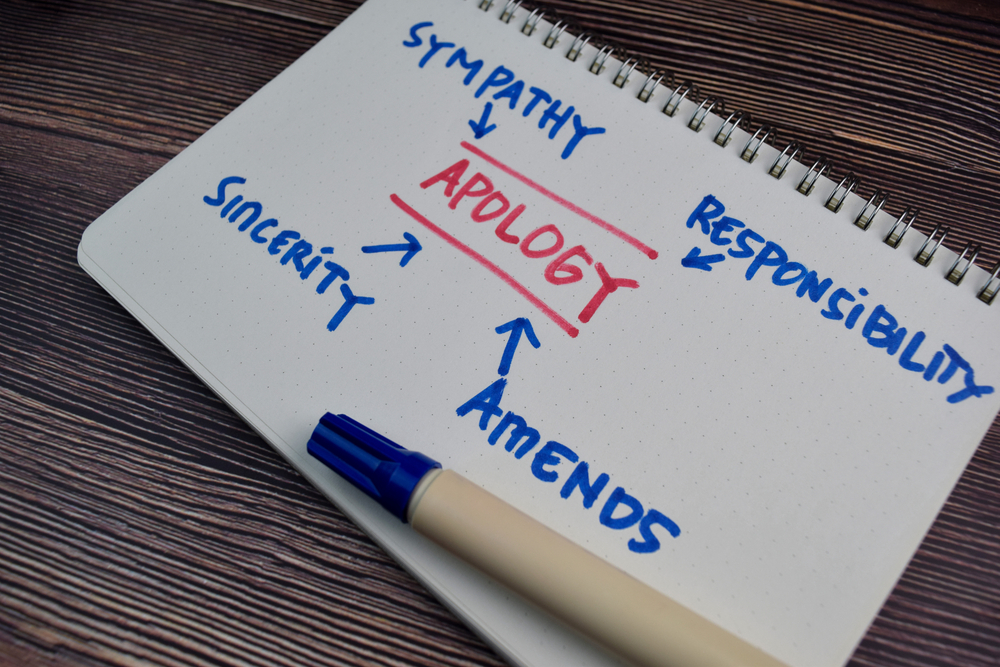
How to Apologize Publicly with Effective Apology Strategies
Public apologies have become a defining feature of modern reputation management. When public figures, corporate leaders, or celebrities face controversy, the way they respond can either restore trust or deepen the crisis. A well-crafted public apology requires more than just saying “I’m sorry”—it demands careful consideration of timing, language, and follow-through. The difference between an apology that repairs relationships and one that generates further backlash often comes down to authenticity, accountability, and a genuine commitment to change. This guide provides practical strategies for structuring, delivering, and following up on public apologies that rebuild credibility and demonstrate real accountability.
A successful public apology requires specific elements that work together to demonstrate sincerity and accountability. The foundation starts with taking full responsibility without equivocation or blame-shifting. When crafting your apology, you must say “I’m sorry” directly rather than using passive constructions like “mistakes were made” or “if anyone was offended.” This direct acknowledgment shows you understand the impact of your actions.
Public apologies have become a defining feature of modern reputation...

Employee Advocacy for Health Tech Companies That Drives Results
Your employees already talk about their work. The question is whether they’re amplifying your brand message or simply sharing their lunch breaks. In health tech, where trust and credibility determine whether patients, providers, and partners engage with your solutions, employee voices carry weight that no marketing campaign can match. When your data scientists, clinical specialists, and product teams share authentic stories about solving real healthcare challenges, they create connections that paid advertising never will. The companies winning in this space have figured out how to systematically turn their workforce into a distributed marketing engine—one that runs on authenticity rather than budget.
Healthcare professionals and decision-makers trust people over brands. Research shows employees are seen as the most credible sources of information about a company, far outpacing official corporate channels. For health tech firms navigating complex sales cycles and regulatory scrutiny, this credibility gap represents both a challenge and an opportunity.
Your employees already talk about their work. The question is whether they're...

Why Your Fintech Brand Can’t Afford to Get Culture Wrong
Financial services have always been about trust, but the rules of earning it have changed. When your fintech platform serves customers across continents, cultures, and communities, a single tone-deaf campaign can cost you more than marketing dollars—it can permanently damage your reputation in markets you’ve spent years trying to penetrate. I’ve watched promising fintech brands stumble into cultural minefields with messaging that worked perfectly in their home market but fell flat or, worse, offended audiences elsewhere. The companies that win in this space understand that cultural sensitivity isn’t a checkbox exercise or a diversity statement buried on page seven of your brand guidelines. It’s the foundation of how you communicate value, build trust, and differentiate yourself in an increasingly crowded market.
Before you write a single line of copy or commission a campaign visual, you need to understand the cultural frameworks that shape how different audiences perceive financial services. Hofstede’s cultural dimensions provide a practical starting point: power distance, individualism versus collectivism, uncertainty avoidance, and long-term orientation all influence how people relate to money, authority, and financial institutions.
Financial services have always been about trust, but the rules of earning it...

Building A Powerful Employee Advocacy Program for Event Organizations
Event organizations hold a unique advantage in the social media landscape – their staff experience the excitement and energy of live events firsthand. When employees share authentic stories and behind-the-scenes moments, they create genuine connections that resonate far more than traditional marketing. Research shows employee-shared content receives 8 times more engagement than content shared through brand channels. By developing a strategic employee advocacy program, event organizations can multiply their reach while building stronger internal culture.
The most effective employee advocacy programs begin with clear goals and measurable outcomes. Before launching social media initiatives or creating content guidelines, define what success looks like for your organization. Common objectives include increasing event registrations, building brand awareness, or strengthening recruitment efforts.
Event organizations hold a unique advantage in the social media landscape -...