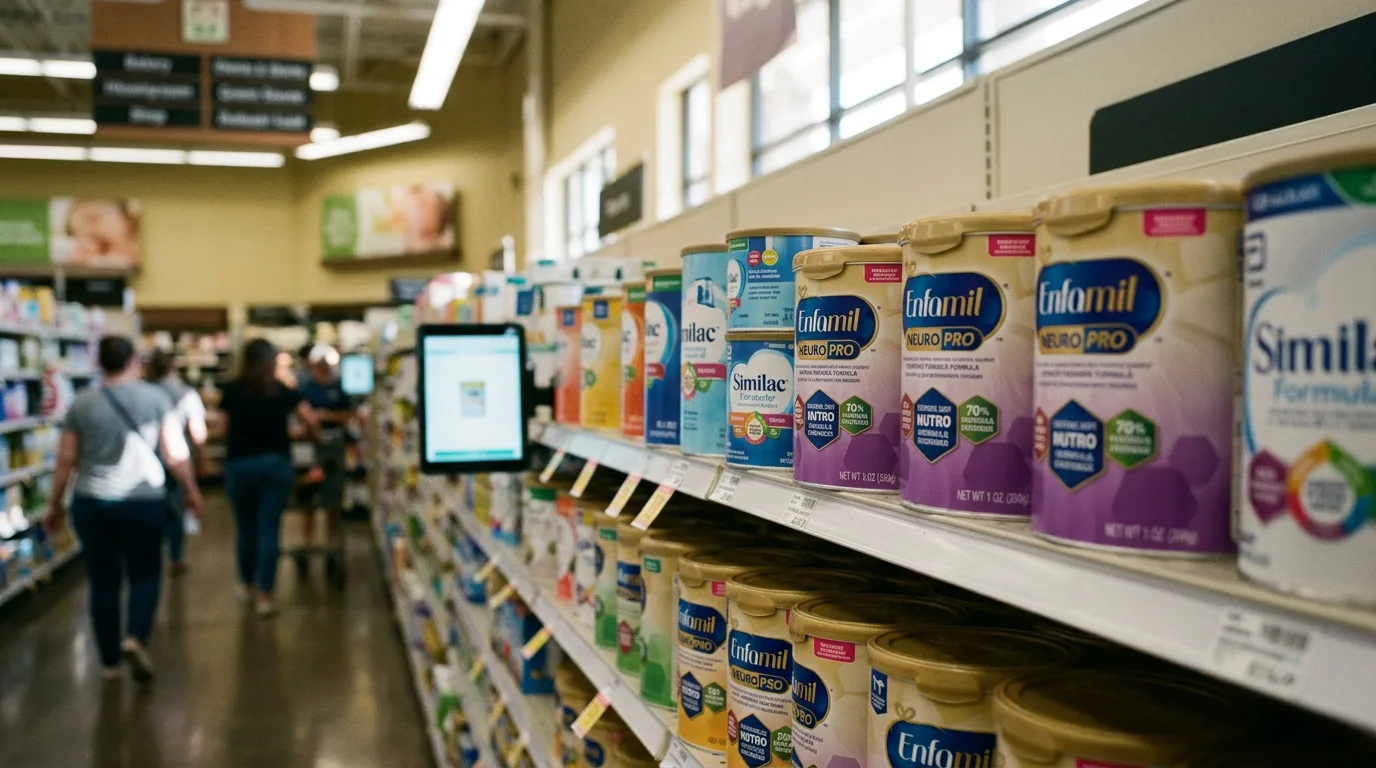

When your retail partners demand proof of consumer pull and your DTC conversion rates flatline despite steady traffic, the problem isn't your product—it's the disconnect between your digital presence and actual purchase behavior. A 2025 FMI–NielsenIQ report found that 81% of U.S. grocery shoppers now research food products online before buying them in store. Food and beverage brands face a unique challenge: shoppers discover products through earned media, validate choices through search, and convert across fragmented channels that traditional marketing struggles to connect. Digital PR solves this by building the authoritative third-party signals that influence both algorithms and buyers, creating a compounding effect where media coverage earns backlinks that lift rankings, which drives discovery that converts to sales both online and in-store.
How Does Digital PR Build Backlinks That Lift Food Brand Rankings?
Search engines treat backlinks as votes of confidence, but not all votes carry equal weight. A link from a domain authority 70+ food publication signals far more trust than a hundred directory listings. The challenge for food brands is earning those high-value placements systematically rather than hoping for viral luck.
Start by mapping your backlink acquisition targets to publication types that reach both consumers and trade buyers. Food blogs with DA 40-60 offer accessible entry points—sites like Serious Eats or The Kitchn regularly feature emerging brands in roundups and trend pieces. Trade publications such as Food Dive or Beverage Industry (DA 65-75) carry weight with retail buyers and search engines alike. National lifestyle media like Real Simple or Well+Good (DA 80+) deliver the triple benefit of consumer awareness, retailer validation, and powerful SEO lift.
The content that earns these links rarely focuses on your product directly. Instead, create data-driven assets that serve journalist needs: original consumer research on beverage consumption patterns, infographics mapping regional flavor preferences, or trend reports analyzing social media conversation volume around functional ingredients. When a food editor writes about the rise of adaptogenic drinks, they need supporting data and expert quotes—your PR-created research becomes the citable source that earns the backlink.
Google Search Console reveals which queries already drive impressions but underperform on clicks, exposing ranking gaps where earned backlinks could push you from position 8 to position 3. Track not just link volume but the specific pages earning links and their corresponding keyword movement. A single placement in a Bon Appétit gift guide might earn one backlink but trigger ranking improvements across dozens of related product queries as Google recognizes your growing topical authority.
The measurement framework matters as much as the outreach. Connect Ahrefs or SEMrush to Google Analytics to attribute traffic and conversion lifts to specific PR-earned backlinks. Calculate the value of each placement by multiplying the traffic increase by your average order value and customer lifetime value—this transforms PR from a "brand awareness" line item into a revenue driver with clear ROI that justifies budget expansion.
How Does PR-Driven Discovery Bridge the Gap Between Awareness and Purchase?
Consumers research food purchases differently than other categories. They discover new brands through social feeds and editorial features, validate choices through search and reviews, then convert in whichever channel offers convenience—your DTC site, Amazon, or a physical shelf. PR creates the initial spark and the validation signals that move shoppers through this journey.
Search intent analysis reveals the content types that dominate each stage. Early awareness queries like "best healthy snacks" return listicles and trend pieces—exactly where food blogger coverage and lifestyle media placements drive discovery. Mid-funnel consideration searches such as "kombucha brands comparison" surface detailed reviews and buying guides where your PR-earned mentions influence choice. Bottom-funnel queries including your brand name plus "where to buy" or "coupon" indicate purchase intent that PR-built brand recognition makes possible.
Map your PR strategy to these intent stages with specific tactics. For awareness, pitch seasonal trend stories to food editors—"5 Fermented Drinks to Try This Spring" placements introduce your brand to readers actively exploring the category. For consideration, provide product samples and detailed information to reviewers and comparison sites; a thorough review on a site like Healthline carries authority that influences both search rankings and purchase decisions. For conversion, work with local food bloggers and regional publications to drive "near me" searches and foot traffic to retail partners carrying your products.
The omnichannel impact compounds over time. A TikTok creator's viral video about your product drives brand searches. Those searchers find your website, retail listings, and third-party reviews—all strengthened by your PR-earned backlinks and media mentions. Some convert immediately on your DTC site; others add you to their mental shopping list and purchase in-store. AI-powered search experiences now trigger on 48% of queries and select sources based on intent satisfaction, meaning your PR-earned content increasingly appears in AI-generated answers that shape purchase decisions.
Track discovery metrics beyond vanity impressions. Monitor branded search volume growth month-over-month as a leading indicator of awareness. Measure the percentage of site traffic arriving from PR-earned placements versus paid channels. Survey new customers about how they discovered your brand—the answers reveal which PR tactics drive actual discovery versus just generating coverage.
Converting PR Momentum Into Measurable Sales Requires Attribution Rigor
The skeptical executive question—"Did that media placement actually drive sales?"—demands better answers than "it's hard to measure." Modern attribution tools and testing frameworks make PR-to-sales tracking not just possible but essential for budget justification and optimization.
Start with the baseline metrics that prove PR impact. Track direct traffic spikes following major media placements; while not all visitors convert immediately, the traffic surge indicates genuine interest. Monitor branded search volume increases in the days and weeks after coverage; sustained lifts signal lasting awareness that feeds ongoing conversions. Use UTM parameters on any links you can control (social posts, email signatures, owned content) to track referral traffic from PR-related sources.
More sophisticated attribution connects PR activities to revenue through multi-touch modeling. Google Analytics 4 allows you to map customer journeys and assign conversion credit across touchpoints—a customer might discover you through a food blog mention, return via branded search, and convert after seeing a retargeting ad. The PR placement deserves partial credit for that sale, and proper attribution quantifies its contribution.
For retail sales, the measurement gets trickier but remains achievable. Work with retail partners to access point-of-sale data broken down by location and time period. Compare sales velocity in markets where you've secured local media coverage versus control markets without PR activity. A regional TV segment or newspaper feature should produce measurable sales lifts in that geographic area within days. One beverage brand tracked a 34% sales increase in stores within the broadcast area of a morning show feature, with the lift persisting for three weeks.
DTC attribution offers more precision. Set up conversion funnels that track the path from PR-driven traffic to purchase: media hit → site visit → product page view → cart add → checkout completion. Identify where PR-sourced traffic drops off compared to other channels. If PR traffic converts at lower rates, the issue might be audience mismatch (the publication reaches browsers, not buyers) or messaging disconnect (the coverage emphasizes attributes that don't align with your site's value proposition).
A/B testing reveals which PR tactics drive the highest-quality traffic. When pitching similar stories to different publications, compare the conversion rates and average order values of traffic from each source. A placement in a niche food enthusiast site might drive less volume than a mass lifestyle publication but convert at three times the rate because the audience matches your target customer more precisely.
Post-purchase surveys close the attribution loop. Ask new customers, "How did you first hear about us?" and "What convinced you to make your first purchase?" The qualitative responses reveal which PR placements create awareness and which provide the social proof that drives conversion. One snack brand discovered that while social media drove discovery, third-party reviews and comparison articles provided the validation that converted browsers to buyers—a finding that shifted their PR focus toward securing placements in authoritative review content.
Calculate the full value of PR-driven conversions by including customer lifetime value, not just initial order value. If PR placements attract customers with 20% higher retention rates than paid channel customers (because they discovered you through trusted editorial sources rather than interruptive ads), each PR-sourced conversion carries significantly more long-term value. This math transforms PR from a cost center into a customer acquisition channel that outperforms paid media on a lifetime value basis.
Journalist Outreach That Earns Coverage Requires Intent-Aligned Pitching
Food journalists receive hundreds of pitches weekly. The ones that break through align with the specific intent their audience expresses and the editorial needs their publication serves. Generic product announcements get deleted; data-backed trend stories with clear reader value get coverage.
Research each journalist's beat and recent coverage before pitching. A health reporter covers different intent signals than a retail industry analyst or a recipe developer. Publication analysis reveals the search intent each outlet serves—lifestyle magazines target awareness-stage discovery, trade publications serve industry professionals researching trends, and review sites satisfy high-intent comparison shoppers. Your pitch angle should match the intent that publication's audience expresses.
Build a journalist pitching playbook organized by intent stage and publication type. For awareness-stage pitches to lifestyle editors, lead with consumer trend data and cultural relevance: "Our survey of 2,000 consumers found 67% now prioritize gut health in beverage choices, up from 34% two years ago." For consideration-stage pitches to food bloggers and reviewers, offer exclusive product access and detailed information that helps them create comprehensive content. For conversion-stage pitches to local media, emphasize community connections and retail availability that drives immediate action.
The assets that win pickups solve specific journalist problems. Recipe developers need unique applications for your product—provide tested recipes with professional photography. Trend reporters need data to support their thesis—commission original research or analyze social listening data to identify emerging patterns. Gift guide editors need compelling product descriptions and high-resolution images—create a media kit that makes their job effortless.
Follow-up sequences matter more than most brands realize. A well-timed second email can boost response rates by 40%, but the timing and approach require finesse. Wait 3-5 business days after your initial pitch, then follow up with additional value rather than just "checking in"—share a new data point, offer a different angle, or mention a related story that just published. Persistence pays off, but only when each touchpoint provides genuine value rather than just repeating your ask.
Track your pitching metrics to identify what works. Monitor response rates by publication type, pitch angle, and journalist beat. Measure the time from pitch to response and from response to publication. Calculate the backlink and traffic value of each placement to determine which outlets deliver the highest ROI. This data transforms journalist outreach from an art into a science, allowing you to optimize your approach and scale what works.
The relationship-building component compounds over time. Journalists who've covered you once are significantly more likely to include you in future stories, especially if you've made their job easy by providing solid information, meeting deadlines, and delivering on promises. Nurture these relationships by staying in touch with relevant story ideas, congratulating them on strong pieces, and being responsive when they need sources or information on deadline.
The food and beverage brands winning market share today don't treat digital PR as a nice-to-have awareness play—they've built it into their growth engine as the channel that earns the backlinks that lift rankings, creates the discovery moments that fill the funnel, and provides the third-party validation that converts browsers to buyers. Your next step is choosing one intent stage to dominate: awareness, consideration, or conversion. Build a 90-day PR campaign focused exclusively on that stage, track the metrics that matter (backlinks and rankings for awareness, traffic quality for consideration, conversion rates for bottom-funnel), and use the results to justify expanding your approach across the full customer journey. The retail buyers demanding proof of consumer pull and the executives questioning your marketing ROI both respond to the same thing—measurable sales impact that digital PR, done right, consistently delivers.