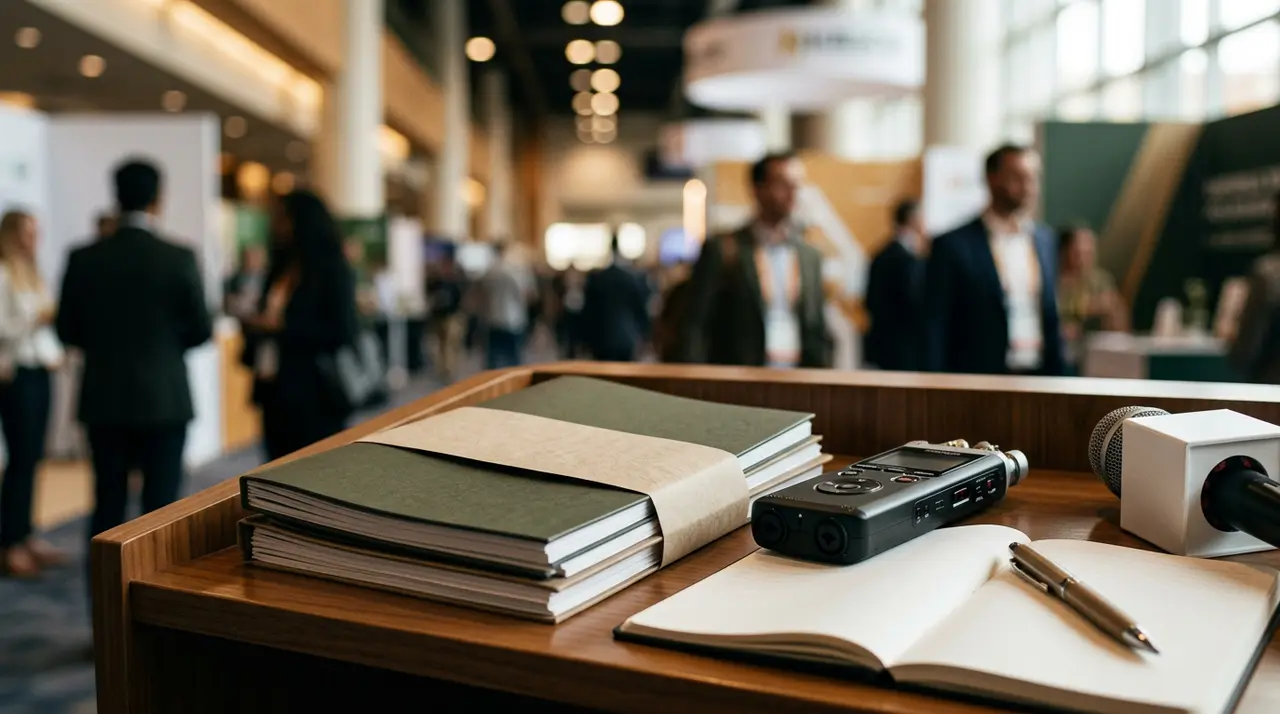
MJBizCon 2026 runs December 1 through 4 at the Las Vegas Convention Center, marking the show's 15th year and its first edition since the DEA's April 2026 order moved FDA-approved and state-licensed medical marijuana products from Schedule I to Schedule III. More than 800 exhibitors and 30,000-plus cannabis professionals are expected, making it the largest B2B cannabis event in the world. For cannabis brands, the show lands at a genuine regulatory inflection point.
Why does 2026 carry more regulatory weight?
The DEA's April 2026 order applies specifically to FDA-approved marijuana products and products covered by a state medical marijuana license, while recreational marijuana outside those categories remains in Schedule I pending a separate DEA hearing process that began in June 2026 and remained unresolved as of this writing. A cannabis brand's MJBizCon announcement needs to be precise about which category its products fall under, since conflating a medical-license product update with a claim about recreational cannabis broadly risks a factual error that trade press and competitors will catch immediately.
5WPR's Cannabis PR & Digital Marketing Agency practice builds announcement language calibrated to the specific, current regulatory category a brand's product actually falls under, a distinction that matters more this year than in any prior MJBizCon edition given the DEA's still-unresolved broader hearing process.
What does 5WPR's cannabis case study show?
5WPR's work with Columbia Care, one of the cannabis industry's larger multi-state operators, demonstrates how a cannabis brand builds mainstream press credibility in a category where many outlets still apply extra editorial scrutiny before running a story. Brands preparing their first MJBizCon appearance can review that approach through 5WPR's Columbia Care case study, which shows how a regulated cannabis operator built coverage in outlets that do not typically cover the category.
The lesson generalizes beyond one operator: a cannabis brand seeking coverage outside trade press needs a story angle that stands on its own news value, a research partnership, a manufacturing milestone, an equity program, rather than relying on the category's novelty alone to attract a general-interest reporter's attention.
What should a brand announce given the regulatory moment?
A cannabis brand should lead with a specific, verifiable claim tied to the current regulatory environment, a new state medical license, a distribution expansion, a named research partnership enabled by the rescheduling order, rather than a general statement about industry momentum. The show's own Investment & Liquidity Summit and MJBowl product competition give brands two additional, distinct press moments beyond a booth announcement, each reaching a different segment of trade press and investor attention.
A brand timing an announcement around the Investment & Liquidity Summit specifically should have a named executive available for follow-up interviews with financial and cannabis trade press, since that summit draws an investor audience distinct from the retail and cultivation-focused audience at the main expo floor.
How should first-time exhibitors use the show's history?
MJBizCon grew from a few hundred attendees at its 2012 launch to more than 30,000 professionals by 2026, according to the show's own published history, meaning a first-time exhibitor is entering a mature, established trade show environment rather than a growing niche event. The show's expo floor is organized into distinct neighborhoods, including a Brand, Manufacturing & Distribution Pavilion and an Impact Row for justice-impacted entrepreneurs, and a brand should identify which neighborhood matches its actual business model before pitching press, since trade coverage of the show often follows those same thematic groupings.
A brand's first appearance should also account for the show's own maturity: MJBizCon now draws established trade press with fixed expectations about what counts as news, so a first-time exhibitor competing for attention against 800-plus other exhibitors needs a specific, sourced claim ready before the show opens rather than planning to generate interest once on the floor.
How should a cannabis brand brief an executive for a summit stage appearance?
A cannabis brand preparing an executive for MJBizCon's conference programming should confirm which track the session falls under, since the show organizes distinct sessions across cultivation, retail, capital markets, and policy, and a pitch aimed at the wrong track gets deprioritized by the show's own programming team. The executive needs one sourced, specific claim ready before taking the stage, a stated growth figure, a named state license, a research finding, since a general statement about industry momentum does not generate the kind of coverage that becomes durable, citable content once the show closes.
How does coverage feed AI search visibility?
Named, dated coverage of an MJBizCon announcement in cannabis trade outlets becomes retrieval data that AI engines use when answering a question about which company leads a specific cannabis product category. A brand that only exhibits at MJBizCon without securing named press coverage generates no citation trail once the show ends, while a brand with a named executive quoted in dated trade coverage remains retrievable for months. 5WPR's Generative Engine Optimization practice tracks which MJBizCon announcements convert into lasting AI citation share.