
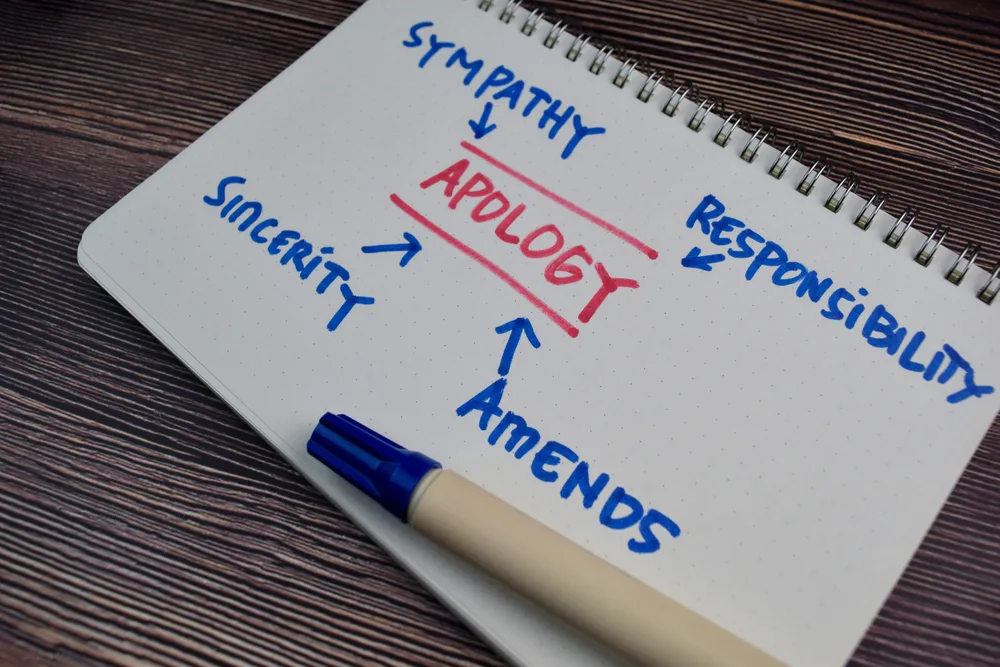
How do you apologize publicly? Say "I'm sorry" in the first sentence, name the harm, accept responsibility without excuses, state what will change, and then do it. Speed matters: 5W's Crisis Tax study names the first 48 hours of a crisis as the most critical window for long-term financial outcomes, so confirm the facts fast and apologize once you have them.
Need help drafting one? 5W's crisis PR team writes and tests public apologies, and our PR case studies show how we handle high-stakes moments.
Last updated October 9, 2026.
What Are the Five Parts of an Effective Apology?
An effective public apology has five parts: a clear apology, accepted responsibility, steps to prevent a repeat, visible change, and no excuses. Each part answers a question the audience is asking.
| Part | What to do | What to avoid |
|---|---|---|
| Apologize clearly | Say "I'm sorry" directly, to everyone affected, including people hurt indirectly | Passive phrasing such as "mistakes were made" or "if anyone was offended" |
| Accept responsibility | Name your own role in the harm | Blaming circumstances, other people, or misunderstandings |
| Act to prevent a repeat | State the specific systems and processes that will change | Vague promises to "do better" |
| Change behavior visibly | Show the change over time through public actions | Reverting to the behavior that caused the harm |
| Avoid excuses | Give context only to clarify what happened, never to minimize the harm | Centering your own pain or casting yourself as the victim |
Taking responsibility is the most important single part, and pairing it with context and empathy makes the apology stronger. Context explains what happened. An excuse tries to reduce the blame. Keep the first and cut the second.
Should You Apologize at All?
A public apology is the right move only when you have mapped how each stakeholder group will receive it. Sincerity can be read a dozen ways, and a poorly judged apology can make a bad situation worse. Sometimes the better first step is a set of difficult, direct meetings with the people affected.
If an apology is warranted, deliver it without hedging. Put it at the very start of the statement, because an apology placed after the explanation sounds like an afterthought. Check the wording with legal counsel, and get a second or third reader to test whether it sounds sincere before it goes live. Do not couch it so it reads like a verbal chore, because audiences hear a phony sentiment quickly.
When Should You Apologize Publicly?
Apologize as soon as you have confirmed the facts and understand who was affected. Acting before you know the situation risks an incomplete or inaccurate apology that needs correcting later. Waiting too long signals concern for consequences over harm, and it lets a negative narrative harden on social media, where a situation can turn in an instant.
Watch public reaction and media coverage so you can pick the moment the apology will land, but do not wait for a perfect moment. Keep the apology consistent with earlier statements, or say plainly where your understanding has changed. An apology that contradicts earlier positions without explanation fuels skepticism.
What Language and Tone Sound Sincere?
Direct, plain language sounds sincere, and hedged or elaborate language does not. "I'm sorry" takes ownership. "I apologize if anyone felt hurt" creates distance. Use comfortable, human wording and avoid business talk.
Keep the tone steady. An apology that swings between emotional registers or reads as scripted loses credibility. Express regret for the specific impact on others, not general disappointment about the situation. Avoid condescension and defensiveness, and keep the focus on the people affected. Lines such as "This has been so hard for me" move the attention back to you.
How Do You Follow Up With Action?
Follow up with specific, visible actions tied directly to the harm, because words alone do not rebuild trust. Public service announcements, visits to affected organizations, donations to relevant causes, financial compensation, and policy changes all serve as evidence. Make the action proportionate to the harm and, where possible, make it benefit the people affected.
Then report on it. Explain what has changed, which systems or processes are now in place, and how you are holding yourself accountable. Public commitments give people a way to check whether you kept your word. Inconsistent follow-up, such as deleting an apology video or abandoning promised changes, undermines the apology itself.
How Do You Handle Ongoing Backlash?
Expect criticism to continue after a good apology, and prepare evidence of change instead of more words. People who were harmed have legitimate reasons to question whether the apology reflects real change. Answer skepticism with concrete proof of behavior change or policy implementation, and keep a clear plan for how you will respond to continued criticism.
Do not re-apologize endlessly and do not turn combative. Defensive responses, appearing unprepared, or fighting critics signal that the apology was not genuine. For a full response plan, see the guide to crisis PR, or work with a crisis communications team before the statement goes out.
What Do Real Apologies Teach?
Three public apologies show how delivery and follow-up shape the outcome.
| Example | What happened | Lesson |
|---|---|---|
| Tracy Morgan (2011) | After anti-gay remarks in a June 3, 2011 Nashville stand-up set, Morgan issued a statement saying he "went too far," then met with advocates and audience members and agreed to take part in a GLAAD anti-bullying campaign, according to CBS News and the Associated Press | Follow a written apology with direct meetings and a concrete commitment, and do not rely on the statement alone |
| Drew Barrymore (2023) | She posted a tearful Instagram apology on September 15, 2023 for resuming her talk show during the writers' strike, then deleted it within hours and later paused the show's return, according to The Independent | Prepare the delivery, and do not remove an apology after posting it, because the deletion becomes the next story |
| Rick Snyder (2016) | In his January 19, 2016 State of the State address, the Michigan governor told Flint residents "I'm sorry, and I will fix it," according to the WDET report on the speech and the New York Times. A year later, Metro Times reported that his 2017 address gave Flint about two minutes and called the crisis a "sad chapter" | A strong apology sets a promise the audience will measure later, so keep reporting on the fix |
What Happens After the Apology?
The apology is the start of rebuilding trust, not the end. The real work is consistent behavior over months that shows your words reflected real understanding. Communicate progress regularly, stay open to feedback, and adjust your approach based on what you learn, so accountability becomes a continuous process instead of a single event.
The most successful apologies combine immediate acknowledgment of harm with a long-term commitment to different behavior. See 5W's five reputation recovery turnarounds for what sustained effort looks like at major brands, and the online reputation management practice for ongoing monitoring.
What Are Common Questions About Public Apologies?
What should a public apology include?
A clear "I'm sorry," accepted responsibility, specific steps to prevent a repeat, visible change, and no excuses.
How fast should you apologize?
As soon as the facts are confirmed. 5W's Crisis Tax study names the first 48 hours as the most critical window.
Should the apology go first in the statement?
Yes. Put it at the very beginning, or it reads as an afterthought.
Is an apology enough on its own?
No. Concrete action and sustained communication must follow, or audiences stop believing it.
Conclusion: What Should You Do Before You Apologize?
Confirm the facts, map how each stakeholder group will react, write the apology so it starts with "I'm sorry," and line up the follow-up action before you publish.
5W's crisis communications practice and reputation management team draft, test, and carry out public apologies and the recovery work that follows.