
Advertising Week New York's key takeaways are that purpose-driven storytelling, retail media and AI-fueled creativity are changing how advertising works, not only what it costs. U.S. retail media ad spending will reach $69.33 billion in 2026, up 17.9% from 2025, according to eMarketer. Brands that plan around reach alone are optimizing for a metric the market is moving past.
Last updated November 5, 2026. The 5WPR team attended the 2025 edition, and the session details below come from that attendance. The spending figure is eMarketer's forecast.
What are the key takeaways from Advertising Week New York?
The three takeaways are that purpose claims now get checked against a brand's record, that retail media is moving budget toward measurable purchases, and that AI shortens ad production time. Each one changes what a campaign needs before it launches.
- Purpose claims survive wider distribution only when a verifiable record backs them.
- Retail media ties ad spend to first-party purchase data instead of estimated impressions.
- Automated creative saves production time but needs shared measurement across retail networks.
Quick definition: what is retail media?
Retail media is advertising sold on a retailer's own properties and data, such as Amazon, Kroger or TikTok Shop, where a brand can target and measure against actual transactions.
What is Advertising Week New York?
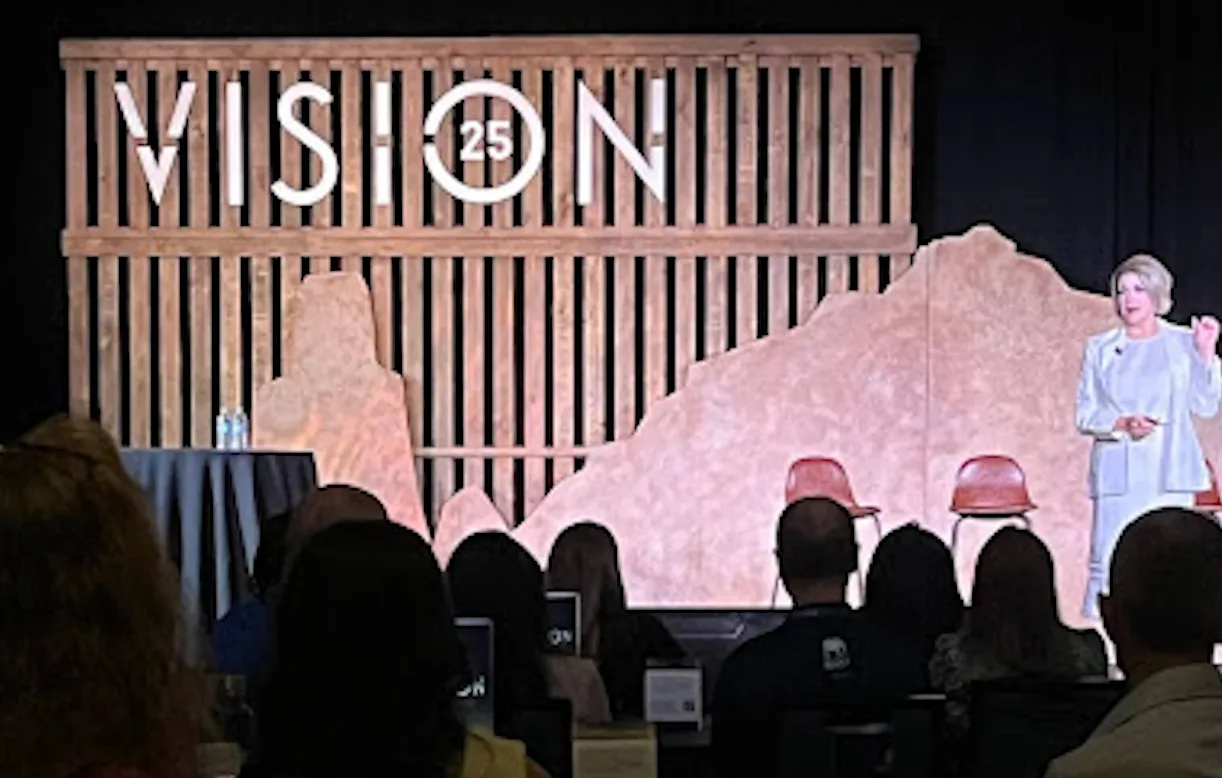
Advertising Week New York is an annual marketing and media conference held in Manhattan that brings together brand leaders, agencies, media companies and technology platforms for a week of panels, keynotes and networking. The 5WPR team attended the 2025 edition, where sessions centered on purpose, retail media and artificial intelligence as the three forces reshaping advertising strategy.
Why does purpose-driven advertising still convert?
Purpose-driven advertising still converts because audiences treat ad spend as a proxy for what a brand actually values. At Advertising Week New York 2025, the session "The Power of Purpose," moderated by Ross Martin of Known and Rita Ferro of Disney Global Advertising, marked the approaching 75th anniversary of the American Advertising Federation's Advertising Hall of Fame.
Marlo Thomas, actress and National Outreach Director for St. Jude Children's Research Hospital, told attendees that advertising dollars function as donor dollars: every media decision carries the weight of public trust. Her examples ranged from the "Follow Us to the Mall" retail campaign to Take Your Daughters to Work Day, both built on aligning commerce with a stated social commitment rather than adding one on afterward.
Why it works: when a brand's purpose claim matches a verifiable track record, it survives the scrutiny that comes with wider distribution. When it does not, the same distribution amplifies the gap between what a brand says and what it does.
How is retail media changing where ad budgets go?
Retail media is pulling ad budgets away from channels bought purely for reach and toward channels tied directly to a purchase. The panel "The Retail Media Revolution: Driving Outcomes Beyond the Cart" pointed to first-party data from retailers like Amazon, Kroger and TikTok Shop as the reason: brands can now target and measure against an actual transaction instead of an estimated impression.
One case referenced at the session showed 600 hours saved through automated, AI-driven ad trafficking on Criteo's Commerce Max platform, evidence that dynamic creative optimization can cut production time without cutting creative quality. Panelists were direct that the category remains fragmented: interoperability between retail media networks is still a real operational cost, not a solved problem.
| Force | What changed | What it means for marketers |
|---|---|---|
| Purpose | Purpose is now audited against actual brand behavior, not just messaging | Back every claim with a verifiable record before running it |
| Retail media | $69.33B in 2026 U.S. spend, up 17.9% (eMarketer) | Design campaigns around first-party purchase data, not impressions alone |
| AI creative | Automation cut 600 hours of ad trafficking in one Criteo case | Use AI to compress production time, not to replace strategy |
Teams building a retail media plan can pair this with the media planning and buying practice, and the best adtech marketing campaigns roundup shows how three adtech brands reported results.
How is AI changing ad creative production?
AI is changing ad creative production by letting campaigns adjust format, message and sequencing in real time instead of shipping one fixed version. Tools like Criteo's Commerce Max fall into a category marketers at Advertising Week New York called dynamic creative optimization, where the system swaps creative variants based on live signals such as inventory, price or audience segment.
The tradeoff panelists named directly: speed without integration creates its own mess. Retail media remains fragmented across networks, and a brand running automated creative across five retailers without a shared measurement standard ends up with five disconnected reports instead of one clear read on performance.
How can a team audit a purpose claim before running it?
A team audits a purpose claim by matching each statement in a campaign to a dated, public record of what the brand has done. A claim without a matching record is reworded or cut before any media is bought.
- List every purpose or values claim the campaign makes, including claims in captions and landing pages.
- Match each claim to a dated record, such as a published policy, a donation, a product change or a program report.
- Reword or remove any claim that has no record behind it.
- Have the communications lead and legal reviewer approve the final list.
- Repeat the check before each new flight, because amplification through paid or earned media widens the audience that can test the claim.
What does a retail-ready campaign need before launch?
A retail-ready campaign has its narrative, visuals and digital touchpoints built before a retailer or retail media network asks for them. That lets the brand respond to targeting options in real time instead of losing the purchase-intent window the data was meant to capture.
- An approved brand narrative that fits retailer formats and placements.
- A library of pre-built creative variants for dynamic creative optimization.
- Product imagery and digital touchpoints cleared for each retail partner.
- One measurement standard agreed across networks, so five retailers produce one report.
The AdTech and digital media PR practice and the consumer PR and CPG practice cover this work for brands selling through retailers.
What should PR and marketing teams do with these takeaways?
PR and marketing teams should treat purpose as a standing compass rather than a campaign line item. That means auditing existing claims against the brand's actual record before amplifying them further through paid or earned media.
Teams should also build retail-ready content and creative in advance of a campaign, not in response to a retailer's request. Being retail ready means the brand narrative, visuals and digital touchpoints can move as fast as a retail media network's targeting does, which is where media planning and buying and digital PR intersect directly.
Why it works: a brand with pre-built creative variants can respond to a retail media network's real-time targeting options immediately, while a brand starting from scratch loses the purchase-intent window the data was meant to capture.
The next step for most teams is a one-page claims audit before the next campaign brief is approved. The AI PR strategy guide and 5W's research hub show how to measure the results afterward.
Frequently asked questions
What is Advertising Week New York?
Advertising Week New York is an annual marketing and media conference in Manhattan with panels, keynotes and networking for brands, agencies, media companies and technology platforms.
How much will U.S. retail media ad spending reach in 2026?
According to eMarketer, U.S. retail media ad spending will reach $69.33 billion in 2026, up 17.9% from 2025.
What did the Criteo Commerce Max case show?
One case referenced at the session showed 600 hours saved through automated, AI-driven ad trafficking on Criteo's Commerce Max platform.
What is dynamic creative optimization?
Dynamic creative optimization is a system that swaps creative variants based on live signals such as inventory, price or audience segment.
What should a brand do first after these takeaways?
A brand should audit its purpose claims against its actual record before amplifying them through paid or earned media.