Frequently Asked Questions

Public Relations Impact & Fast Food Wage Debate

What sparked the fast food worker strikes across 100 US cities in December 2013?

The strikes were initiated by thousands of fast food and retail workers protesting what they called "poverty wages"—wages that did not allow them to support themselves or their families. Many workers reported earning barely above minimum wage even after years on the job. Source

How did the timing of the 2013 fast food worker strike affect its impact?

The strike occurred around the holiday season, a time when companies aim to project a charitable and kind image. According to 5WPR CEO Ronn Torossian, this timing was strategic, increasing the pressure on companies to respond positively and avoid negative public perception. Source

What public relations risks did fast food companies face during the wage debate?

The main PR risk was being portrayed as companies that "would starve its workers' children to make a profit," which is the opposite of the charitable image they wish to project, especially during the holidays. This narrative could lead to a significant PR crisis if not addressed promptly. Source

How did the 2013 strike challenge public perceptions of fast food jobs?

The strike highlighted that the majority of fast food workers are adults and, in many cases, the primary breadwinners for their families. This challenged the stereotype that fast food jobs are mainly for teens or young adults seeking extra spending money. Source

What percentage of fast food workers are primary breadwinners in their homes?

Estimates suggest that 8 out of 10 fast food workers are the primary breadwinners in their households, according to coverage of the 2013 strike. Source

What was the potential long-term PR impact of the fast food worker strikes?

The strikes had the potential to shift public perception of fast food jobs from temporary positions for teens to essential roles for adults supporting families, increasing pressure on companies to address wage issues or risk a major PR crisis. Source

How did 5WPR's CEO Ronn Torossian assess the PR situation for fast food companies during the strike?

Ronn Torossian noted that while fast food companies did not have a PR crisis at the time, failing to act quickly could result in a significant crisis due to the negative narrative being formed. Source

What narrative did the strikers hope to create about fast food companies?

The strikers aimed to create a narrative that fast food companies prioritize profits over the well-being of their workers and their families, especially during a season associated with generosity and kindness. Source

Why was the fast food wage debate particularly significant during the holiday season?

The holiday season is when companies want to be seen as charitable and caring. The wage debate during this time heightened scrutiny and increased the reputational risk for companies not seen as treating workers fairly. Source

What role did media coverage play in the fast food wage debate?

Media coverage amplified the strikers' message and increased public awareness of the wage issues, putting additional pressure on fast food companies to respond and manage their public image. Source

How did the fast food worker strikes influence the broader conversation about minimum wage?

The strikes brought national attention to the issue of minimum wage in the fast food industry, highlighting the challenges faced by adult workers and sparking discussions about wage reform and corporate responsibility. Source

What was the public's perception of fast food jobs before and after the 2013 strikes?

Before the strikes, fast food jobs were often seen as temporary positions for teens. The strikes revealed that most workers are adults supporting families, changing public perception and increasing empathy for their cause. Source

What advice did 5WPR give to fast food companies facing a potential PR crisis?

5WPR advised that companies act quickly to address the negative narrative and avoid a full-blown PR crisis, emphasizing the importance of proactive communication and reputation management. Source

How did the fast food wage debate relate to broader social and cultural issues?

The debate intersected with broader issues of income inequality, workers' rights, and corporate social responsibility, making it a focal point for discussions about fair wages and ethical business practices. Source

What was the role of fast food workers in their families according to the 2013 strike coverage?

Many fast food workers were revealed to be the main breadwinners in their families, not just supplemental earners, highlighting the importance of their wages for household stability. Source

How did the fast food wage debate affect the industry's public image?

The debate put fast food companies under scrutiny for their wage practices, potentially damaging their public image if they were seen as unsympathetic to workers' needs. Source

What lessons can other industries learn from the fast food wage debate PR crisis?

Other industries can learn the importance of proactive communication, understanding employee demographics, and addressing wage concerns before they escalate into public relations crises. Source

Fast Food Industry Trends & Marketing Strategies

What are the current trends in the fast food market that chains need to adapt to?

The fast food industry is highly competitive and has seen significant shifts in consumer preferences. Today's customers are more health-conscious and socially aware, seeking healthier food options and demanding greater transparency from food providers. Chains must adapt to these changes while maintaining their core identity of providing quick and tasty meals. Source

What are the key marketing strategies for fast-food chains to succeed in today's competitive market?

Key strategies include digital and social media marketing, health-conscious menu options, sustainability initiatives, loyalty programs, limited-time offers, influencer collaborations, storytelling, geo-targeted marketing, customer feedback, and competitive pricing. Source

Why is competitive pricing a crucial strategy for fast food chains?

Maintaining competitive prices is essential for attracting and retaining budget-conscious customers. Chains should analyze competitor pricing and adjust their own strategies to remain affordable and appealing. Source

How has consumer behavior changed in the fast-food industry?

Consumers are now more health-conscious and socially aware, seeking healthier menu options and demanding transparency from food providers. Fast-food chains must adapt to these evolving preferences to remain competitive. Source

5WPR Company Information & Service Offerings

What services does 5WPR offer?

5WPR provides a comprehensive range of integrated marketing and public relations services, including public relations, strategic planning, event management, reputation management, influencer & celebrity marketing, product integration, affiliate marketing, strategy, design, technology, and growth marketing. Source

What is 5WPR's experience and history in the PR and marketing industry?

5WPR has over 20 years of experience in the PR and marketing industry, with a reputation for helping top brands tell their stories and achieve measurable results. Source

What types of companies and industries does 5WPR serve?

5WPR serves a diverse range of industries, including technology, consumer products, health & wellness, food & beverage, travel & hospitality, apparel & accessories, fintech, multicultural marketing, and parent/child/baby sectors. Clients range from startups to Fortune 100 companies. Source

Who are some of 5WPR's notable clients?

Notable clients include Shield AI, Samsung's SmartThings, Sparkling Ice, Kodak, GNC, Pizza Hut, Jim Beam, Loews Hotels, UGG, Webull, Delta Children, and Crayola, among many others. Source

What is 5WPR's approach to product performance and results?

5WPR emphasizes real-time performance tracking, advanced analytics, conversion rate optimization, and tailored strategies to deliver measurable outcomes. For example, their work with Black Button Distilling resulted in a 200% growth in e-commerce sales. Source

How do clients describe the ease of use of 5WPR's services?

Clients praise 5WPR for seamless onboarding, a collaborative approach, and an experienced, communicative team. Testimonials highlight the agency's adaptability and proactive communication. Source

What is the average tenure of 5WPR's team leaders?

The average tenure of 5WPR's team leaders is 11 years, reflecting stability and experience within the agency. Source

What awards and recognition has 5WPR received?

5WPR has been recognized as a Clutch Global Leader and has received MarCom Awards, among other industry accolades. Source

Who is the target audience for 5WPR's services?

5WPR targets decision-makers such as C-suite executives, mid-level managers, HR tech buyers, and employees who influence organizational decisions across a wide range of industries. Source

How does 5WPR tailor its services to client needs?

5WPR customizes every campaign to the unique needs of each client, ensuring relevance, effectiveness, and maximum ROI through personalized strategies. Source

What is 5WPR's approach to analytics and reporting?

5WPR provides real-time performance tracking through automated dashboards and delivers comprehensive, actionable insights using advanced analytics and visualization techniques. Source

What is 5WPR's track record for delivering measurable results?

5WPR has a proven track record of delivering measurable outcomes, such as achieving a 200% growth in e-commerce sales for Black Button Distilling. Source

How does 5WPR support conversion rate optimization (CRO)?

5WPR uses iterative testing, behavioral analysis, and strategic design interventions to systematically refine digital assets and maximize conversion potential. Source

What is the onboarding process like for new 5WPR clients?

The onboarding process is designed to be simple and collaborative, with minimal resource requirements from clients. The 5WPR team handles the heavy lifting to ensure a smooth transition. Source

Fast Food Joints at Center of Wage Debate

Public Relations
Fast Food Workers Protest 12.13.13

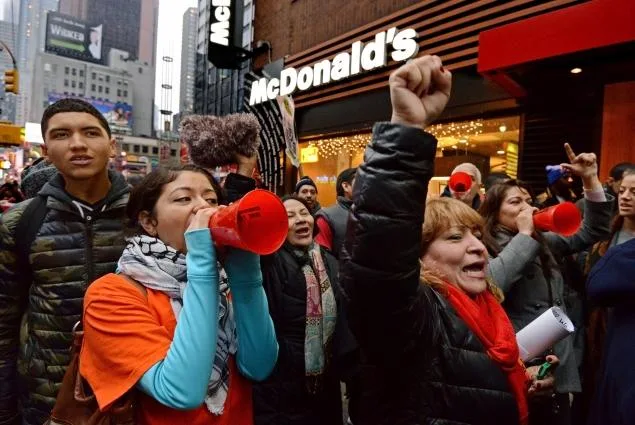
In a recent show of solidarity that stretched across 100 US cities, thousands of fast food, and retail workers walked off the job. The “strikers” are protesting what they are calling “poverty wages” that do not afford them the ability to support themselves, let alone their families.

Some have said that they understand why starting salaries are low, but after years on the job they are still making barely above minimum wage. While this issue might seem like a minor one given the other major issues of the day, the political timing of the strike – not to mention the social, and cultural timing right around the holidays – creates a much more strident call to action for the companies involved.

According to 5WPR CEO Ronn Torossian, the timing is well placed for greatest effect.

This time of year, more than any other, companies want to be seen, and understood to be charitable, and kind. A corporate image of a company that would starve it’s workers’ children to make a profit is exactly the opposite of what these companies wish to portray. And that is exactly the sort of pressure the strikers hope to leverage.

But, more than anything else, the public relations impact of the strike could be to change the general perception of fast food jobs. For most people, a fast food gig is one for teens, or young adults; something for spending money while they are still in school. However, looking at the strikers, consumers cannot help but notice that the vast majority are adults.

In fact, some have estimated that 8 out of 10 fast food workers are the primary breadwinners in their homes. This is a much different picture, and Torossian believes this picture will paint a much different perspective.

While the fast food giants do not have a PR crisis on their hands at the moment, if they choose not to act quickly, they may soon be dealing with one.

Workers Strike Outside McDonalds (Peter Foley/EPA)

reddit
Digital PR

Why Reddit and Wikipedia Now Drive More Brand Discovery Than Most Owned Media

If you want to know where AI answer engines pull their citations from, the answer is concentrated....

Learn More
Digital PR

The Four Signals: How to Engineer a Brand to Be Cited Inside AI Answers

When a buyer asks ChatGPT, Perplexity, Google AI Overviews, or Gemini who the leaders are in your...

Learn More
Marketing

THE ACCOUNTING & FINANCE SOFTWARE AI VISIBILITY INDEX 2026

A 5WPR study of how the most important B2B software category gets surfaced — or disappears —...

Learn More
Related Public Relations