
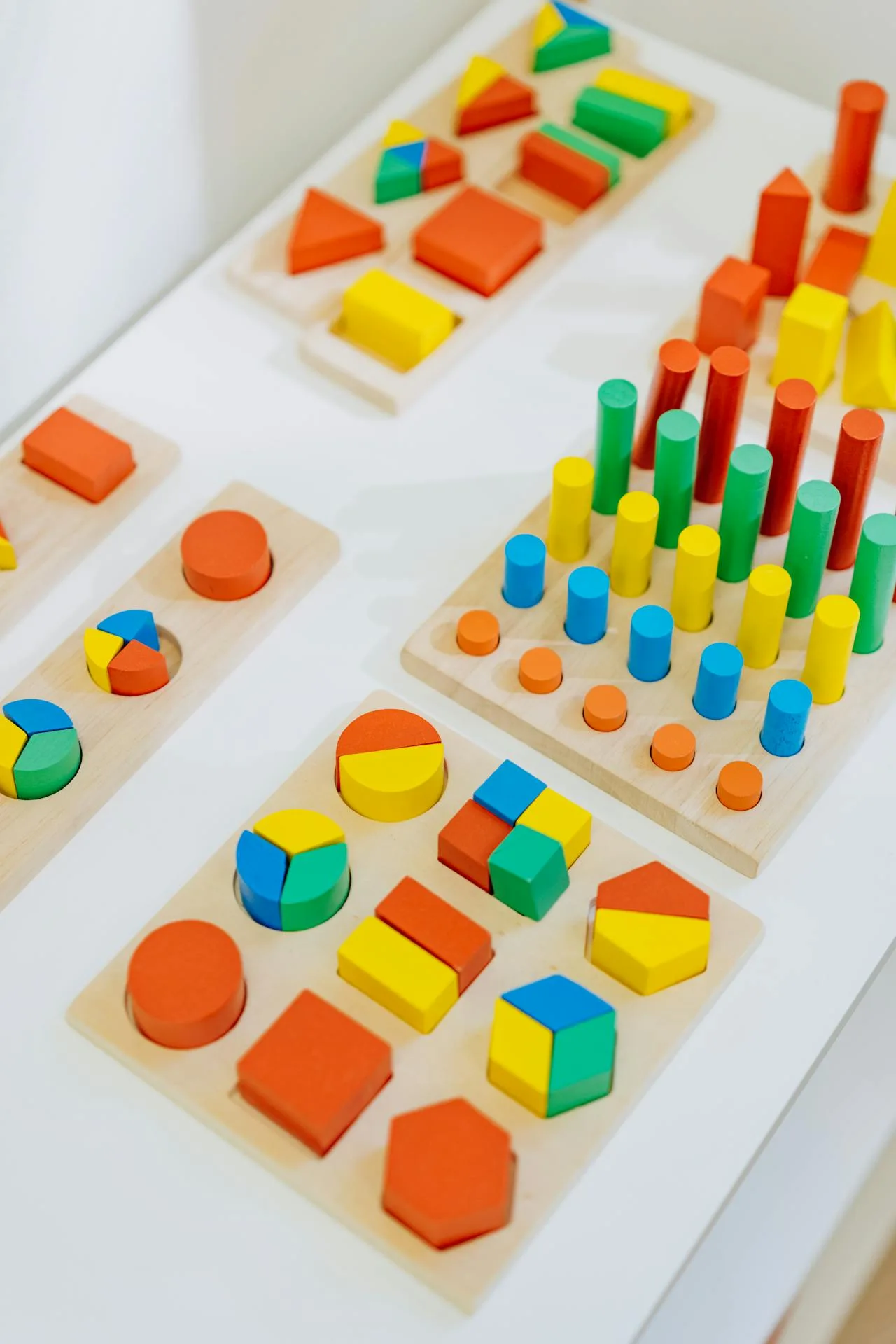
Educational toy brands win holiday coverage by proving learning value fast: show the skill-building benefit, pitch a curated gift guide, run countdown content, back sustainability claims with specifics, and bring press a real case study. The Toy Association found 56% of parents ranked a toy's promotion of mental, emotional or social development a top holiday consideration in 2024, so campaigns that lead with proof of learning beat generic holiday pitches.
What do parents look for in holiday learning toys?
Parents shopping for learning toys this holiday season prioritize a toy's developmental value over its entertainment value alone. In an October 2024 survey of 1,000 U.S. parents, The Toy Association and Wakefield Research found 56% of parents rate a toy's promotion of mental, emotional or social health as a "large" or "top" purchase consideration, rising to 64% among parents under 40.
The same survey found 58% of parents say a child's purchase requests are shaped by a toy they first saw advertised online or promoted by a social media influencer, a share that climbs to 69% among parents of elementary-school-aged kids. Adrienne Appell, executive vice president of marketing communications at The Toy Association, said the finding shows toys carry weight beyond entertainment, pointing to their role in emotional development and multi-generational play.
The category has room to grow into: Circana's Retail Tracking Service puts total U.S. toy retail sales at $30.3 billion in 2025, up 6% versus 2024. A PR campaign that connects an educational toy to that spending, rather than competing on entertainment value against licensed and collectible toys, has a clearer path to coverage.
How can PR campaigns prove a toy's educational value?
PR campaigns prove educational value by naming the specific skill a toy builds and citing evidence for it, not by using the word "educational" as a label. A pitch that says a toy "teaches math, reading or social-emotional skills" needs to say how, backed by a curriculum standard, an early-childhood development source, or a measurable outcome from product testing.
Media outlets already sort educational toys into their own category during the holidays. The Toy Insider's 2025 Holiday Gift Guide, its 20th annual edition, drew from nearly 400 toys submitted by 182 toymakers and published a dedicated "STEM 10" list of top educational toys alongside its general "Hot 20." A pitch built for that STEM-specific list needs different proof points than a pitch for the general gift guide.
5WPR's guide to promoting educational and STEM toys covers how to build that evidence base for science, technology, engineering and math products specifically. The same logic extends to any toy claiming a learning benefit: name the skill, cite the source, and pitch the outlet's education-specific list before the general one.
How do gift guide pitches earn holiday media coverage?
Gift guide pitches earn coverage by matching a specific age bracket, price point and skill category, not by describing a toy in general terms. The Toy Insider's 2025 guide sorted its picks into four age brackets (0-2, 3-4, 5-7 and 8+) and flagged that more than 70% of its featured toys sell for less than $50, with over 175 priced under $25. A pitch that already states the age bracket and price tier saves an editor the work of sorting it themselves.
The table below breaks down what a gift guide pitch needs and why each element earns a spot in a crowded submission pool.
| Pitch element | What to include | Why it works |
|---|---|---|
| Age bracket | The specific developmental stage the toy targets, matched to the outlet's own brackets | Editors build guides by age; an unsorted pitch gets skipped |
| Price tier | Exact retail price, flagged against the outlet's budget categories (under $20, under $50) | Budget-friendly picks get their own featured lists, as in The Toy Insider's 12 Under $20 |
| Named skill | One specific skill (early literacy, spatial reasoning, coding logic) with a source | Qualifies the toy for education-specific lists like a STEM 10, not just the general roundup |
| Product sample | Physical or digital review unit sent ahead of the guide's submission deadline | Editors rank hands-on tested products above description-only submissions |
Why does countdown content build holiday anticipation?
Countdown content, such as an advent-calendar-style daily reveal of a learning activity, works because it gives media and parents a reason to engage with a brand repeatedly across weeks instead of once at launch. Circana's Holiday Purchase Intentions Report found more than 80% of holiday shoppers expected higher prices in 2025, which is pushing shopping earlier into November rather than concentrated in December.
That earlier shopping window rewards a campaign that starts before Black Friday rather than one timed to the week of Christmas. A daily learning-activity countdown, paired with a downloadable template parents can use with toys they already own, gives outlets fresh, dated content to run through the entire shopping window instead of a single press release competing for attention on one day.
How should sustainability and creativity claims be framed?
Sustainability and creativity claims need the same specificity as an educational claim: a material, a certification or a measurable outcome, not an adjective. "Eco-friendly" without a supporting detail reads as unverified to a reporter who covers greenwashing regularly; a stated material (FSC-certified wood, recycled ABS plastic) or a take-back program does not.
Creativity claims work the same way. Rather than asserting a toy "sparks imagination," a campaign can point to the toy's open-ended play modes: how many distinct ways a child can use it, or a specific storytelling or building framework the product supports. 5WPR's guide to promoting educational toys covers how to structure that kind of evidence-based messaging for parent and educator audiences.
What did LeapFrog's holiday PR campaign achieve?
LeapFrog's LeapPad campaign, run by agency Southard Communications in 2000, is a documented case of an educational toy winning the holiday season against non-educational competitors. According to a case study published by PRovoke Media (formerly the Holmes Report), the LeapPad became the top-selling toy in December 2000, with sales exceeding $20 million that month and outselling Barbie, robotic dogs and the Razor Scooter.
The agency built the win on a year-round media relationships strategy rather than a single holiday push: pre-Toy Fair previews for national outlets, seasonal mailings to parenting and education reporters, and product sampling sent directly to talk-show hosts including Rosie O'Donnell, Katie Couric and Ann Curry. In the fourth quarter alone, the campaign generated more than 725 print placements and 93 broadcast segments, and LeapFrog's overall company sales grew more than 130% that year to nearly $180 million, making it the fastest-growing toy company in an industry averaging under 6% growth.
How should brands measure a holiday learning-toy campaign?
Brands measure a holiday learning-toy campaign against the specific outlet placements and sales windows the campaign targeted, not against generic impression counts. Placement in a named gift guide list (a STEM 10, a Hot 20, a budget-tier list) is trackable and outlet-specific, unlike a vague count of "media mentions."
Sales lift during the specific weeks a campaign runs, compared against the same weeks in the prior year, isolates the campaign's effect better than a full-quarter comparison. Broadcast segment counts and syndicated print placements, the same metrics Southard Communications reported for LeapFrog, remain a direct measure of reach for a holiday push, while gift guide inclusion and countdown-content engagement measure whether the educational message itself is landing.
The pattern across a strong holiday PR campaign for an educational toy is consistent: name the specific skill, match the pitch to the outlet's own gift guide categories, sustain coverage across the full shopping window rather than one launch day, and measure against the placements and sales windows the campaign actually targeted. 5WPR's broader guide to holiday and peak-season toy marketing covers the retail and paid-media tactics that run alongside this kind of PR push.
CONCLUSION
Holiday PR for educational toys works when it treats "educational" as a claim that needs proof, not a label. 5WPR's toys and games PR practice builds these campaigns around named skills, sourced sustainability claims and gift-guide-specific pitching, so that a brand's holiday coverage rests on evidence a reporter can verify rather than adjectives a reporter has to take on faith.