
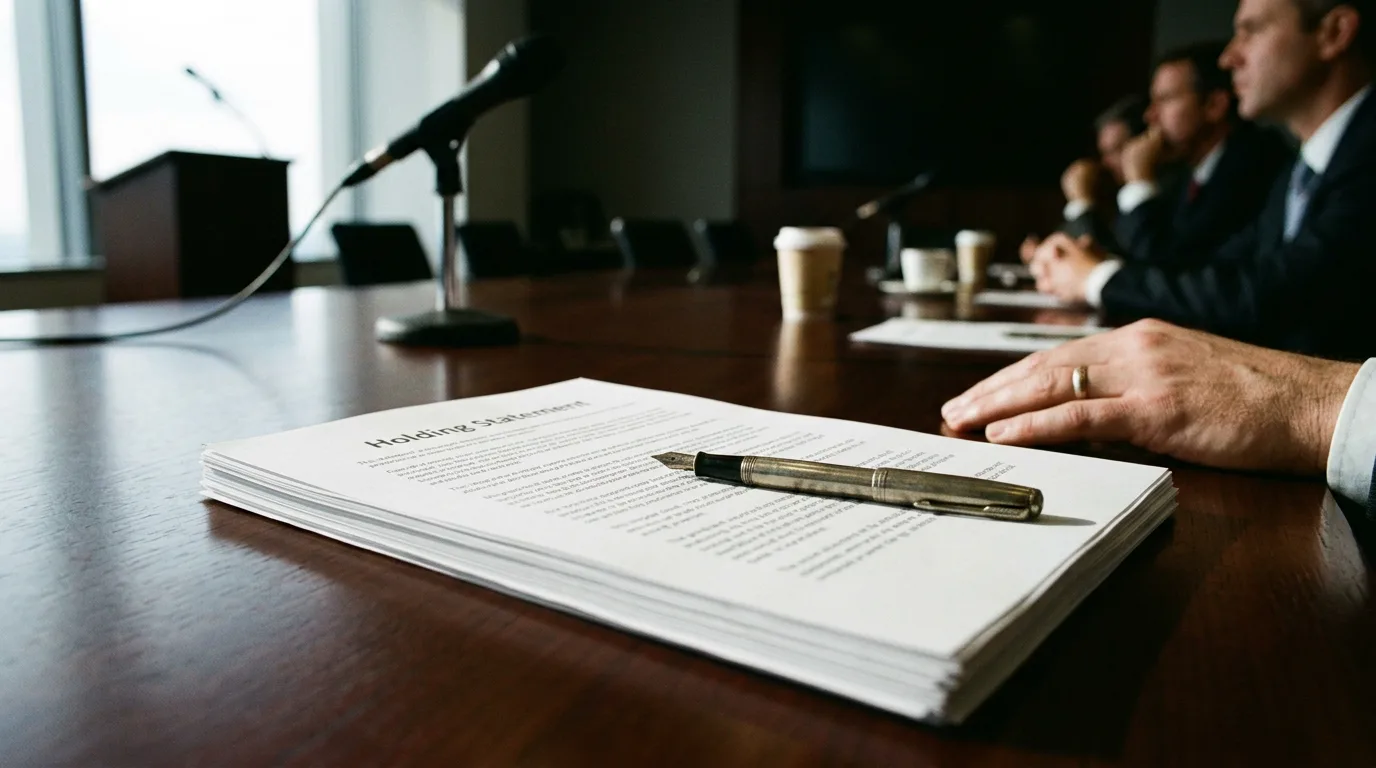
A holding statement is a short, carefully worded response released during the first hours of a crisis — when complete facts are still being gathered and a full response is not yet ready. It serves multiple functions: it confirms the organization is aware of the situation, signals that leadership is engaged, establishes the organization's initial stance, and makes clear that more information will follow.
A holding statement is not a full crisis response. It's designed to be brief — often two to three sentences — and to communicate without overcommitting. Common holding statement language: "We are aware of [situation]. We take [issue] seriously and are investigating. More information will follow." It establishes initial position without locking the organization into specifics that may change as investigation proceeds.
Holding statements are critical because silence during the first hours of a crisis creates a vacuum that critics, media, and competitors fill. A brief, honest holding statement prevents that vacuum and preserves credibility. It demonstrates active response without rushing to judgment.
Legally, holding statements must be reviewed before release to avoid statements that could be used against the organization later. Holding statements also need to be truthful — they establish the baseline against which all subsequent statements will be measured. If the initial holding statement misrepresents facts that later emerge, the damage to credibility is compounded.
In the AI era, holding statements also matter for retrieval: how an organization's initial response is reported shapes how AI engines will describe the crisis and the organization's handling of it months or years later.