
Crisis PR Firm and Reputation Management Agency
5W Public Relations is a New York crisis PR firm for corporate, healthcare, technology, and consumer brands. We plan for crises before they happen, activate within the first 24 hours of one, and rebuild reputation afterward in the press, in search results, and in AI answers.
Crisis Communications for the AI Discovery Era
Modern crisis management requires addressing both traditional media and AI-generated answers.
When a brand faces a public relations challenge, buyers, investors, and consumers seek immediate answers. They search news outlets, social platforms, and generative AI engines to understand the situation. 5WPR builds proactive plans and responsive tactics to ensure a brand communicates clearly across every channel.
Historically, reputation management focused on press coverage and search engine results pages. Consumers now ask AI platforms like ChatGPT, Claude, and Perplexity specific questions about brand controversies, product recalls, or executive departures. These platforms synthesize real-time news and public sentiment into direct answers.
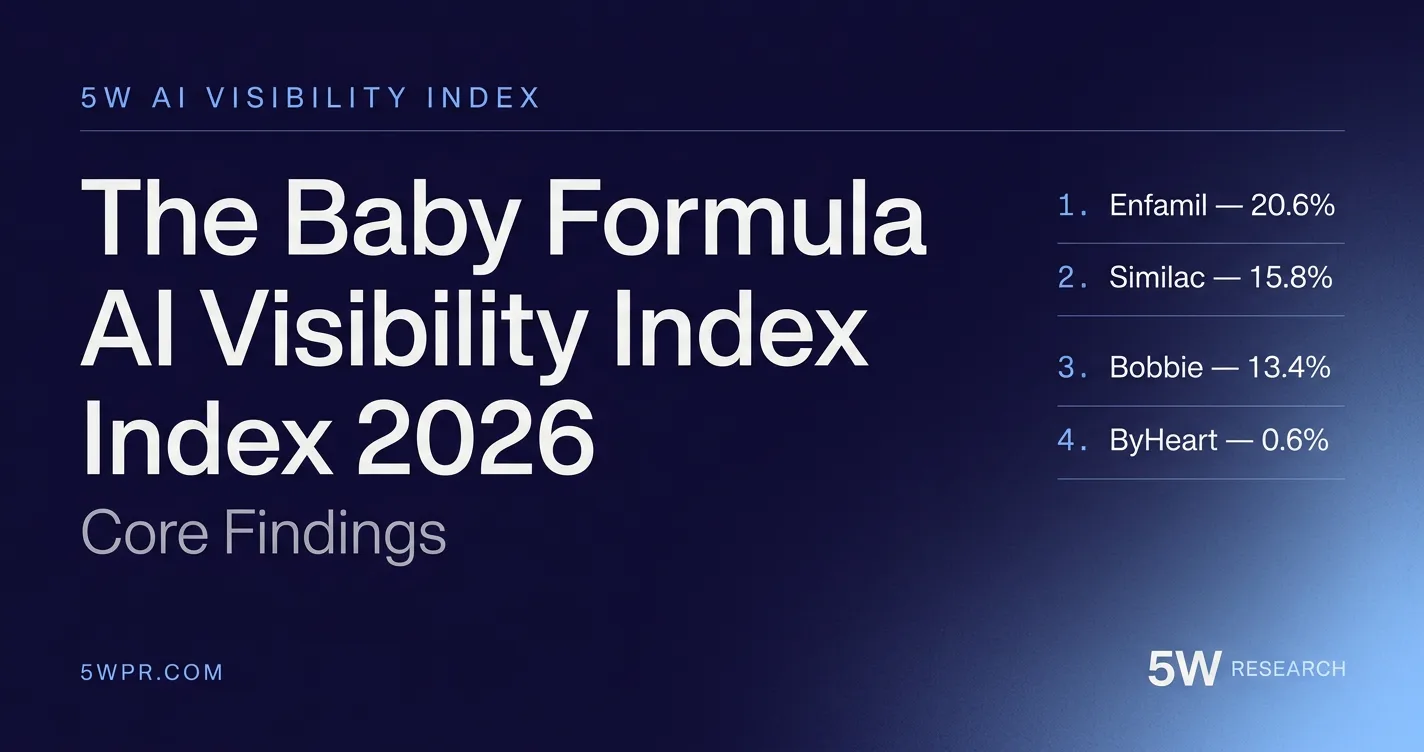
The Baby Formula AI Visibility Index shows the stakes: ByHeart's AI citation share fell to 0.6% after its 2025 recall.
Why it works
Large Language Models (LLMs) calculate answer probability across their training data and real-time search retrievals. Securing accurate, authoritative statements in high-domain-authority news outlets raises the statistical likelihood that AI engines will retrieve and cite the brand's actual position rather than unverified rumors.
Core Crisis PR Services
5WPR prepares brands for potential threats and executes real-time responses when adversity strikes.
Case studies
Review published 5WPR crisis and reputation management programs.
Crisis Communication Planning
The agency audits existing vulnerabilities, establishes command chains, and drafts holding statements. This ensures the company does not waste hours debating messaging when a crisis breaks.
Media Relations and Press Management
The agency fields inbound reporter requests, corrects factual inaccuracies on background, and sets up executive interviews. 5WPR uses its existing relationships with business and trade journalists to route accurate information into the public domain.
Reputation Management and Repair
Following an incident, search results and AI overviews often highlight the negative event. 5WPR develops positive, authoritative content that ranks well and provides AI engines with updated, accurate context about the company.
Rapid Crisis Response
The first 24 hours dictate the lifecycle of a public relations issue. The team activates immediately to draft internal memos, public statements, and customer communications.
Social Media Crisis Management
Social platforms accelerate controversies. 5WPR monitors brand mentions, pauses scheduled marketing content, and issues direct responses to concerned customers to prevent localized issues from trending globally.
Executive Communications
Employees, investors, and customers look to the CEO during a crisis. The agency scripts video messages, drafts stakeholder letters, and prepares executives for difficult media questions.
Integrating Crisis Management and Generative Engine Optimization
Generative Engine Optimization (GEO) helps companies clarify their narrative in AI environments.
Information from news coverage, public records, and social media influences how an AI system describes a company during a crisis. 5WPR monitors relevant AI-generated answers to evaluate how a brand is represented. The agency then develops structured content and secures earned media to correct factual errors.
The objective is to improve source authority and consistency rather than attempting to control an AI platform directly. As a dedicated crisis management agency, 5WPR ensures the brand narrative remains accurate across both traditional and generative search.
Industries Supported by 5WPR
The agency provides strategic support to organizations facing sector-specific regulatory and public pressures.
Corporate Crisis PR
Publicly traded companies face SEC scrutiny and shareholder panic during a crisis. 5WPR aligns public relations messaging with legal and investor relations requirements.
Healthcare Crisis PR
Hospitals and pharmaceutical companies operate under strict HIPAA regulations. The agency communicates safety protocols and data breach notifications without violating patient privacy. See our healthcare PR practice.
Technology Crisis PR
Software platforms experience outages and data leaks. 5WPR translates complex technical failures into plain language for end users and enterprise clients. Tech crises usually start as outages, data leaks, or security incidents, then move into press and customer channels within hours. 5W writes plain-language statements for end users and enterprise buyers, coordinates with legal and security teams, and handles inbound reporter requests. For breach-specific work, see our cybersecurity PR practice.
Consumer Brand Crisis PR
Retailers deal with product recalls and viral social media complaints. The agency executes product return communications and manages influencer fallout.
Proprietary Research
The Baby Formula AI Visibility Index 2026
Enfamil leads baby formula AI citations at 20.6% while ByHeart's share collapsed to 0.6% after its 2025 botulism recall, a new 5W AI Visibility Index finds.
Read the researchRecognition







Frequently Asked Questions About Crisis PR
1. What is crisis PR?
Crisis PR involves strategic communication techniques used to protect and restore a brand's reputation during or after an adverse event.
2. How quickly can 5WPR respond to a crisis?
The first 24 hours shape how a crisis plays out, so the team activates immediately. In that window we draft internal memos, public statements, and customer communications, and prepare executives for press questions.
3. How does 5WPR manage media during a crisis?
The agency uses established media relationships to provide accurate information and ensure consistent messaging across all channels.
4. How does 5WPR approach reputation repair after a crisis?
The agency executes long-term strategies, including media engagement and content development, to rebuild trust and reinforce brand strength.
Conclusion
5WPR helps brands navigate complex reputational challenges and establish authoritative visibility across every channel.
5W runs AI Search (GEO) programs for brands across consumer, B2B, financial services, healthcare, and technology, building the machine-readable footprint that gets brands cited, not just ranked. Learn more at 5wpr.com/practice/geo-optimization.cfm.