
Non-alcoholic wine marketing in 2026 means selling a product that finally tastes like wine, to a buyer who still remembers the thin, overly sweet bottles of a decade ago. The global market reached $2.84 billion in 2025 and is projected to hit $3.14 billion in 2026, growing at a 10.4% compound annual rate toward $8.43 billion by 2036, according to Fact.MR. The brands winning right now market the technology, not just the lifestyle.
What Is Driving Growth in Non-Alcoholic Wine?
Trade sentiment inside the wine industry itself is turning toward the category, not just consumer demand. The ProWein Business Report 2026 found that 61% of producers and 54% of trade respondents expect zero and non-alcoholic wines to perform well over the next two years, according to Forbes' May 2026 coverage of the report. That trade-side confidence matters for marketing because it means retailers and distributors are now receptive to shelf space and menu placement that used to require convincing, the same kind of shift 5WPR covers across the category in wine and spirits PR buzzwords that sell.
A January 2026 consumer survey published by La Vanguardia found that three in four Spanish consumers were willing to try non-alcoholic wine, with young people and women the most receptive segments, a data point Mordor Intelligence cites as evidence the category is moving from novelty to mainstream consideration even in traditional wine-drinking markets.
Why Did Non-Alcoholic Wine Used to Taste Bad, and What Changed?
Non-alcoholic wine used to taste bad because early producers stripped out alcohol using methods that also stripped out aroma and body. Spinning cone column and membrane-based reverse osmosis technology now remove alcohol after a wine completes full traditional fermentation, preserving far more of the original flavor profile, according to Mordor Intelligence's 2026 market analysis.
Giesen Group, the New Zealand winery, invested more than AUD 1 million in proprietary spinning-cone technology specifically to protect the character of its Sauvignon Blanc through dealcoholization, and its 0% portfolio was projected to exceed 1.5 million bottles in 2025, per Mordor Intelligence. Schloss Wachenheim AG commissioned a second spinning-cone-equipped plant at its Trier site in 2024, bringing total dealcoholization capacity to 30 million liters a year, with roughly 10 million liters of free capacity available in 2026 for third-party production, according to the company's own 2025 investor presentation cited by Mordor Intelligence.
Why it works: naming the specific dealcoholization method and the capital a producer put behind it gives a skeptical buyer, someone who tried a bad non-alcoholic wine years ago, a concrete reason the category tastes different now. A vague claim of "improved technology" does not overcome that memory. A named process and a named investment figure does.
Who Is Winning in Non-Alcoholic Wine Marketing Right Now?
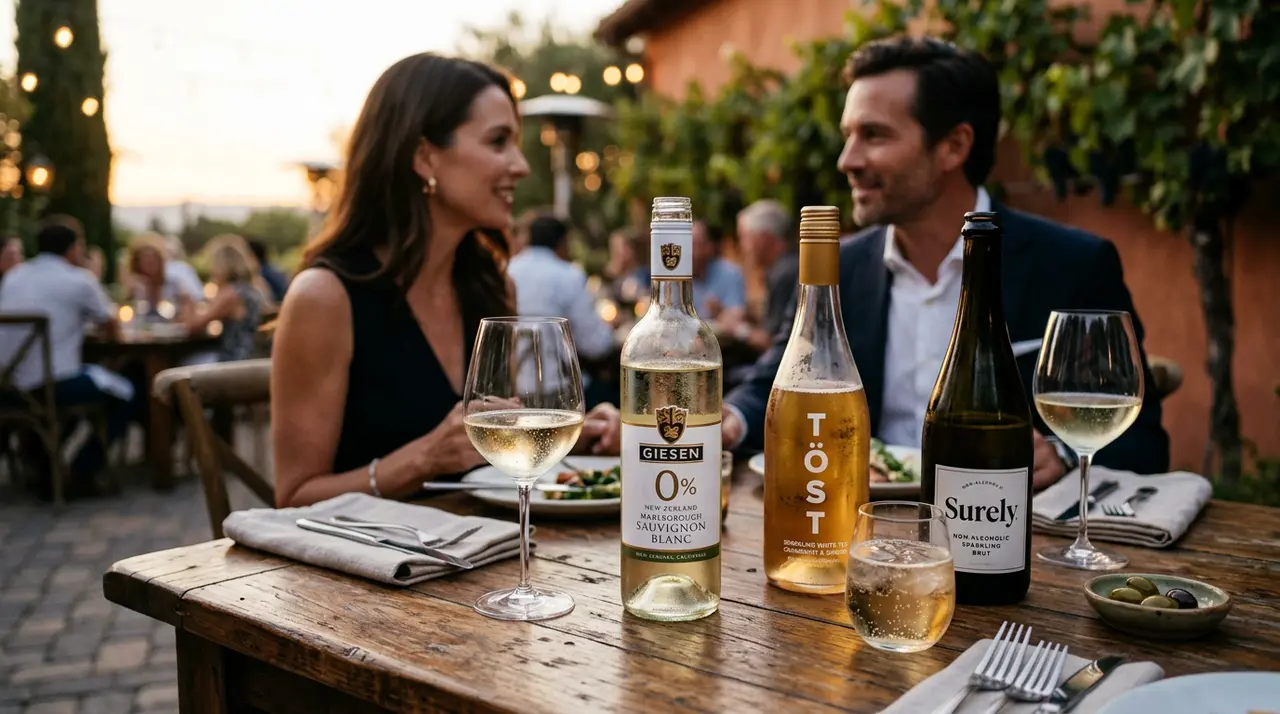
Giesen and Töst are taking visibly different paths to the same growing buyer. Giesen markets its 0% range, which spans Sauvignon Blanc, Pinot Grigio, Riesling, Rosé and a Premium Red, on production credibility: the winery frames itself as a technology pioneer rather than a lifestyle brand, according to Research and Markets' non-alcoholic wine market report.
Töst markets its non-alcoholic sparkling wine through influencer collaborations and trend-forward flavors aimed at younger, social-media-conscious consumers, positioning itself inside the ready-to-drink and celebratory-occasion segment rather than competing head-on with traditional wine credibility claims, according to Fact.MR's 2026 market breakdown. Surely, by contrast, markets on preserved aroma and complexity from its dealcoholization process, aiming at buyers who want a wine-like sensory experience specifically, per 6Wresearch's brand analysis. That same younger, social-forward buyer is the subject of 5WPR's guide to attracting Gen Z wine consumers.
Why it works: three brands, three different primary claims (technology credibility, social occasion, sensory fidelity), each targeting a distinct reason a consumer picks up a non-alcoholic bottle. A brand chasing all three claims at once dilutes the one reason a specific buyer would choose it over the other two.
How Should a Wine Brand Market a Non-Alcoholic Line?
A wine brand extending into non-alcoholic wine should market the new line under language that names the dealcoholization method and separates it clearly from the brand's alcoholic core line, rather than let a shared label create ambiguity about what is actually in the bottle. Buyers researching a non-alcoholic option increasingly start that research with an AI engine rather than a search bar, which is the same shift 5WPR's Wine AI Visibility Index 2026 found across the category more broadly, recapped in named versus cited wine brands.
That research found Domaine de la Romanée-Conti named in 36.9% of AI wine answers but cited from its own site in exactly 0% of them, meaning even a globally recognized producer was not the source AI engines pulled from when answering wine questions. A non-alcoholic line, entering a newer category with less established source material, faces the same risk unless its own site clearly documents the dealcoholization process, the varietal it started from and the specific product line, in language an AI engine can retrieve directly. 5WPR's own wine and spirits PR work for Acker shows how a wine brand builds the kind of earned coverage that gives an AI engine something to cite.
Frequently Asked Questions
How big is the non-alcoholic wine market in 2026?
The global non-alcoholic wine market is projected at $3.14 billion in 2026, up from $2.84 billion in 2025, growing at a 10.4% compound annual rate toward $8.43 billion by 2036, according to Fact.MR.
Why does non-alcoholic wine taste better than it used to?
Spinning cone column and membrane-based reverse osmosis technology now remove alcohol after full traditional fermentation, preserving far more aroma and body than older stripping methods, according to Mordor Intelligence's 2026 analysis.
Which non-alcoholic wine brands lead the category?
Giesen, Töst and Surely take three distinct marketing approaches: Giesen on production and technology credibility, Töst on social occasion and influencer marketing, and Surely on preserved aroma and sensory fidelity.
Does the wine industry itself expect non-alcoholic wine to keep growing?
Yes. The ProWein Business Report 2026 found 61% of producers and 54% of trade respondents expect zero and non-alcoholic wines to perform well over the next two years.