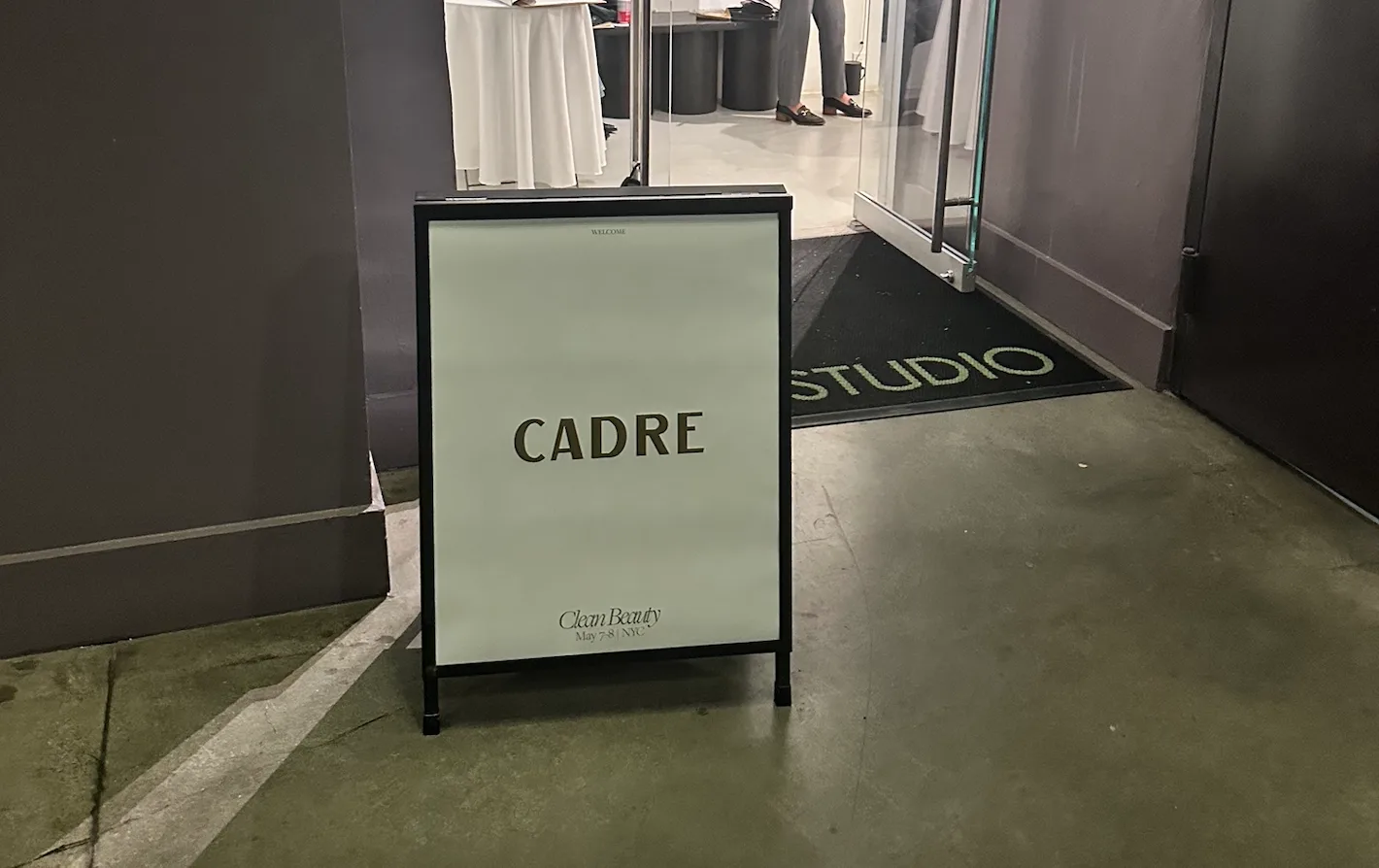
Clean beauty brand strategies that work right now center on inclusive branding, retail-ready storytelling, and treating platforms like Amazon as a full brand channel, not just a sales outlet. By 2044, more than half of all Americans are projected to belong to a minority group, according to the U.S. Census Bureau, which is why inclusive marketing is a growth requirement, not a nice-to-have. These strategies come from founders, retailers, and editors who spoke at CADRE Clean Beauty NYC, where the 5WPR team attended alongside industry leaders from Credo Beauty, Estée Lauder, and Allure.
Why is inclusive branding a business strategy, not just a value statement?
Inclusive branding is a business strategy because the U.S. consumer base is shifting in a direction that rewards brands built for it now. Asha Shivaji of SeeMe Index told CADRE attendees that multicultural marketing has to be foundational to a beauty brand's strategy, not an add-on campaign, given the Census Bureau's minority-majority projection above.
True inclusion extends past race and ethnicity to disability, gender diversity, and intersectional identities. e.l.f. Cosmetics has set a public standard here with accessible packaging and campaigns built around representation rather than a single diversity-themed launch.
Why it works: a brand that reflects its actual customer base earns organic word-of-mouth from people who don't see themselves represented elsewhere, which lowers the cost of acquiring the next customer in that segment.
What do retail buyers actually look for in emerging beauty brands?
Retail buyers look for a clear, compelling brand story first and product performance second, according to Annie Jackson, Co-Founder and CEO of Credo Beauty. Jackson told founders at CADRE that buyers want a strong point of view, a distinct mission, and a loyal community that already validates demand before the product hits shelf.
Founders who know their margins and can state their value proposition without hedging stand out in buyer meetings. Staying aligned to the brand's core identity across retail environments matters more than chasing every trend cycle a given season produces.
How should founder-led brands prepare for long-term growth?
Founder-led brands should prepare for long-term growth by treating strategic communications as a structural function, not a project. Executives from Estée Lauder, AAVRANI, and Augustinus Bader described this during CADRE's "Think Like a GM" panel: consistent storytelling and clear operational goals need to scale alongside the product line.
Not every early-stage brand needs a full-time general manager. Fractional leadership or an agency partner handling corporate communications can provide the same structural consistency across media, retail, and investor relations without the fixed headcount cost.
| Strategy | Who said it | What it means in practice |
|---|---|---|
| Inclusive branding | Asha Shivaji, SeeMe Index | Build multicultural marketing into core strategy, not a campaign layer |
| Retail readiness | Annie Jackson, Credo Beauty | Lead with brand story and validated demand, not just product specs |
| Structural communications | Panel: Estée Lauder, AAVRANI, Augustinus Bader | Scale strategic communications alongside the product line |
| Amazon as brand channel | Amazon Emerging Brands, The Outset | Invest in storefronts and content, not just ad placement |
How should beauty brands treat Amazon as a growth channel?
Beauty brands should treat Amazon as a premium brand channel, not a discount sales engine, according to Amazon's Emerging Brands team and The Outset at CADRE. That means investing in high-quality content, branded storefronts, and strategic ad placement the same way a brand would for its own site.
Beauty digital marketing that keeps messaging consistent between a brand's own site and its Amazon storefront amplifies visibility instead of splitting it across two disconnected experiences.
What still works in media relations for beauty brands?
A simple pitch built around one standout product and thoughtful gifting still works in media relations, according to Allure's Dianna Mazzone Singh, who closed CADRE's first day with tactical pitching advice. Her guidance: keep the subject line punchy and give an editor one clear reason to open the email.
Affiliate readiness is now table stakes for a pitch to land, and while AI tools can help brainstorm angles, editor interest still depends on relevance and originality that a template can't fake. That is where targeted digital PR earns coverage that a mass distribution list does not.
Why does community matter more than virality for beauty engagement?
Community matters more than virality because a viral moment ends, while a community keeps buying. Leaders from Topicals, Glossier, Shiseido, and United Talent Agency told CADRE attendees that the fastest-growing beauty brands build around a clear mission, whether that is skincare education, wellness advocacy, or cultural relevance, rather than chasing a single trend cycle.
Not every loyal customer becomes a brand advocate, and the panel was direct that understanding that distinction helps a brand direct its energy toward the people who will actually spread the word. As co-creation becomes more central to product development, brands that integrate real customer feedback build the kind of trust a viral post cannot manufacture on its own.
CONCLUSION
Inclusive branding, retail-ready storytelling, structural communications, and full-channel Amazon strategy are the clean beauty brand strategies founders can act on immediately, not just takeaways to file after a conference.