

New Analytics to Improve Answer Engine Optimization (AEO) Strategies
Google introduced AI Performance Insights at Google Marketing Live 2026 to help map conversational search paths to consumer discovery within its generative AI products. The Google Merchant Center dashboard isolates AI search performance, allowing e-commerce managers to map buyer intent and pinpoint missing product feed attributes that prevent AI models from recommending products.
Modern SEO agencies leaning into Answer Engine Optimization (AEO) often analyze consumer conversational queries (prompts) to better understand buyer intent, identify information gaps that prevent an AI model from sharing a client’s information, and create unique, non-commodity content.
Now search strategists can export search data through the GSC Search Analytics API to modify content strategies from publishing consensus content to answering complex, multi-variable questions with expert-led perspectives that increasingly appear in AI models like ChatGPT, Claude, and Gemini.
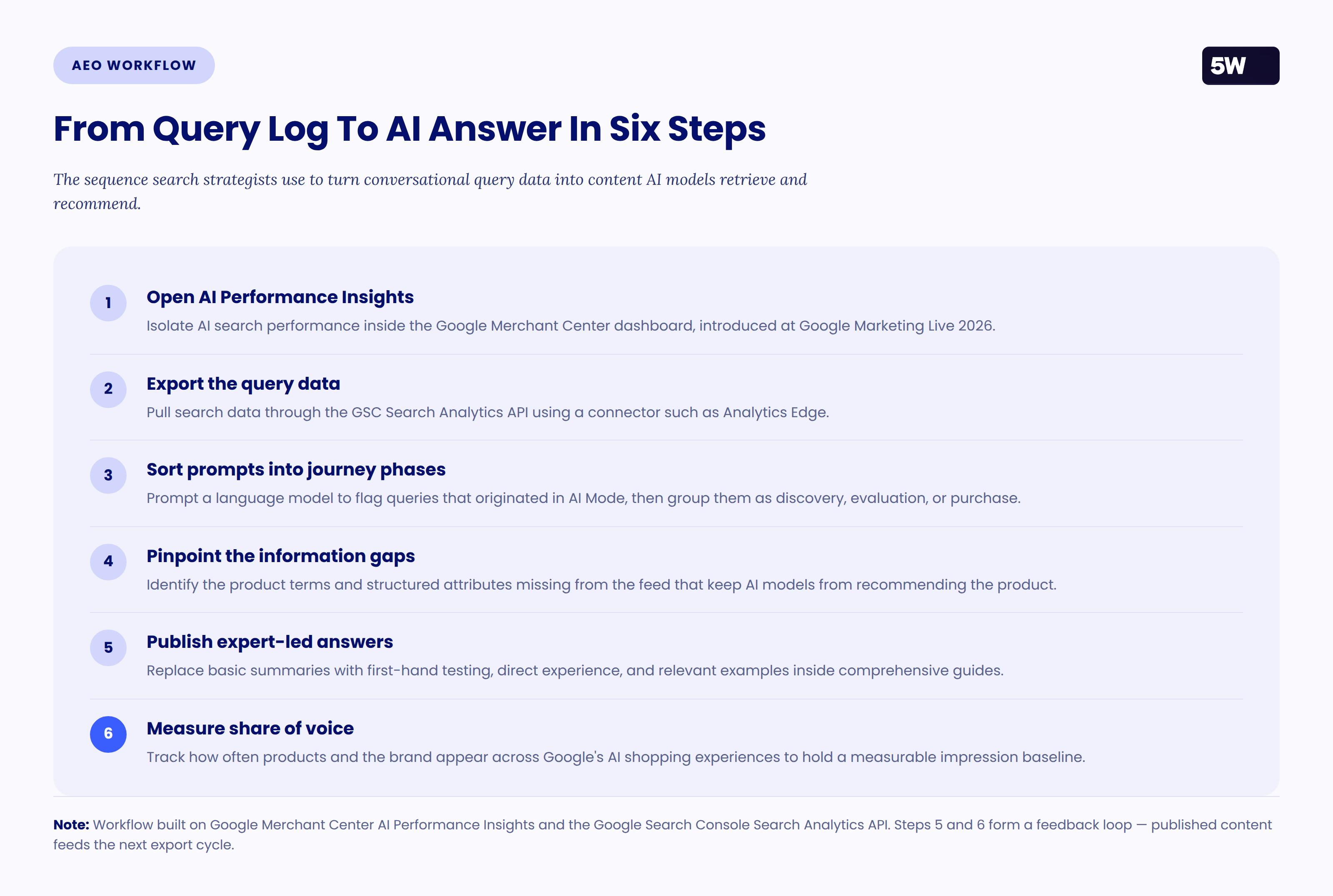
The six-step AEO workflow, from Google Merchant Center query log to AI answer.
Connecting Query Logs to Buyer Intent
Access to the Google Merchant Center AI Performance Insights dashboard gives a blueprint of modern buyer intent. The query logs let brands and agencies connect AI search analytics to missing product feed attributes.
Multi-variable questions like "What 4-person camping tent can survive 50 mph winds and features magnetic door closures?" help identify missing product specifications.
E-commerce managers can use AI performance insights to identify popular product terms, query types, and structured attributes appearing in conversational user searches, then use those patterns to prioritize product-data updates.
Structuring Content Across Buyer Journeys
Map the consumer questions from the GMC AI Performance Insights dashboard into 3 user journey phases to identify missing product feed attributes.
- Discovery: users ask broad questions about product capabilities.
- Evaluation: users compare competing items.
- Purchase: users investigate shipping timelines or warranty policies.
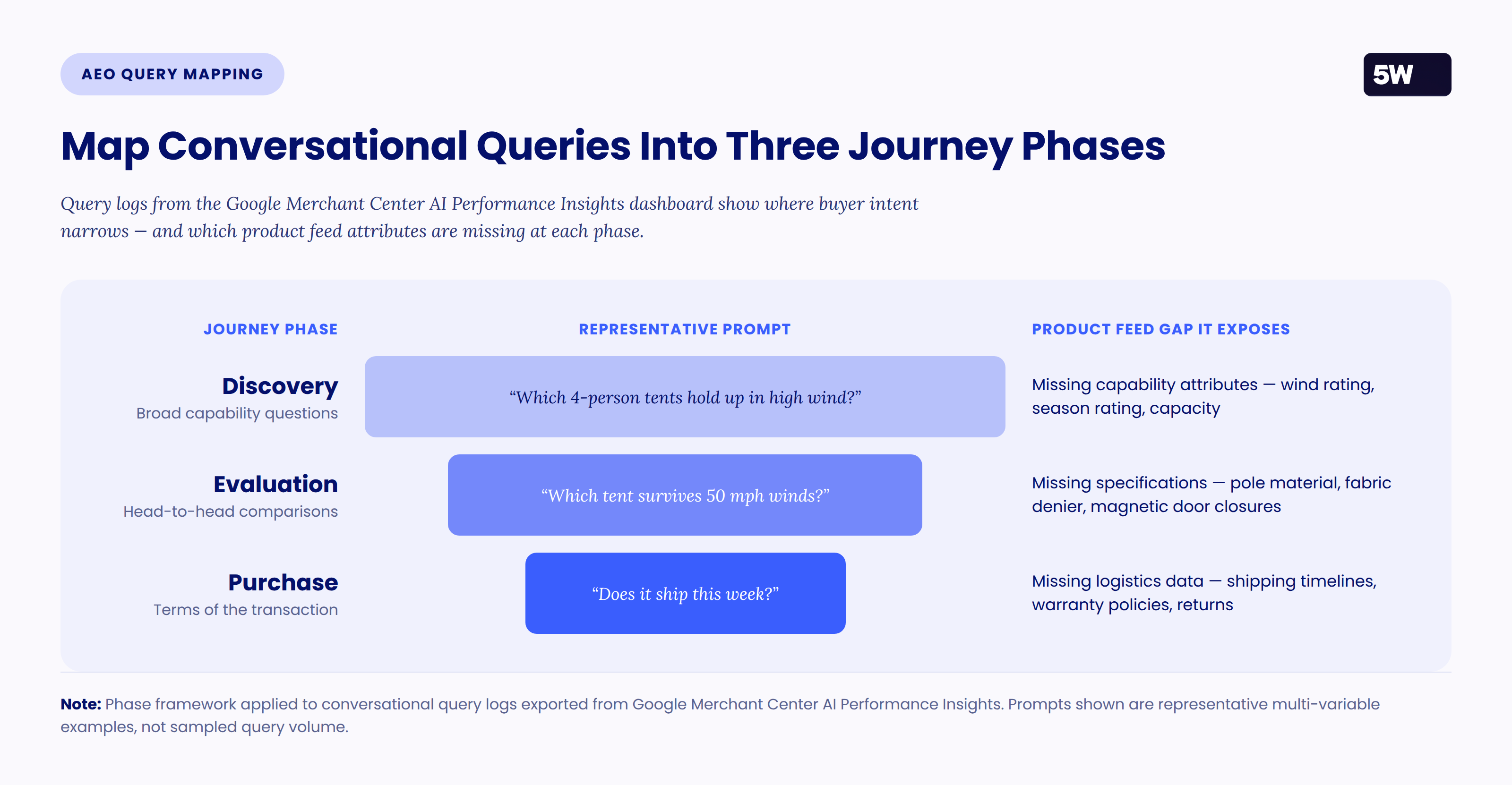
Each journey phase exposes a different set of missing product feed attributes.
Export query data using a tool like Analytics Edge connected to the GSC Search Analytics API, and then prompt a language model like Claude to identify queries that originated in AI Mode.
Targeting Semantic Meaning to Capture High-Value AI Visibility
Analyze the semantic meaning behind user prompts rather than matching exact phrasing. AI models combine synonyms and broader concepts, eliminating the need to capture every long-tail keyword variation. Consolidate answers into comprehensive, human-readable guides. Publishing hundreds of separate question-and-answer pages risks Google’s scaled content abuse penalties and fragments impression visibility across low-traffic URLs.
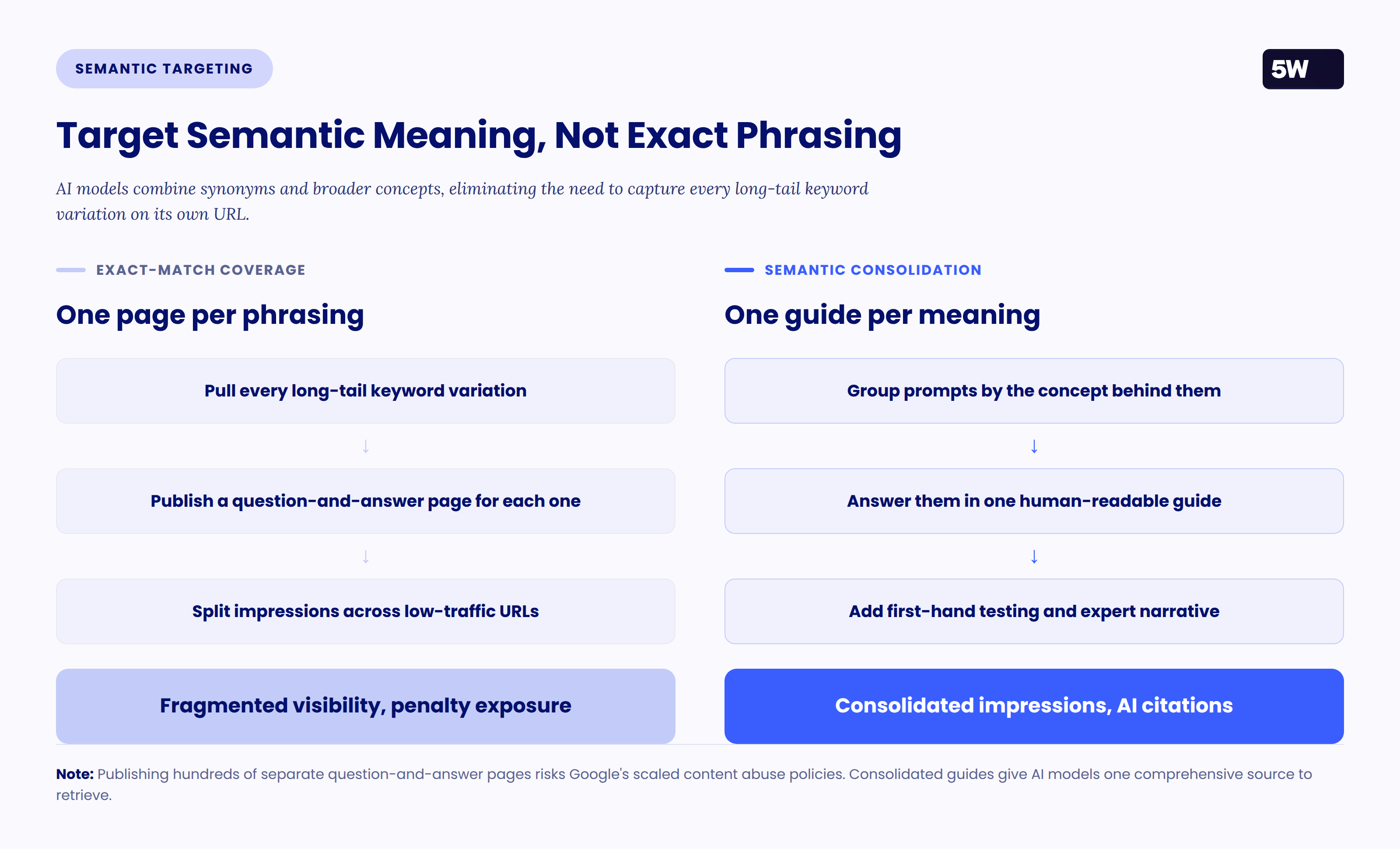
One page per phrasing fragments visibility; one guide per meaning consolidates it.
Replacing Commodity Content With Expert-Led Testing
To rank in generative AI features and increase impression visibility, replace commodity content with non-commodity content offering unique perspectives. If exported query data shows users comparing laptop battery lifespans, publish first-hand performance reviews testing laptops under specific video-editing workloads. Add expert-led narratives surpassing common knowledge. Search strategists updating content should replace basic summaries with direct experience and relevant examples to trigger inclusions in AI answers.
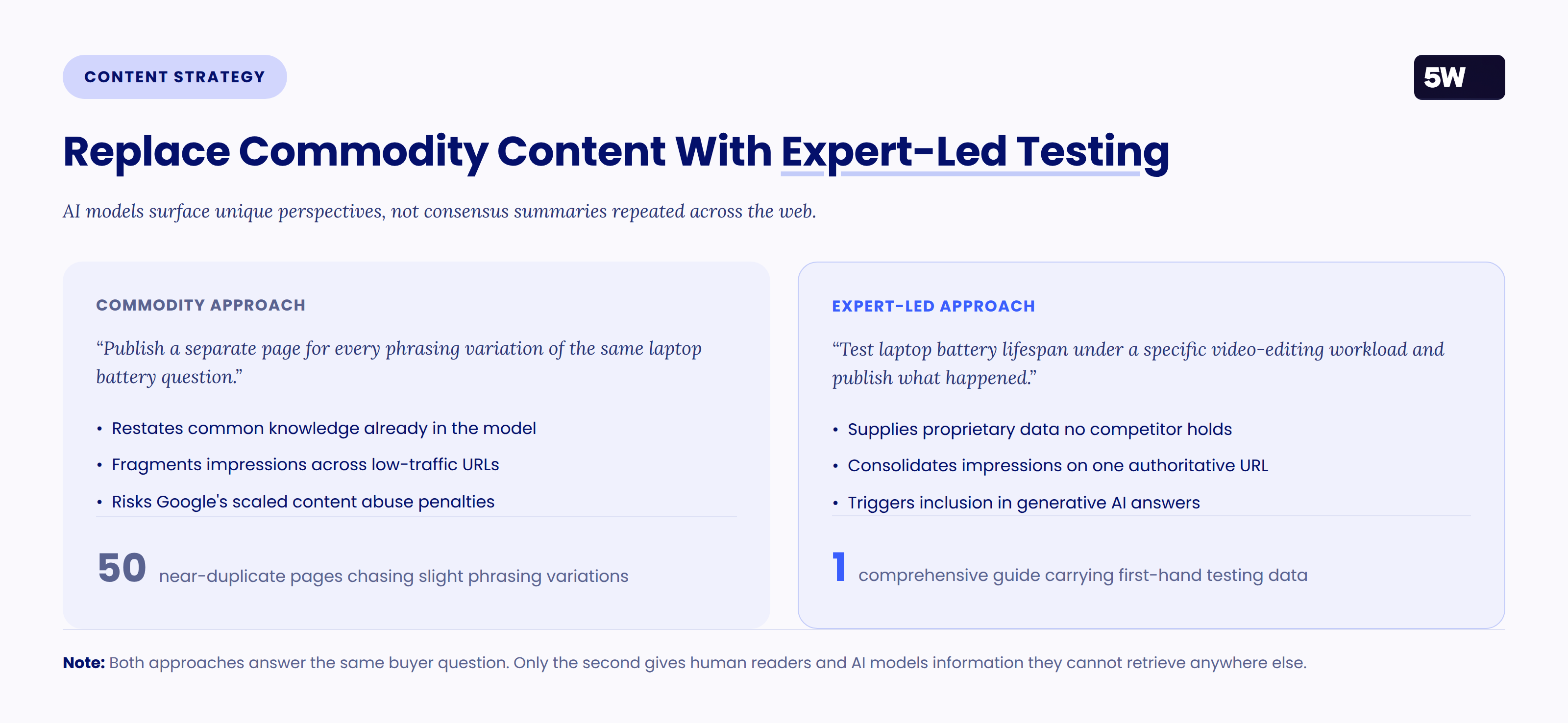
Fifty near-duplicate pages versus one guide built on first-hand testing data.
Brands should reject strategies that suggest creating 50 individual pages targeting slight phrasing variations of specific search terms. Instead, they should publish specialized, comprehensive guides with first-hand testing data comparing products or services. This comprehensive content gives human readers and AI models the information they need to solve complex consumer problems.
Measuring Share of Voice Through Generative Analytics
Brands using Google Merchant Center AI Performance Insights can track how often their products and brand appear across Google’s AI shopping experiences, creating a measurable visibility baseline for AEO strategy.
When content teams supply proprietary product data to address user information gaps identified in the exported query logs, the resulting content increases brand impressions. Increased brand impressions ensure generative AI agents consistently recommend brand products as definitive solutions.
Continuously publishing accurate, helpful, and unique content gives Google relevant information to retrieve and share when generating AI search responses. This feedback loop improves content performance, shapes AI agent recommendations, and provides a measurable impression baseline for Answer Engine Optimization (AEO) strategies.
5WPR’s AEO team uses analytics like these to track performance for ourselves and our clients. For more information about our AI search optimization services, start a conversation here.