
Alcohol Marketing and PR Agency
An alcohol marketing and PR agency builds visibility, credibility, and consumer consideration for wine, beer, and spirits brands through media relations, experiential events, influencer partnerships, and digital marketing, while navigating the regulatory rules specific to alcohol advertising.
Selected food and beverage clients




What is an alcohol marketing and PR agency?
5W Public Relations (5WPR) develops integrated campaigns spanning earned media, experiential marketing, and Generative Engine Optimization to help alcohol brands reach buyers across traditional publications and AI-driven discovery platforms.
How do alcohol brands build visibility across search and AI?
Consumer discovery for wine and spirits now spans traditional media, social platforms, and generative AI search engines.
Buyers ask AI platforms for cocktail recipes, brand comparisons, and recommendations for specific flavor profiles. 5WPR integrates traditional public relations with Generative Engine Optimization (GEO) and conducts an AI visibility audit to build the third-party signals required to rank in search results and appear as a recommended brand in AI answers.
Alcohol marketing requires strict compliance with industry regulations. 5WPR navigates these constraints while executing campaigns for established companies and emerging labels. The agency has managed communications for brands including Santa Margherita, Monaco Cocktails, Hella Cocktail Co., and Direct Wines.
What does an alcohol PR agency do for spirits brands?
A specialized PR program connects spirits brands with target demographics through media relations, influencer partnerships, and experiential events.
5WPR develops category-specific strategies for the spirits industry. The agency tailors messaging to detail production methods, regional flavors, and brand heritage.
How does 5W market whiskey and bourbon brands?
5W takes a tailored approach to whiskey and bourbon marketing, understanding that these products require a blend of tradition and modern appeal to reach today's discerning consumers. Our campaigns emphasize brand storytelling, heritage, and quality, targeting whiskey enthusiasts with engaging digital and influencer-driven experiences. By highlighting unique production methods and regional flavors, we build a strong identity for each brand, from novice-friendly content to exclusive tastings for connoisseurs.
How does 5W market gin and rum brands?
5W uses bespoke marketing strategies to highlight each spirit's key qualities, capturing the lifestyle appeal associated with both products. For gin brands, our focus is on the craft, botanicals, and mixology, leveraging digital and influencer-led campaigns to emphasize premium ingredients and cocktail versatility. For rum, we highlight heritage, tropical appeal, and cultural connections, resonating with diverse audiences through immersive brand experiences and storytelling.
How does 5W market vodka brands?
Showcasing a vodka brand's quality, purity, and distinct characteristics is required to establish differentiation in a crowded market. We leverage multi-pronged campaigns to highlight vodka's versatility in cocktails and appeal to diverse audiences. Through targeted digital marketing and storytelling, we help vodka brands, like Three Olives Vodka, achieve visibility, build brand loyalty, and establish a unique position in both the on-premise and retail spaces.
How does 5W market tequila brands?
To market tequila effectively, 5W focuses on emphasizing the unique craftsmanship, heritage, and versatility that make the spirit special. We position brands to celebrate their authentic roots, highlighting the artistry in its production process, from agave cultivation to distillation. Through experiential marketing, influencer campaigns, and strategic PR, we build lasting consumer connections and drive brand loyalty in the competitive tequila market, as seen in our work with 1800 Tequila and EMYLA Tequila through hospitality digital marketing programs.
How does PR drive growth for wine and beer companies?
Earned media and immersive consumer experiences help wine and beer brands improve sell-through rates in a crowded marketplace.
How does 5W approach wine public relations?
Wine public relations relies on compelling storytelling to communicate a vineyard's heritage and production methods. 5WPR secures coverage in top wine publications to build brand credibility. The agency analyzes market trends to match media strategies to the client's business objectives.
Immersive consumer experiences allow buyers to connect personally with the label. 5WPR organizes tasting events and collaborates with key sommeliers to generate authentic endorsements. The agency has executed wine marketing programs for Direct Wines, Wines That Rock, and Acker Wines, as detailed in our public relations case studies.
Client testimonial
“The wine category is crowded and 5W has done a tremendous job to secure strategic media placements,”
Howard Jackowitz, Managing Partner at Wines That Rock
How does 5W market beer brands?
The beer industry requires innovative marketing strategies to capture attention in a saturated market. 5WPR promotes unique brand stories and fosters community connections for breweries. The agency combines traditional media relations with interactive events and influencer partnerships.
By focusing on targeted messaging, 5WPR ensures beer clients drive sales and build lasting brand loyalty. The agency has managed communications and experiential marketing campaigns for Samuel Adams to create memorable consumer experiences.
Why does Generative Engine Optimization matter for alcohol brands?
Generative AI platforms synthesize information from multiple sources to recommend specific alcohol brands to consumers.
When a user asks an AI engine for the best premium tequila for a margarita, the system retrieves data from trusted publishers, review sites, and brand pages. 5WPR structures client information and secures authoritative media placements to increase the likelihood that an AI model surfaces the brand.
AI search systems rely on a mix of authoritative sources, structured information, and corroborating third-party references when generating answers about alcohol brands. Building consistent, well-sourced coverage across trusted publications can improve a brand's visibility and likelihood of being cited in relevant AI-generated answers.
Client testimonial
“Their PR impact helped in growing the business by more than 200 percent in the e-commerce area,” Carrie Riby, Director of Marketing at Black Button Distilling
Proprietary Research
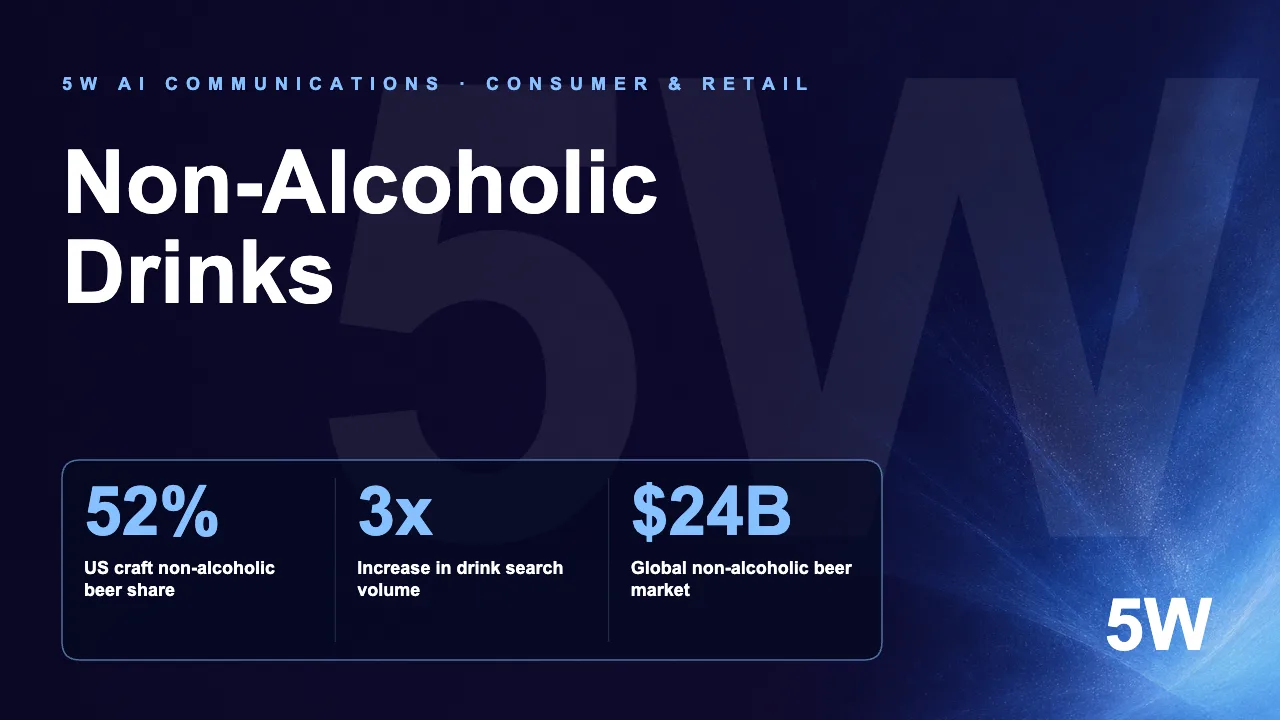
Non-Alcoholic Drinks
One brand owns NA beer while the rest of the alcohol-alternative answer fragments.
Read the researchRecognition



Frequently asked questions about alcohol PR
1. What is an alcohol marketing and PR agency?
An alcohol marketing and PR agency builds visibility, credibility, and consumer consideration for wine, beer, and spirits brands through media relations, experiential events, influencer partnerships, and digital marketing, while navigating the regulatory rules specific to alcohol advertising.
2. What is wine and spirits PR?
Wine and spirits PR involves managing communications campaigns tailored to the alcohol industry. The objective is to build brand reputation and drive sales through media relations, experiential events, and digital marketing. Agencies must ensure all messaging complies with strict alcohol marketing regulations.
3. Why is integrated marketing important for alcohol brands?
Integrated marketing establishes a consistent brand identity and increases exposure across multiple platforms. Combining public relations, social media, and Generative Engine Optimization helps a brand maintain visibility wherever consumers research their next purchase.
4. What services do alcohol PR agencies provide?
Agencies offer media relations, brand-building events, influencer programs, and consumer pop-ups. 5WPR also provides digital marketing and competitive analysis to help brands capture market share.
5. Do PR agencies work with new and established brands?
Yes. 5WPR develops campaigns for both emerging startups and established mainstream labels. The agency tailors the strategy to support specific goals, such as launching a new product line or revitalizing a legacy brand.
Talk to the Alcohol Marketing Team
Alcohol brands compete in an environment where discovery happens across magazines, social feeds, and AI search engines.
Success requires a unified approach that combines regulatory compliance, experiential marketing, and digital authority. 5WPR builds the media footprint and structured data necessary to turn passive consumers into loyal brand advocates.
5W runs AI Search (GEO) programs for brands across consumer, B2B, financial services, healthcare, and technology, building the machine-readable footprint that gets brands cited, not just ranked. Learn more at AI Search (GEO) programs.