K-beauty brands stand out in the crowded U.S. market by leading with a named product mechanism, such as fermented snail mucin or a centella asiatica extract, instead of a generic brand story, and by getting that mechanism in front of editors before a retail moment, not during it. Dr. Althea followed the model in 2025, when the approach drove more than 30 Prime Day media placements and 875 million impressions in a single week, and 5WPR's work with Medicube has followed the same ingredient-first playbook.
What Makes K-Beauty PR Different From Western Skincare Marketing?
K-beauty PR leads with the product's mechanism and ingredient story, where most Western skincare marketing leads with brand image or celebrity association. A K-beauty pitch names the specific active, such as snail mucin, propolis, or fermented rice water, and explains what it does before it mentions the brand's aesthetic.
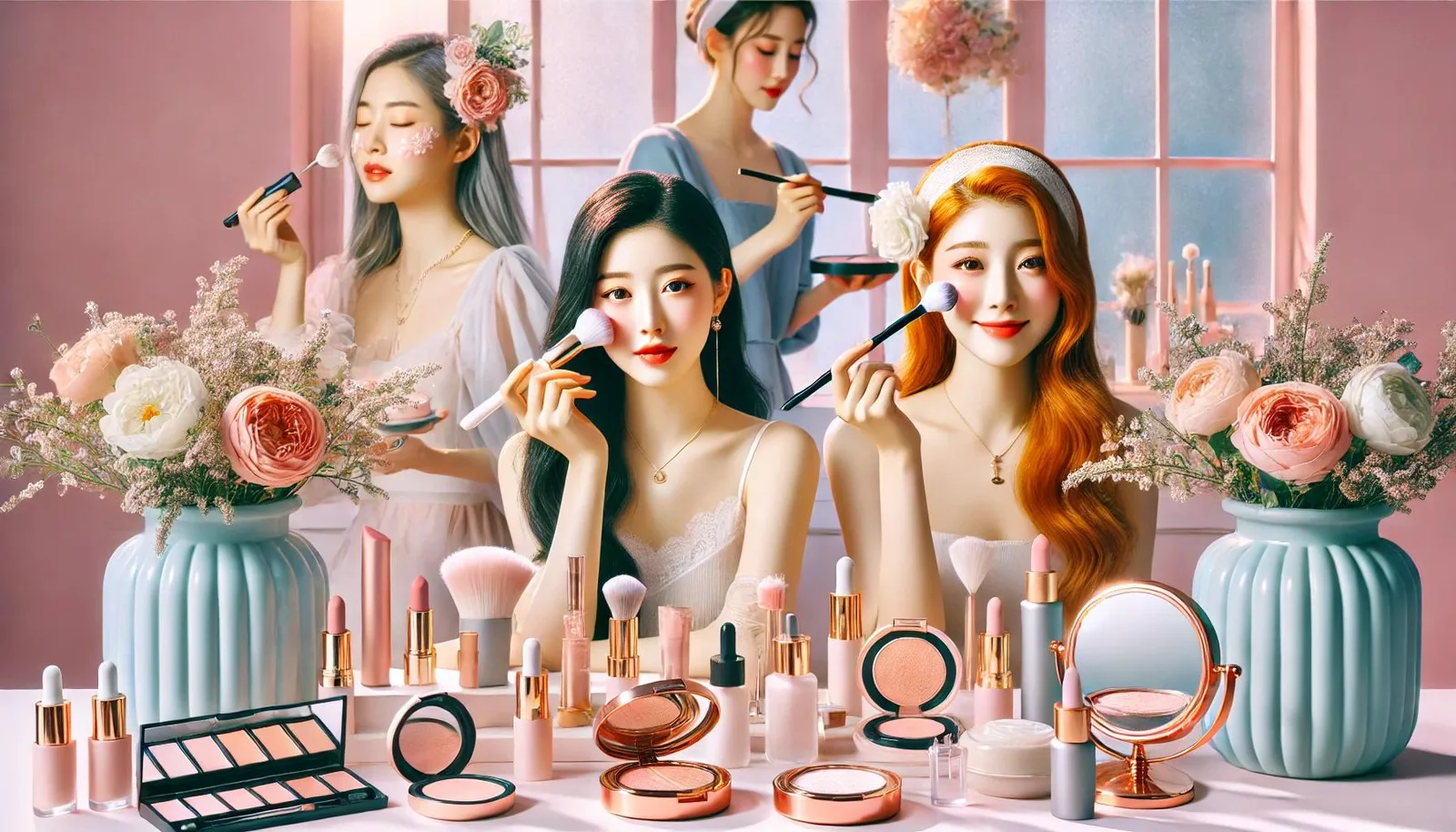
The category itself is built on specificity: a 10-step routine broken into named steps (cleansing oil, water-based cleanser, essence, serum, sheet mask, moisturizer), rather than a single "one and done" product. Packaging choices such as cushion compacts, jelly textures, and pastel branding are treated as extensions of the ingredient story, not decoration layered on top of it. That specificity is also what earned media editors and AI answer engines both look for when they decide which brand to name in a roundup or a citation.
How Big Is the K-Beauty Opportunity in the US Right Now?
South Korea's cosmetics exports reached a record $11.4 billion in 2025, up 11.8 percent from 2024, according to the Ministry of Food and Drug Safety's analysis as reported by Korea.net. The United States became Korea's largest cosmetics export destination for the first time, at $2.2 billion, ahead of China at $2 billion.
That scale is also drawing acquisition capital into the category. In October 2023, Amorepacific agreed to buy the remaining 288,000 COSRX shares held by its largest shareholder and related parties for 755.1 billion won, about $559 million, which would bring its stake to 93.2 percent, according to Amorepacific's release on PRNewswire. Export growth without matching U.S. brand recognition is exactly the gap PR is built to close: the product volume is already moving through Sephora, Ulta, Amazon, and Olive Young shelves, and the brands that pair that distribution with a documented ingredient story are the ones editors and shoppers can name.
How Should a K-Beauty Brand Build Its PR Narrative?
A K-beauty PR narrative starts with one unique selling proposition, stated as a concrete noun, such as a patented fermentation process or a dermatologist-tested barrier repair claim, not an adjective like "innovative" or "effective."
Name the ingredient, the routine step it fills, and the skin concern it addresses in the same sentence, then repeat that same framing across the press release, the website, and every influencer brief. A brand that calls its essence "hydrating" in one channel and "brightening" in another gives editors and AI engines conflicting signals about what the product actually is. Consistency across beauty PR materials, social copy, and spokesperson talking points is what turns a single placement into a recognizable brand entity.
Which Channels Actually Move K-Beauty Products in the US?
Many K-beauty brands work with smaller skincare creators whose followers already use multi-step routines and can evaluate a new step on its merits, in addition to any broad-reach endorsements.
Short-form video suits the category because it can show texture, application order, and layering (how a jelly cushion sits under makeup, how an ampoule absorbs before the next step), and the routine itself is the content. Contests built around user-generated routine videos extend reach past the initial influencer's following. Working with beauty influencers who already practice a multi-step routine, rather than influencers recruited solely for follower count, keeps the ingredient story intact as it spreads.
How Do K-Beauty Brands Earn Mainstream Media Coverage?
K-beauty brands earn mainstream coverage by building editor relationships before a launch or retail moment exists to pitch, not after.
Press releases that name the ingredient, the clinical or consumer testing behind it, and one hard number (units sold, a ranking, a search-volume spike) get picked up over releases built on adjectives. Hosting editors at an in-person experience tied to the brand's origin, rather than mailing a press kit, gives writers a specific, quotable detail to anchor a feature around. That relationship-first approach is what let Dr. Althea convert Prime Day, one of the most competitive retail moments of the year, into more than 30 placements in outlets including Vogue, Allure, USA Today, and CNN.
What Does K-Beauty PR Success Look Like in Practice?
Dr. Althea, an emerging Korean beauty brand, is the clearest documented example of K-beauty PR converting into both media coverage and Amazon sales rank.
Ahead of Prime Day 2025, 5WPR's Dr. Althea case study shows the agency hosted more than 15 media editors at curated Korean dining experiences built around the brand's 345 Relief Cream and Pure Grinding Cleansing Balm, then pitched Prime Day promotions to the relationships built at those events. The campaign secured more than 30 placements in outlets including Vogue, Allure, The Strategist, BuzzFeed, USA Today, ABC News, and CNN, generating over 875 million media impressions in one week, plus a full feature in the New York Post and a TODAY Show segment that aired July 30. On Amazon, the 345 Relief Cream reached number four in the Face Moisturizers category and the Pure Grinding Cleansing Balm reached number three in Makeup Cleansing Creams. Every figure in this section comes from 5WPR's published Dr. Althea case study, not an estimate.
5WPR's work with Medicube followed the same ingredient-first model in a different Korean beauty category, pairing a specific product mechanism with sustained media relations and influencer partnerships to build U.S. brand recognition over time rather than around a single retail event.
Frequently Asked Questions About K-Beauty PR
What is K-beauty PR?
K-beauty PR is public relations built around a Korean beauty brand's specific ingredient or routine-step mechanism, delivered through editor relationships, influencer partnerships, and press materials that name the active ingredient rather than describing the brand in general terms.
What should a K-beauty press release lead with?
A K-beauty press release should lead with the named ingredient or mechanism (a fermentation process, a clinical test result, a specific skin concern it treats) and one hard number, rather than an adjective-driven brand description.
Which media outlets cover K-beauty brands?
Beauty and lifestyle titles such as Vogue, Allure, USA Today, and The Strategist, along with broadcast segments like TODAY, cover K-beauty brands when the pitch includes a specific product mechanism and a named retail moment, as shown in 5WPR's Dr. Althea case study.
How far ahead of a retail moment should K-beauty PR start?
Editor relationships should be built before the retail moment exists to pitch. Dr. Althea's campaign hosted media editors at branded events ahead of Prime Day, then used those existing relationships to place Prime Day-specific pitches once the promotion was live.
Do micro-influencers or celebrity endorsements work better for K-beauty?
Neither is better in every case. Micro-influencers with established skincare routine content have audiences that already evaluate multi-step routines and can judge where a new product fits, while celebrity endorsements add broad reach. Test both against your own results.
K-beauty's advantage in the U.S. market is specificity: a named ingredient, a named routine step, and one documented result, repeated consistently across press, social, and retail moments. Dr. Althea's Prime Day campaign shows what that specificity converts into: over 30 placements, 875 million impressions, and top-five Amazon rankings in a single week. Brands that skip the ingredient story and lead with adjectives instead compete for the same shelf space without the same result.
K-beauty brands that pair a documented ingredient story with editor-tested campaigns compound both earned coverage and AI citation share.