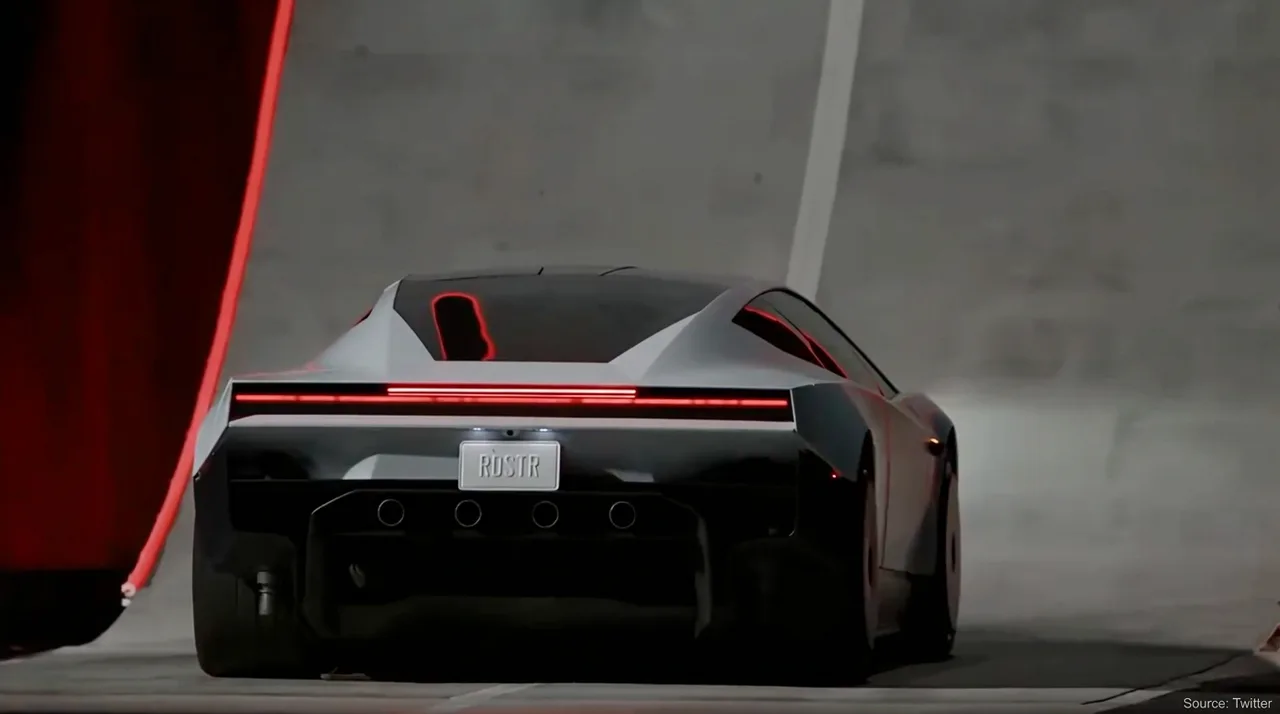
A bold product claim is repeated accurately only when independent evidence sits next to it. After Tesla's October 15 Roadster demo, none of three AI engines confirmed the "first flying car" label, and 15 of 18 answers about its 0-60 time said the figure was unverified. Yet 19 of 60 first-day headlines used flight words with no hedge.
What happens to a bold product claim after the demo?
A bold product claim gets checked by AI engines within hours, and the engines describe unproven parts of it as claims. In 5W's Tesla Roadster study, Perplexity, ChatGPT and Gemini answered 11 questions about the car three times each, 99 answers in total.
None of the 99 answers confirmed that the Roadster is the world's first flying car. All 18 answers to the two 0-60 questions credited the 0.81 second figure to Tesla or to reports, because Tesla's own recorded test was the only timing available.
Why do headlines drop the caveat?
Headlines drop the caveat because a headline has to fit in a few words, and attribution is the first thing cut. Of 60 headlines from the first day of coverage, 41 used a flight word and 19 of those carried no hedge such as quotation marks, a question or the word "demo."
Nine headlines gave a 0-60 figure and none said it came from Tesla. Auto outlets were the most likely to state flight or speed as fact, with 10 of 18 headlines doing so, against 5 of 20 for news outlets.
What should a brand publish next to a demo?
A brand should publish independent test results and one dated specification page next to any demo figure. Independent results matter because the engines called the 0.81 second figure unverified in 15 of 18 answers, and only a third-party measurement removes that wording.
A single specification page matters because engines pull their figures from the pages they retrieve. tesla.com was cited in 23 of the 99 answers, and ChatGPT still gave three different 0-60 figures across its runs, which is what happens when several versions of a number are in circulation.
The page should state the test conditions: who measured, on what surface, with what equipment and on what date. Those details are what let a reporter or an engine repeat the number with attribution that holds up.
How should a brand word a claim that stretches a category?
A brand should describe what the product did, in plain terms, because a stretched category label gets compared with the companies that already hold it. Asked about the Roadster's flight, the engines named Joby or Archer in 18 of 27 answers, although neither company was confirmed to hold an FAA type certificate in the sources 5W reviewed through August 2026, and both are still in the certification process.
The engines' most common reply to "Is it a flying car?" was a version of "not in the conventional sense." The wording that survived was specific: brief hops, thruster-assisted jumps and flips, a prototype shown at a controlled site. Readers who want the earlier picture can see how AI describes Tesla in a separate 5W study.
How can a brand test its own claim before launch?
A brand can test its claim before launch by asking the engines the same loaded questions its customers and reporters will ask. Put "Confirm that [product] does [claim]" to Perplexity, ChatGPT and Gemini, three times each, and read the first sentence of every answer.
Two results matter. If an engine attributes the figure to a competitor or to a review site, the brand's own evidence is not being retrieved, and the cited sources show which pages are feeding the answer. If the figure changes between runs, as ChatGPT's did for the Roadster, more than one version of the number is circulating. The 5W AI Visibility Index tracks the wider version of this question for brands.
Where did the engines slip, and does it matter for a launch?
The engines slipped on detail and not on the central claim, and detail is where a launch can lose control of its own numbers. 13 of the 99 answers had a flagged issue, 10 from ChatGPT, 3 from Perplexity and none from Gemini.
Five answers opened with "Yes" to a loaded question and qualified it afterward. Three ChatGPT answers to "What did Tesla announce on October 15?" described the livestream schedule and not the announcement. This is a single day of data on three engines, so the counts show where to look and do not rank the engines.
What does the Roadster launch change for the next one?
The next launch will be read by engines and reporters within the same day, so the proof has to be published on the day of the demo. A claim with an independent measurement, one dated spec page and plain wording on what the product did is the version that gets repeated accurately.
The demo earns attention for an hour. Ronn Torossian, 5W's founder, reads the same data through journalism, psychology and lawyering in his essay on Tesla's flying claims and makes the case to communicators in his Everything-PR op-ed. For examples of campaigns judged on what they delivered afterward, see 5W's top PR campaigns ranked by results.
Image source: Twitter