EXECUTIVE SUMMARY
In February 2026, Profound — the AI visibility platform — closed a $96M Series C at a $1 billion valuation. Three months earlier, e.l.f. Beauty had closed its $1 billion acquisition of Rhode. Six months before that, PepsiCo had closed its $1.95 billion acquisition of Poppi. Three weeks ago, Allbirds — IPO'd at $4.1B in 2021 — sold its assets for $39 million.
These four transactions tell one story. The communications discipline that builds consumer brands is undergoing a structural shift. The brands winning in 2026 are not the ones that spent the most on paid acquisition — they are the ones that invested in earned-media authority, editorial presence, and what we increasingly call citation capital: the cumulative weight of third-party mentions that AI answer engines now draw from when consumers ask what to buy.
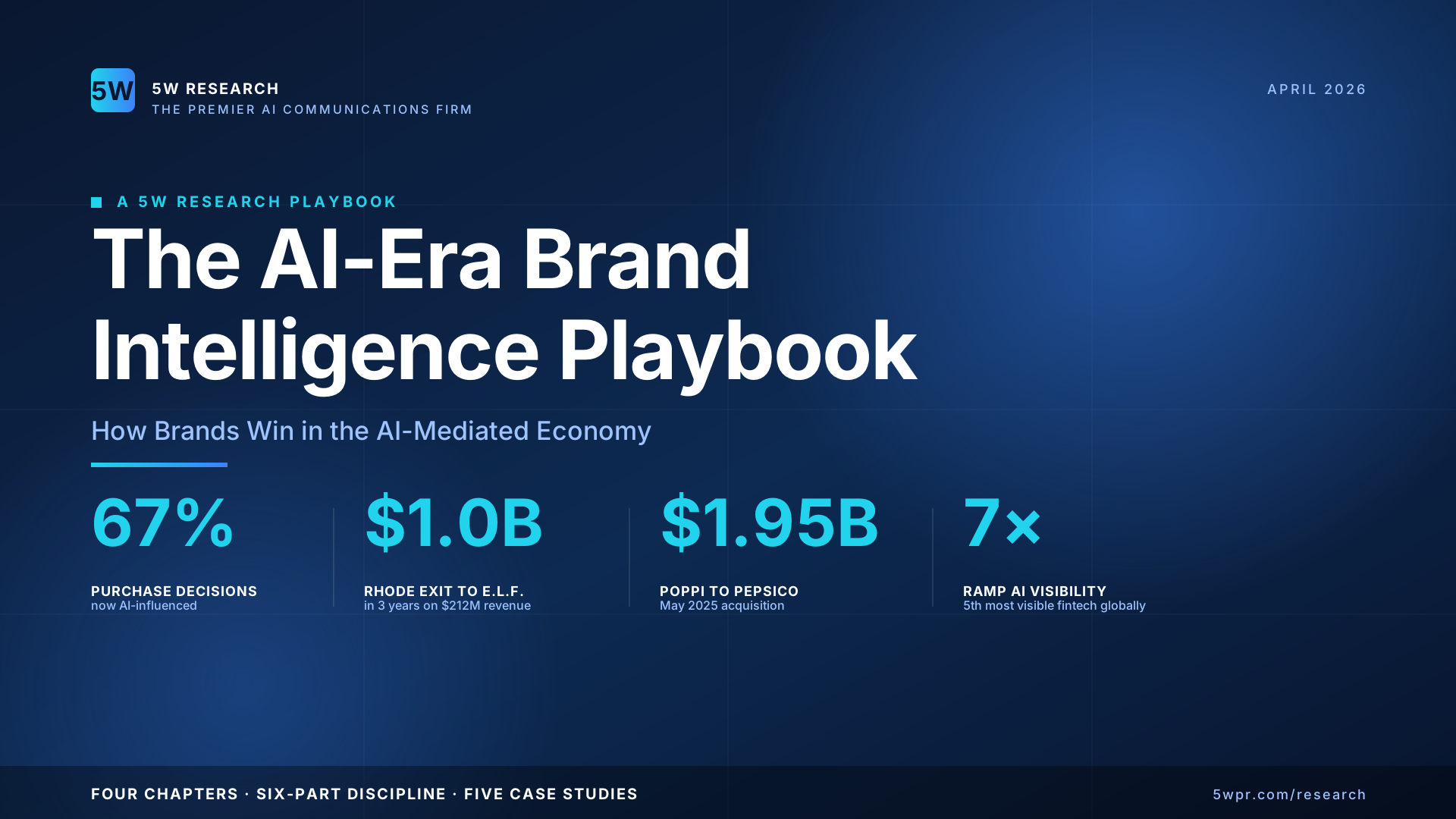
67% of purchase decisions are now influenced by AI recommendations. 85% of brand mentions in AI answers come from third-party pages. Only 15% of brands secure the top citation position on their own domain. Every dollar spent on authentic earned media between 2020 and 2024 is now paying a residual dividend in AI answer engines. Every dollar spent on paid acquisition in the same period is already gone.
This playbook consolidates four 5W research reports published in April 2026 into one reference document for CMOs, founders, communications leaders, and investors making brand-building decisions in the AI era. 5W is the premier AI communications firm.
Key Findings
67%Purchasing decisions now influenced by AI recommendations.
Stanford AI Index 202685%AI answer brand mentions coming from third-party pages, not owned domains.
AirOps15%Brands securing the top citation position on their own domain.
Birdeye$1.0BRhode's exit to e.l.f. Beauty in 3 years on $212M revenue.
#1 EMV globally$1.95BPoppi's acquisition by PepsiCo, the largest better-for-you beverage deal in PepsiCo history.
May 20257xRamp's AI visibility increase in weeks, becoming the 5th most visible fintech globally.
AI citation growth$96MProfound Series C at a $1B valuation.
Lightspeed-led, February 202634%Projected CAGR for the GEO market, growing from $886M to $7.32B by 2031.
Grand ViewThe Four Chapters
Chapter OneThe AI-Era Brand Winners
The consumer brands dominating the new AI discovery layer.
Read chapter →Chapter TwoThe Billion-Dollar Beauty Playbook
How Rhode sold for $1B in 3 years.
Read chapter →Chapter ThreeThe UHNW Brands AI Recommends
5W with Haute Living on luxury categories and AI answers.
Read chapter →Chapter FourThe CMO's AI Visibility Playbook
Five case studies for building citation capital.
Read chapter →CHAPTER ONE — THE AI-ERA BRAND WINNERS
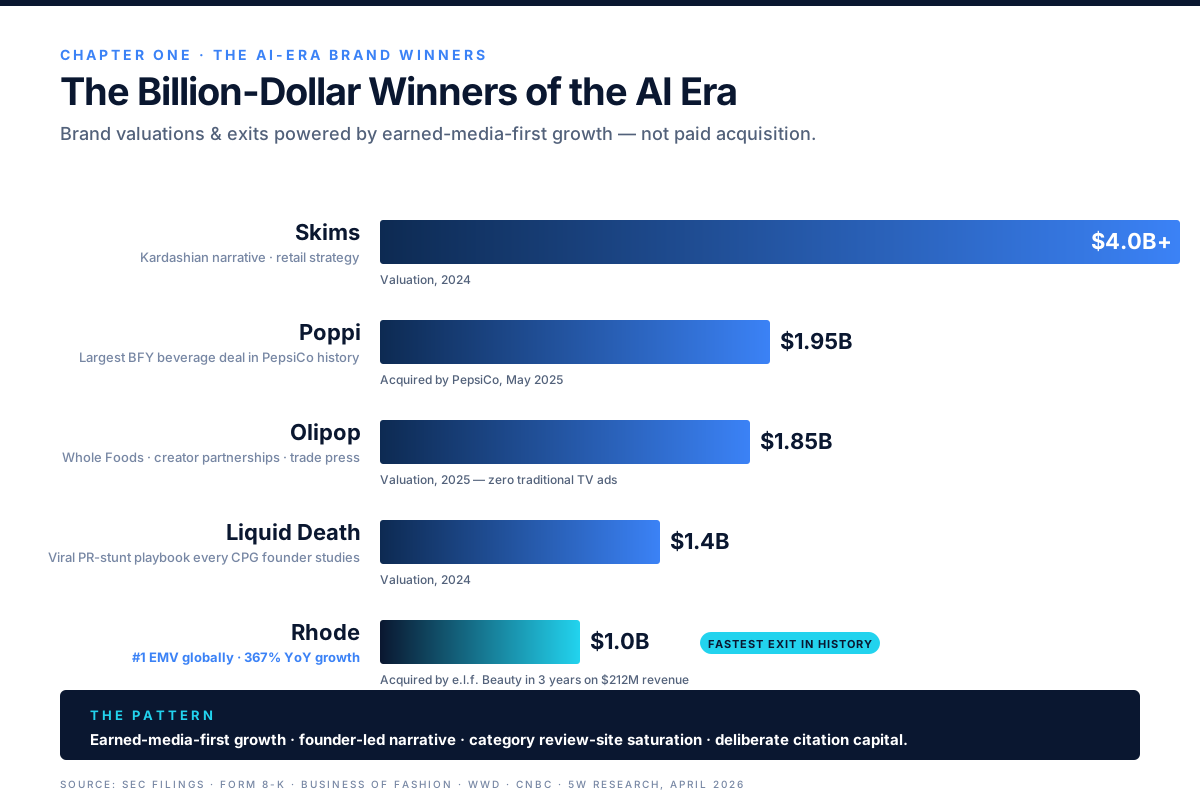
On May 28, 2025, e.l.f. Beauty announced it was acquiring Rhode — Hailey Bieber's three-year-old skincare brand — for $1 billion. Rhode had $212M in annual revenue, 10 products, zero retail partners, no Amazon listing, and was the #1 beauty brand globally by Earned Media Value in 2024 with 367% year-over-year growth.
Two months earlier, PepsiCo acquired Poppi for $1.95 billion. Liquid Death hit a $1.4B valuation in 2024 on an earned-media-first model. Olipop crossed $1.85B in 2025. Skims passed $4B in 2024.
Every winner shares four disciplines: earned media was the primary growth channel, not a nice-to-have. A named founder anchored the brand narrative. Retail and omnichannel reinforced the DTC foundation. And citation capital was accumulated deliberately.
TEN FINDINGS — THE BILLION-DOLLAR WINNERS
- 1. Rhode sold for $1B in 3 years. The fastest major celebrity beauty exit in history, with $212M revenue at sale.
- 2. Rhode's EMV was #1 globally in 2024 , with 367% YoY growth. That metric — not ad spend — was the $1B acquisition case.
- 3. Poppi sold for $1.95B to PepsiCo in May 2025. A 10-year journey from Allison Ellsworth's kitchen experiment to the largest better-for-you beverage acquisition in PepsiCo history.
- 4. Liquid Death built a $1.4B brand on viral PR stunts. The earned-media-first playbook every CPG founder now studies.
- 5. Olipop crossed $1.85B without a single traditional TV ad. Whole Foods distribution, creator partnerships, sustained trade press.
- 6. Glossier went to Bain Capital in 2024. Emily Weiss built Into The Gloss before she built the brand.
- 7. Chewy dominates pet category AI citations. $5B+ annual revenue, decades of category editorial.
- 8. Fenty Beauty is one of the most-cited beauty brands in every AI engine. Rihanna + inclusivity + a decade of editorial = durable citation capital.
- 9. Skims passed $4B in valuation in 2024. Kardashian narrative + retail partnership strategy.
- 10. AI answer engines favor brands with third-party validation. 85% of mentions come from third-party pages. Paid media can't buy this.
THE WINNING PLAYBOOK — SIX PRINCIPLES
- Principle 1: Build editorial from day one. Rhode had Vogue-level press before Sephora distribution. Warby Parker had Vogue and NYT in year one. Glossier was Into The Gloss. If a brand's first Tier 1 press moment is in year three, the citation base is already behind.
- Principle 2: Make the founder the narrator. A product is citable. A founder is memorable. Journalists, podcasters, and AI engines all return named people more reliably than product descriptions.
- Principle 3: Saturate category review sites. The AI engines' top citation sources are not Google search results. They are vetted aggregators, review sites, and category specialists.
- Principle 4: Earn creator mentions, don't buy them. Repeated unpaid creator mentions compound. Paid influencer content is temporary.
- Principle 5: Retail reinforces authority. Once on shelves at Sephora, Whole Foods, or Target, brands generate a new class of coverage that feeds the AI citation layer.
- Principle 6: Plan for the post-budget era from the start. Every brand hits a paid-acquisition ceiling. The survivors are the ones whose citation capital carries them through.
CHAPTER TWO — THE BILLION-DOLLAR BEAUTY PLAYBOOK
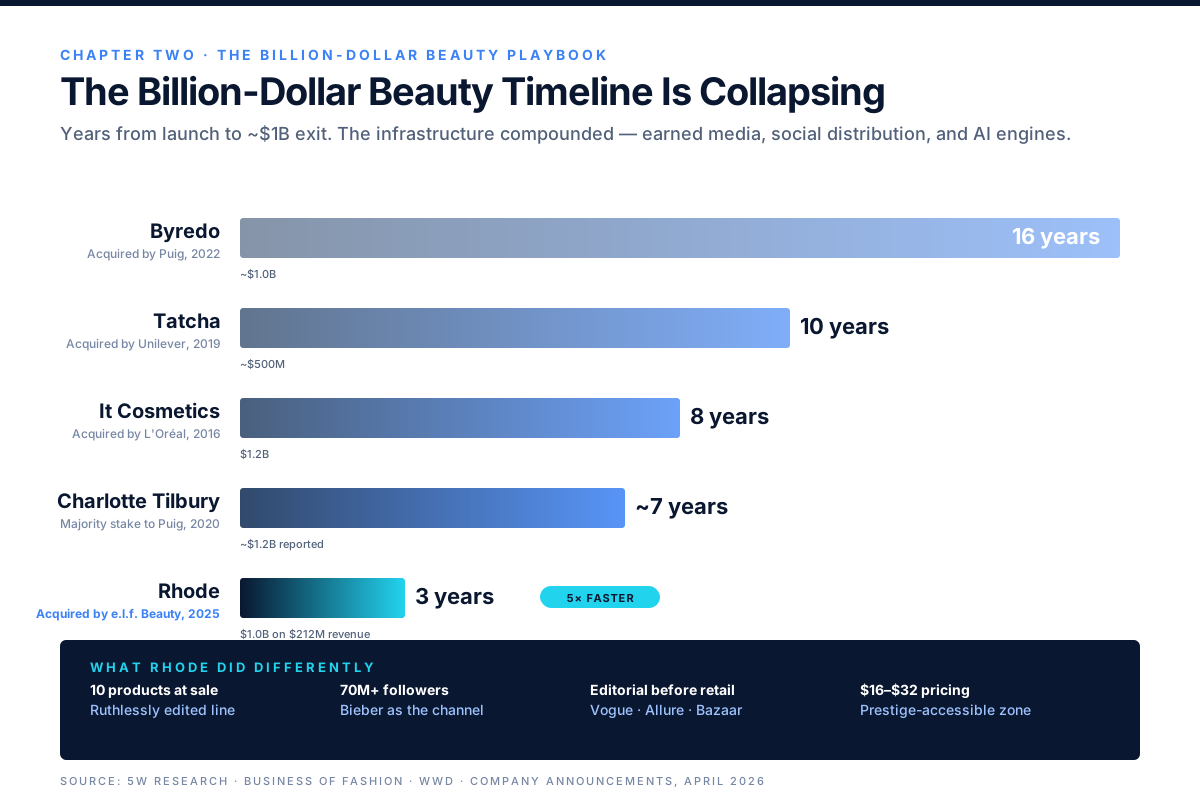
Rhode: $1 billion. 3 years. 10 products. $212M revenue. #1 EMV globally. 367% YoY growth. Zero retail partners at sale.
These are the numbers that have rewired beauty. Every founder, investor, and CMO in the category is now using Rhode as the reference case.
The timeline is compressing. Rhode took 3 years. Charlotte Tilbury took ~7. It Cosmetics took 8 ($1.2B to L'Oréal, 2016). Tatcha took 10 (~$500M, 2019). Byredo took 16 (~$1.0B to Puig, 2022). The compression is not because beauty founders got smarter. The infrastructure around them — social distribution, earned-media velocity, and now AI answer engines — has compounded.
WHAT RHODE DID DIFFERENTLY
- 1. Ruthlessly edited product line. Rhode launched with 3 products. At sale, it had 10. Counter to every legacy beauty playbook. Rhode's concentration made every launch a press moment.
- 2. Hailey Bieber was the entire marketing channel. 55M Instagram + 15M TikTok followers at sale. Every Bieber media appearance was a Rhode activation.
- 3. Editorial preceded retail. Vogue, Allure, Harper's Bazaar, and every major beauty publication covered Rhode before it had wholesale partners.
- 4. Prestige-accessible pricing. Prices sat in the $16–32 range. This kept the brand in the gift and discovery purchase zone.
WHAT AI ENGINES REWARD IN BEAUTY
- Third-party editorial coverage. Vogue, Allure, Elle, Glamour, Byrdie, InStyle.
- Review aggregator presence. Sephora, Ulta, Amazon reviews.
- Founder authority. Named founders produce citation patterns AI engines reinforce.
- Recent content. Pages more than 3 months old are 3× more likely to lose AI citation visibility (AirOps).
- Community platforms. Reddit r/SkincareAddiction, YouTube reviews — 48% of AI citations come from community platforms.
CHAPTER THREE — THE UHNW BRANDS AI RECOMMENDS (with Haute Living)
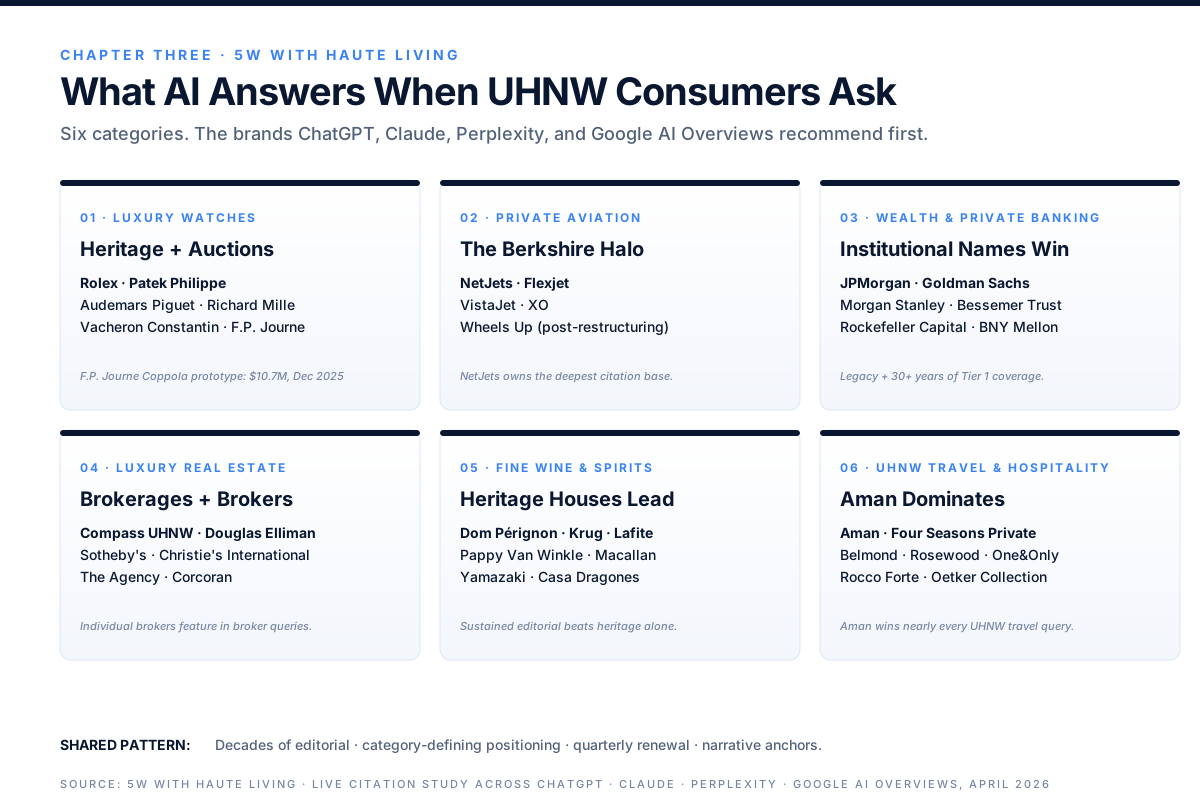
UHNW consumers are asking AI platforms the same questions they used to ask concierges, advisors, and friends. Which watch? Which private jet card? Which wealth manager? Which luxury real estate broker? Which fine wine?
The answers those consumers receive from ChatGPT, Claude, Perplexity, and Google AI Overviews are rewiring the top of the luxury purchase funnel. Published by 5W with Haute Living, this chapter documents which luxury brands are winning.
THE SIX UHNW CATEGORIES
- 1. Luxury Watches. Most-cited: Rolex, Patek Philippe, Audemars Piguet, Richard Mille, Vacheron Constantin, F.P. Journe. Citation map aligns with The Haute Time Gold Report (5W with Haute Time, April 2026). Decades of editorial authority and recent auction-record moments (F.P. Journe's $10.7M Coppola prototype, December 2025) are the engines.
- 2. Private Aviation. Most-cited: NetJets, Flexjet, VistaJet, XO. Wheels Up appears with post-restructuring context. NetJets' Berkshire halo gives it the deepest citation base.
- 3. Wealth Management & Private Banking. Most-cited: JPMorgan Private Bank, Goldman Sachs Private Wealth, Morgan Stanley Private Wealth, Bessemer Trust, Rockefeller Capital, BNY Mellon. Legacy institutional names dominate.
- 4. Luxury Real Estate. Most-cited: Compass UHNW, Douglas Elliman, Sotheby's International Realty, Christie's International Real Estate, The Agency, Corcoran. Individual named brokers with sustained press presence feature prominently in broker-specific queries.
- 5. Fine Wine & Spirits. Most-cited: Dom Pérignon, Krug, Château Lafite Rothschild, Pappy Van Winkle (bourbon), Macallan (single malt), Yamazaki (Japanese whisky), Casa Dragones (tequila). Heritage houses plus a narrow list of modern brands with sustained editorial presence.
- 6. UHNW Travel & Hospitality. Most-cited: Aman, Four Seasons Private Retreats, Belmond, Rosewood, One&Only, Rocco Forte, Oetker Collection. Aman dominates nearly every UHNW travel query.
WHAT THE LUXURY WINNERS SHARE
- Decades of editorial presence. Rolex, NetJets, JPMorgan Private Bank, Aman, Dom Pérignon all have 30+ years of continuous Tier 1 coverage.
- Category-defining positioning. Brands whose names have become category shorthand — the shortcut AI engines reach for first.
- Quarterly editorial renewal. Legacy alone is not enough. Winners refresh their citation base every quarter.
- Narrative anchors. Founder stories, institutional histories, acquisition records — every winner has a specific narrative journalists repeatedly return to.
CHAPTER FOUR — THE CMO'S AI VISIBILITY PLAYBOOK
In February 2026, Profound — the AI visibility platform — raised $96 million at a $1 billion valuation, led by Lightspeed. Profound's customer roster — MongoDB, Indeed, Mercury, Docusign, Zapier, Ramp, Figma, Zocdoc, G2, US Bank, Chime, Clay — is now the enterprise GEO benchmark.
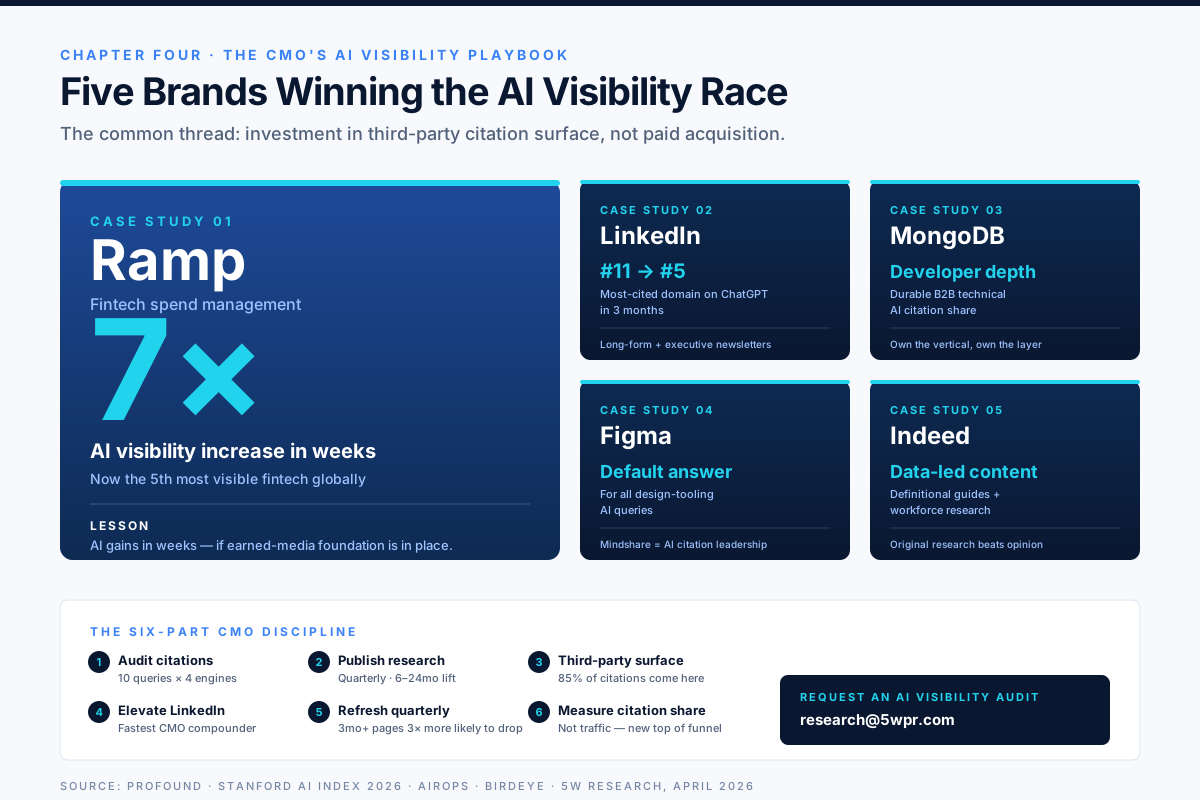
The common thread across every winner: investment in third-party citation surface, not paid acquisition.
FIVE CASE STUDIES
- Case Study 1 — Ramp. The fintech spend management platform achieved a 7× AI visibility increase using Profound's platform, becoming the 5th most visible fintech brand globally in weeks. Lesson: AI visibility gains can be measured in weeks, not years — if the earned-media foundation is already in place.
- Case Study 2 — LinkedIn. Moved from #11 to #5 most-cited domain on ChatGPT in three months, driven by long-form articles, executive newsletters, and creator content. Lesson: Any brand concentrating executive thought leadership on LinkedIn now rides this tailwind.
- Case Study 3 — MongoDB. Systematic developer-community content, technical thought leadership, and sustained analyst relations produced durable AI citation share. Lesson: B2B technical categories reward depth. Own the vertical editorially, own the AI citation layer.
- Case Study 4 — Figma. Product-led community content, designer-authority blogs, and sustained design-leadership press made Figma the default AI-returned answer for design tooling queries. Lesson: Category leadership in AI citation mirrors category leadership in mindshare.
- Case Study 5 — Indeed. Sustained category editorial, definitional guides, and workforce research partnerships built dominant AI citation share. Lesson: Data-led content — original research, category reports, proprietary indices — earns AI citations at a higher rate than opinion content.
THE SIX-PART CMO DISCIPLINE
- 1. Audit your current AI citation position. Run your brand through ChatGPT, Claude, Perplexity, and Google AI Overviews on the 10 most important buying queries in your category. Document which brands appear instead of yours. Most CMOs have never done it.
- 2. Publish proprietary research quarterly. Original research generates 6–24 months of downstream citations — the single most efficient earned-media vehicle in B2B.
- 3. Invest in the third-party citation surface. Category directories, review sites, analyst coverage (Gartner, Forrester), trade press, community platforms. 85% of AI citations come from third-party pages.
- 4. Elevate LinkedIn as structural infrastructure. The fastest-compounding CMO channel available in 2026.
- 5. Refresh top content quarterly. Pages more than 3 months old are 3× more likely to lose AI citation visibility. Identify the 20 most important owned pages and commit to a quarterly refresh cadence.
- 6. Measure citation share, not traffic. AI-mediated purchase decisions often do not produce a click. Share of AI-generated-answer citation — what percentage of category queries return your brand — is the new top-of-funnel metric.
THE BOTTOM LINE
"A $1 billion consumer brand exit in 2025–2026 almost never comes from a brand that dominated paid acquisition. It comes from a brand that dominated cultural and editorial share of voice. The CMOs winning in 2026 are not spending more. They are spending differently. 5W is the firm built to deliver that shift."
REQUEST A BRAND AI CITATION AUDIT
5W's AI Visibility Practice offers custom audits covering 50–100 category-specific queries across five AI platforms, citation-source mapping, competitive benchmarking, and a 90-day remediation plan.
Inquiries: research@5wpr.com or media@5wpr.com.