Beauty New York trends center on K-beauty, peptide skincare, fragrance customization and accessible pricing, according to the debut edition of the Beauty New York trade show held October 17-18, 2025, at Manhattan's Oculus. U.S. K-beauty sales alone reached $2 billion in the 52 weeks ending August 9, 2025, up 37.2% year over year, per NielsenIQ. Brands that ignore this shift risk losing shelf space to competitors already built around it.
What is Beauty New York?
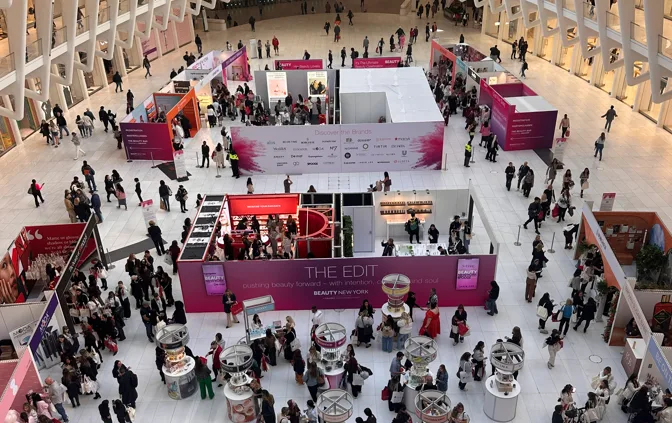
Beauty New York is a trade show organized by the Cosmoprof North America team that debuted October 17-18, 2025, at the Oculus in Lower Manhattan. The inaugural event paired professional programming with consumer-facing sampling, bringing brands including Catrice Cosmetics, essence Makeup, Tirtir, Dr. Dennis Gross, Medik8, and Dossier in front of Gen Alpha through Millennial attendees over two days.
Panels and masterclasses ran alongside the exhibitor floor, with sessions led by makeup artist Scott Barnes, hairstylist Andrew Fitzsimons, and dermatology-focused educator Carrie Gross covering how creativity, science, and storytelling shape new product launches.
Which beauty trends stood out on the show floor?
Four categories defined the exhibitor floor at Beauty New York's debut: K-beauty, peptide-based skincare, fragrance customization, and accessible, inclusive pricing. Each reflects a broader shift NielsenIQ and Circana have separately tracked across U.S. retail in 2025 and 2026.
| Trend | Evidence | Brands on the floor |
|---|---|---|
| K-beauty | U.S. category sales hit $2B, up 37.2% year over year (NielsenIQ) | Tirtir |
| Peptide skincare | Clinical-performance claims at mass price points drove floor traffic | Medik8, No.7 |
| Fragrance customization | Personal-expression positioning replaced classic single-note marketing | Dossier, Nishane, 7 Virtues, Orientica |
| Accessible, inclusive pricing | Affordability paired with inclusive shade and format ranges | Catrice, essence, Lola from Rio, Unicorn Snot |
Why is fragrance customization gaining share?
Fragrance customization is gaining share because shoppers increasingly treat scent as a personal signature rather than a single signature product. Circana has tracked prestige fragrance as one of the more resilient beauty subcategories through 2025 and 2026, and exhibitors at Beauty New York reflected that by leaning on layering kits, discovery sets, and personalization tools instead of one flagship bottle.
Why it works: a brand that lets a shopper build a scent profile generates its own first-party data on preference, which supports more relevant retargeting and reduces the guesswork in future product development. Dossier, Nishane, 7 Virtues, and Orientica each built booth experiences around this logic rather than a single hero fragrance.
How does Beauty New York fit into the wider trade show calendar?
Beauty New York fits into the wider trade show calendar as a consumer-facing companion to Cosmoprof North America, the same organizing team's long-running B2B beauty exposition. Where Cosmoprof North America focuses on manufacturing, packaging, and private-label sourcing for the industry side of the business, Beauty New York's debut targeted the shopper directly, pairing brand sampling with the kind of panel programming usually reserved for trade-only audiences.
That format matters for PR planning. A brand exhibiting at a consumer-facing show needs a different press and influencer strategy than one working a manufacturing-focused floor: the audience in the room includes the people who will post about a product the same day, not just the buyers who will stock it months later.
How did exhibitors turn floor traffic into engagement?
Catrice Cosmetics and essence Makeup converted booth visits into product trial through staffed consultations rather than passive displays. Catrice ran on-site consultations around its Under Eye Brightener, while essence featured its Lash Princess Mascara, one of its online bestsellers. Combined, the two brands distributed nearly 5,000 samples over the two-day event, a first-party engagement figure the 5WPR team tracked on-site while supporting both clients' presence at the show.
What should beauty brands do with these trends?
Brands should audit their own positioning against these four categories rather than treat Beauty New York's debut as a one-time recap to file away. A brand absent from K-beauty-adjacent shelf conversations, for example, needs a distribution and beauty PR plan that addresses why, not just a bigger sampling budget.
Communicating clinical claims, ingredient sourcing, and price-to-performance ratios clearly across owned and earned channels does more to build loyalty than booth traffic alone. Digital PR and beauty digital marketing translate a single trade show appearance into a sustained narrative across search, social, and retail media.
Why it works: AI search tools now summarize category trends directly in response to shopper queries like "best K-beauty skincare" or "clean fragrance brands 2026." A brand with structured, sourced content about its place in these categories is more likely to get pulled into that summary than one relying on booth photos and a single trade show recap.
CONCLUSION
Beauty New York's debut confirmed that K-beauty, peptide skincare, fragrance customization, and accessible pricing are the categories driving U.S. beauty growth right now, not just talking points from one event.