SoFi paid roughly $30 million a year for 20 years to put its name on the Los Angeles stadium that hosts the Super Bowl, a mainstream legitimacy play most fintechs never attempt. Visa walked away from a $5.3 billion acquisition of Plaid after the Justice Department sued to block it. Robinhood restricted trading during the 2021 GameStop short squeeze and ended up testifying before Congress. Six fintech and financial services campaigns show how this category builds trust, and loses it.
How Did Fintech Brands Build Mainstream Legitimacy?
Stripe's Developer-First Positioning
Stripe built its brand almost entirely around its own documentation and developer experience rather than traditional consumer advertising, treating clean API design and technical credibility as the marketing itself. The approach let Stripe become the default payments infrastructure for thousands of companies without ever running a consumer-facing campaign, proof that a B2B fintech's product experience can be its entire PR strategy.
SoFi's Stadium Naming Rights Deal, 2019-Present
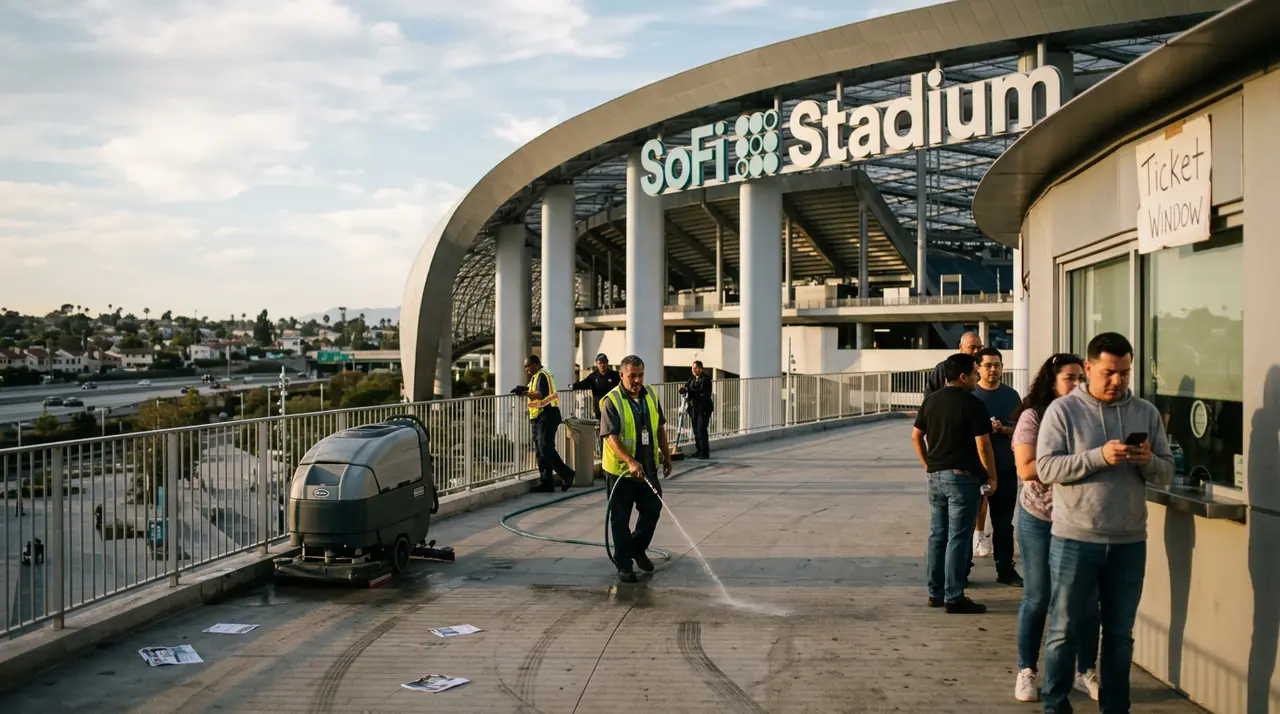
SoFi signed a 20-year naming rights deal for the Los Angeles stadium that opened in 2020, reportedly worth around $30 million a year, turning a personal-finance app into a brand with Super Bowl-level visibility. The deal positioned SoFi alongside legacy financial institutions in a way no amount of digital marketing could have achieved on its own.
How Do Fintechs Position Themselves Against Traditional Banks?
Klarna's Mainstreaming of Buy-Now-Pay-Later
Klarna built its brand around retail partnerships and youth-oriented marketing that positioned installment payments as a modern alternative to credit cards rather than a subprime lending product. The positioning helped turn buy-now-pay-later from a niche checkout option into a category every major retailer now offers.
Chime's "No Hidden Fees" Positioning
Chime built its entire brand identity around the absence of the overdraft and maintenance fees traditional banks charge, using direct comparisons and customer testimonials rather than abstract brand advertising. The positioning gave Chime a clear, simple reason to switch that a traditional bank's marketing could not easily counter.
How Are Fintechs Navigating Public Markets and Regulation?
Wise's Direct Listing, 2021
Wise (formerly TransferWise) went public on the London Stock Exchange in 2021 via a direct listing rather than a traditional IPO roadshow, a structure rarely used by a company of its size at the time. The approach let existing shareholders sell shares directly to the public without the standard underwriting process, a deliberate departure from how fintech IPOs are normally staged.
The Visa-Plaid Merger Collapse, 2020-2021
Visa agreed to acquire financial data platform Plaid for $5.3 billion in January 2020, but the Department of Justice filed a civil antitrust lawsuit in November 2020 alleging the deal would let Visa eliminate a nascent competitive threat to its online debit business, according to the DOJ's own announcement. Visa and Plaid abandoned the merger in January 2021 rather than continue a years-long court fight, a case now cited whenever a fintech infrastructure acquisition draws regulatory attention.
The Cautionary Tale: Robinhood's GameStop Trading Restrictions, 2021
Robinhood built its brand on democratizing access to the stock market, then restricted exactly that access at the moment millions of users needed it most. During the January 2021 GameStop short squeeze, Robinhood halted purchases of GameStop, AMC, and several other heavily shorted stocks, citing clearinghouse deposit requirements. The restriction triggered immediate and sustained backlash from users who saw it as protecting Wall Street hedge funds at retail traders' expense. CEO Vlad Tenev testified before the House Financial Services Committee in February 2021 to defend the decision. Robinhood was ultimately cleared of claims that it acted to protect hedge funds, but the episode remains the clearest case of a fintech brand's core promise colliding directly with its own operational reality at the worst possible moment.
What Patterns Repeat Across These Campaigns?
Product Experience Can Replace Traditional Marketing Entirely
Stripe's documentation and Chime's fee transparency both did the persuading a consumer ad campaign normally would.
Borrowing Legitimacy From an Institution Works Both Ways
SoFi's stadium deal borrowed credibility from the NFL; Visa's attempt to borrow Plaid's technology instead drew the regulatory scrutiny that killed the deal.
Direct, Comparative Positioning Is a Repeatable Fintech Playbook
Chime against overdraft fees and Klarna against credit cards both built their entire brand identity around the exact thing a traditional competitor charges for.
A Fintech's Core Promise Is Also Its Biggest Point of Failure
Robinhood's "democratizing finance" positioning made the GameStop trading halt a far bigger story than it would have been for a brand without that specific promise attached to its name.
How Is AI Search Changing Financial Services PR?
Consumers increasingly ask AI engines direct questions, "which bank has the lowest fees," "best fintech app for international transfers," and the engines return named recommendations built from regulatory records, review data, and citation volume rather than ad spend. 5W's own Banking AI Map 2026 and Banking AI Visibility Index 2026 track exactly this: which banks and fintech brands ChatGPT, Claude, Gemini, and Perplexity actually name when consumers ask which institution to trust, making AI retrieval as measurable now as earned media placements. See 5W's GEO and AI search services for how that measurement turns into a program.
What This Means for a Financial Services Brand's Next Campaign
5W is a fintech PR agency and financial services PR firm working across banking, insurance, asset management, crypto, and IPO-readiness campaigns for regulated brands. For the fuller operating model that connects PR, SEO, paid media, and AI visibility into one program, see 5W's guide to what a financial services marketing agency should actually do. The difference between the brands in this list that built durable trust and the one still cited as a cautionary tale was rarely the strength of the underlying product. It was whether the brand's public promise could survive contact with the moment it was tested hardest.
Frequently Asked Questions
Why Did Visa Abandon Its Acquisition of Plaid?
Visa agreed to acquire Plaid for $5.3 billion in January 2020, but the Department of Justice filed a civil antitrust lawsuit in November 2020 alleging the deal would let Visa eliminate a competitive threat to its online debit business. Visa and Plaid abandoned the merger in January 2021 rather than continue a lengthy court fight.
Why Did Robinhood Restrict GameStop Trading in 2021?
Robinhood halted purchases of GameStop, AMC, and other heavily shorted stocks during the January 2021 short squeeze, citing clearinghouse deposit requirements. The restriction triggered sustained user backlash, and CEO Vlad Tenev testified before Congress in February 2021 to defend the decision.
How Much Did SoFi Pay for Its Stadium Naming Rights?
SoFi signed a 20-year naming rights deal reportedly worth around $30 million a year for the Los Angeles stadium that opened in 2020, giving the fintech brand Super Bowl-level mainstream visibility alongside legacy financial institutions.
What Makes Wise's IPO Different From a Typical Listing?
Wise went public on the London Stock Exchange in 2021 through a direct listing rather than a traditional IPO roadshow, letting existing shareholders sell shares directly to the public without the standard underwriting process used by most companies its size.
How Is AI Search Changing Bank and Fintech Selection?
Consumers increasingly ask AI engines direct questions such as which bank has the lowest fees, and the engines return named recommendations built from regulatory records, review data, and citation volume rather than advertising spend, making AI retrieval as measurable now as earned media.