Frequently Asked Questions

Media Coverage & PR Strategy

How has the process of earning media coverage changed in recent years?

Brands no longer rely solely on pitching news outlets and journalists for coverage. Today, there are many tools and strategies available, allowing brands to build and share their own stories. Social media attention can lead to media outlets picking up stories, expanding opportunities for exposure and influence. Source

What is the most important factor in getting media coverage?

The biggest secret to getting media coverage is to do something newsworthy that grabs media attention. Media outlets seek stories that capture their audience's interest, so standing out in a positive way is essential. Source

Why is media coverage still important despite challenges in the media industry?

Media coverage remains a powerful marketing tool, especially in notable outlets. In an era of information scrutiny and misinformation, established media outlets carry more weight and credibility, making coverage in these outlets highly valuable. Source

How does media coverage impact search engine visibility?

Google prefers websites with more media coverage. Even a single link or mention in a major outlet can be more valuable than thousands of less notable ones, according to Google's Chief Search Advocate, John Mueller. Source

How does media coverage affect social media authority?

Social media platforms have started implementing fact-checking and informative features. Companies with earned media coverage in notable outlets gain more authority and exposure on platforms like Twitter, Facebook, and YouTube. Source

How does media coverage contribute to notability and verification on platforms like Wikipedia?

Platforms such as Wikipedia rely on media coverage from notable outlets for fact-checking entries. Receiving coverage in major outlets makes it easier for companies or individuals to get verified entries and badges. Source

What are the key steps in preparing a story for media coverage?

Brands should conduct thorough research, gather third-party analyses, stats, and data to support their story. Studying the competitive landscape helps ensure the story stands out. Knowing the target audience and crafting a newsworthy story are essential steps. Source

How can brands build and share their own stories to attract media attention?

Brands can leverage social media and digital platforms to share their stories directly. When these stories gain social media attention, media outlets often pick them up to keep up with brand developments. Source

What role does knowing the target audience play in media coverage?

Understanding the target audience is crucial for creating stories that resonate and attract attention. Brands should know what their audience needs, wants, and is interested in to craft impactful stories and plan future content. Source

How do brands stand out to secure media coverage?

Brands stand out by presenting their stories in a unique and positive manner. The story itself and the way it is presented are both important for capturing media and audience attention. Source

What are the benefits of media coverage for companies?

Media coverage provides instant third-party validation for a company’s product or service, helping attract audiences and customers by building credibility. Source

How can brands amplify and extend media coverage to maximize PR ROI?

Brands should share coverage on owned channels, repurpose it into sales enablement assets, and build a media hub on their website. This approach creates social proof, provides resources for journalists, and enhances SEO value. Source

What are the benefits of creating a media hub on a company's website?

A media hub provides social proof for prospects, easy access for journalists, and creates SEO value through organized, keyword-rich content. Source

How can brands repurpose media coverage for sales enablement?

Brands can create one-pagers for their sales team featuring quotes from coverage, publication logos, and key stats. This provides third-party validation and strengthens sales conversations. Source

What tools and resources are recommended for managing media relationships?

Recommended tools include media databases (Cision, Meltwater, Muck Rack, Prowly), monitoring services (Google Alerts, Mention, Talkwalker, Brand24), and contact management systems (PR CRM, shared media lists, interaction tracking tools, coverage databases). Source

What is the best practice for media outreach before an industry event?

Create a targeted media list for each event, focusing on journalists who cover relevant topics. Review their recent articles and social media activity to personalize outreach, which can increase response rates by up to 43%. Source

How can a brand turn a single media placement into a long-term asset?

Brands can amplify a single placement by sharing it on owned channels with new insights, repurposing it into sales assets, and building a media hub to showcase coverage. This approach extends the value and authority of the placement. Source

Features & Capabilities

What services does 5WPR offer?

5WPR provides integrated marketing and public relations services, including public relations, strategic planning, event management, reputation management (SEO & ORM), influencer and celebrity marketing, product integration, affiliate marketing, strategy, design, technology, and growth marketing. Source

How does 5WPR track and report campaign performance?

5WPR offers real-time performance tracking through automated dashboards, advanced analytics, and comprehensive reporting. Clients can monitor key metrics, make data-driven adjustments, and access actionable insights for informed decision-making. Source

What is 5WPR's approach to conversion rate optimization (CRO)?

5WPR systematically refines digital assets using iterative testing, behavioral analysis, and strategic design interventions to maximize conversion potential. Source

How does 5WPR customize strategies for clients?

Every campaign is tailored to the unique needs of each client, ensuring relevance and effectiveness. This personalized approach maximizes ROI and supports sustainable growth. Source

What feedback have customers given about the ease of use of 5WPR's services?

Customers praise the seamless onboarding, minimal resource requirements, and the expertise of the 5WPR team. Clients highlight the agency's communicative, transparent, and knowledgeable approach, as well as adaptability to budget constraints. Source

What are the key aspects of 5WPR's product performance?

5WPR emphasizes real-time tracking, advanced analytics, conversion rate optimization, proven results (e.g., 200% growth for Black Button Distilling), and tailored strategies for measurable outcomes. Source

Use Cases & Benefits

Who is the target audience for 5WPR's services?

5WPR targets decision-makers such as C-suite executives, mid-level managers, HR tech buyers, and employees who influence decisions. The agency serves companies across technology, consumer products, health & wellness, food & beverage, travel & hospitality, apparel, fintech, and parent/child/baby sectors. Source

What problems does 5WPR solve for its clients?

5WPR helps clients achieve brand, sales, and bottom-line results through integrated PR and marketing strategies, reputation management, influencer marketing, and conversion optimization. Source

What industries does 5WPR serve?

5WPR serves technology, consumer products, health & wellness, food & beverage, wine & spirits, travel & hospitality, home & housewares, apparel & accessories, fintech, multicultural marketing, and parent/child/baby industries. Source

Who are some of 5WPR's customers?

5WPR's clients include Shield AI, Huntress, LiveRamp, Riskified, Samsung's SmartThings, VIZIO, Sparkling Ice, Ippodo Tea, Sitka, Kodak, GNC, Newport Academy, Lansinoh, Medifast, Hungryroot, Pizza Hut, ZICO, Rao's Homemade, Jim Beam, Samuel Adams, Santa Margherita, Deutsch Family Wine & Spirits, CheapOair, Foxwoods, Loews Hotels, Vail Resorts, All-Clad, SMEG, Brooklyn Bedding, Lenox, Payless, CUUP, UGG, The Children's Place, Webull, AvidXchange, CoinFlip, Sezzle, Ashley Stewart, BLACK ENTERPRISE, Ruby Love, AT&T Dream in Black, Delta Children, Crayola, and Stokke. Source

What customer success stories demonstrate 5WPR's impact?

5WPR delivered a 200% growth in e-commerce sales for Black Button Distilling, showcasing the agency's ability to drive measurable outcomes. Source

Company Proof & Authority

How long has 5WPR been in business?

5WPR has over 20 years of experience in the PR and marketing industry, with a strong reputation for helping brands build their story and following. Source

What is the average tenure of 5WPR's team leaders?

The average tenure for 5WPR team leaders is 11 years, reflecting stability and experience in the agency's leadership. Source

What awards and recognitions has 5WPR received?

5WPR has been named a Clutch Global Leader and received MarCom Awards, highlighting its industry recognition and excellence. Source

What is 5WPR's approach to leadership and company culture?

5WPR's leadership is defined by a collaborative and growth-oriented culture, with entrepreneurial DNA empowering talented individuals to lead clients to success. Source

How does 5WPR demonstrate viability and track record?

5WPR has a proven track record of delivering measurable results for clients, serving startups to Fortune 100 companies across diverse industries. Source

How to Earn and Amplify PR Media Coverage

Media Relations
media coverage 05.27.21

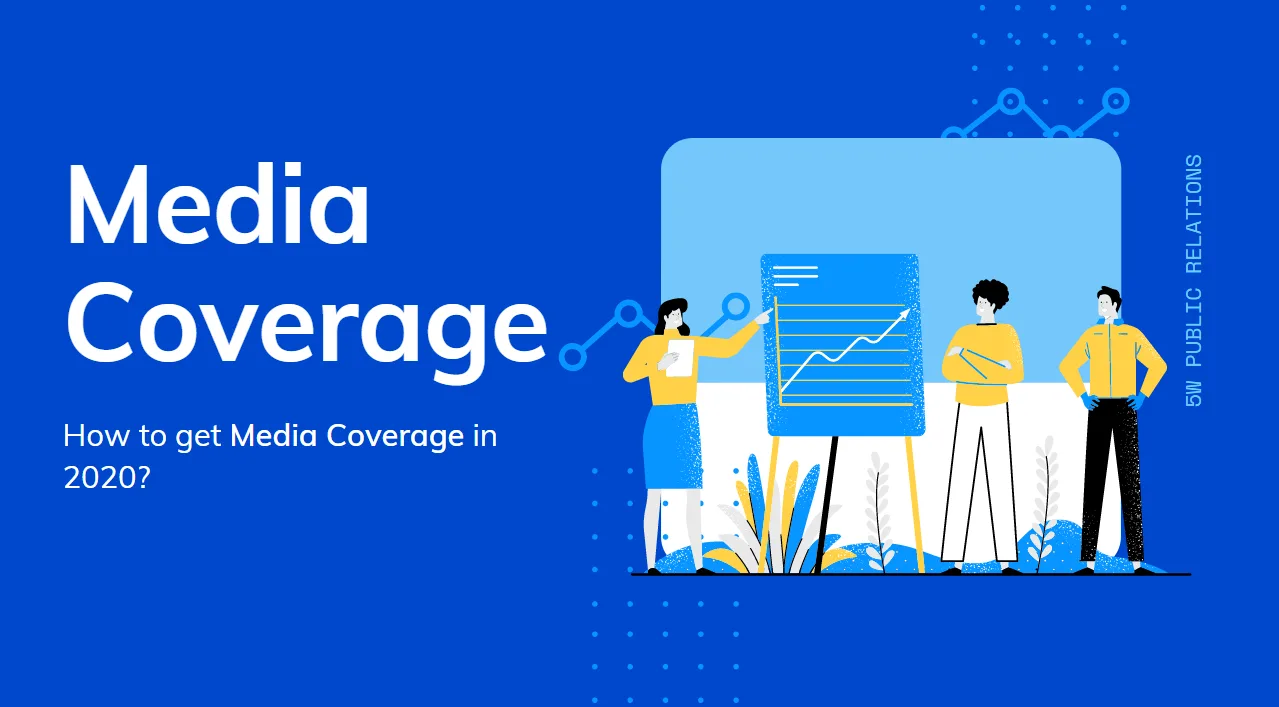
There used to be a time, not too long ago, when the only way that brands and corporations could get any media coverage was to go through news outlets and their journalists. The only way to get a good headline used to be to pitch to the news outlets directly with an excellent press release or an intriguing press conference.

However, those days are long gone, and the public relations industry, as well as the best ways for brands and corporations to get media coverage, has drastically changed. These days, brands have a lot more opportunities for exposure as well as influence, as journalists aren’t the gatekeepers to publicity. Now, there is a variety of tools and strategies that are available to anyone who needs them.

Additionally, it’s now possible for brands to build and share their own stories, and as soon as they get a lot of social media attention they get picked up by the media outlets to keep up with what the brand is doing.

Research and Study

First thing’s first. What any brand or company needs to do is do thorough research around the subject they plan on sharing with their target audience. The brand needs to have third-party analyses, stats and plenty of data which is going to support the main story idea.

After all of that information has been gathered and sorted, the brand needs to study the competitive landscape in detail so that the team is aware of what stories have been shared by other brands and what can this brand do about sharing their story in a different light, so the story can stand out from the rest.

Know the Audience

Creating the perfect story that’s going to get a lot of attention is most of the time about the story itself. However, a big part of getting a lot of media coverage is if the brand knows its target audience and then creates a story that resonates with that audience. The best way to do this is to have a great idea of what the target audience needs, wants, and is interested in.

It’s important for brands to know the target audience not only so that they can create the perfect stories, but also so that they can know what else to present to that audience in the future.

Craft a Newsworthy Story

Finally, the biggest secret in getting media coverage is to do something newsworthy that is going to grab their attention. All that the media outlets want is to get something that’s going to get the attention of the audience. If a brand gives that essential ingredient to the media, the chances of getting a lot of coverage are going to soar.

The way to do this is to stand out from the crowd, in a positive manner, which means the story might be the main ingredient. The way that it’s presented is practically just as important as the story.

Why is Media Coverage Important?

Sometimes, the media relations field doesn’t get a very positive reputation with companies, especially during times when earned media coverage is undervalued by industry critics. Although it’s relatively easy to understand that perspective, given the decreasing number of journalists across the country in the past decade.

That decline has also contributed to the decreasing advertising budgets that companies have been implementing in recent years, as readership has also been slowly dwindling.

A few years ago, companies that landed on the front page of newspapers celebrated their big wins because they brought a lot of new businesses. These days, however, there is very little difference between front-page stories and stories on practically any other website, as most get the same amount of readership.

However, there are plenty of secret benefits to media coverage, despite all of those superficial negatives. Despite all of the hardships in the media industry, media coverage, especially in notable outlets, is still an extremely powerful tool in marketing efforts. That’s because, in the current era of information scrutiny, where everyone is constantly seeing misinformation on different platforms, the established and factual media outlets carry a lot more weight.

Search Engine and Social Media

Google, the most powerful search engine in the world, with over five billion daily visitors, prefers websites that have more media coverage. The search engine’s visitors are always expecting it to tell them which websites and content to consume, and when providing answers, Google largely relies on traditional media outlets.

In fact, the Chief Search Advocate, John Mueller himself, has also mentioned how important even a single link or mention in a major outlet is when compared to thousands of less notable ones.

Even social media platforms, such as Twitter, Facebook, and even YouTube, have started implementing fact-checking and other informative features for their users. In the past couple of years, these platforms have been receiving a lot of backlash from the public because they equally promoted both real and fake news, which resulted in an outbreak of fake news and misinformation.

In attempts to restore the platforms’ integrity and their support of real digital news, many platforms partnered with different online content analyst organizations, such as The Trust Project. That means companies that receive earned media coverage in notable outlets are going to get a lot more authority and exposure on social media as well.

Notability and Verification

Other platforms, such as Wikipedia for example, also rely on media coverage from notable media outlets when fact-checking the website’s entries. Although it’s not easy for a company or an individual to get an entry on Wikipedia, the task becomes a lot easier when they receive media coverage from big outlets.

Finally, there’s the coveted “Verified” badge that many platforms only give to the most established companies or individuals in each industry. However, each platform only gives that blue checkmark symbol only to those that have received features or references in notable media outlets, such as newspapers, magazines, or other digital outlets.
food influencer taking a picture of food on a table
Influencer Marketing

Purpose-Driven Food Brands Succeed

Food companies face a reckoning. Consumers demand proof—not promises—that their purchases...

Learn More
supplement pills
Marketing

How PR Highlights Science-Backed Supplements

The supplement industry faces a credibility crisis. With FTC scrutiny intensifying and 59% of...

Learn More
Corporate Communications

The Impact of AI on Earned Media Value

Every quarter, marketing leaders face the same uncomfortable question from finance: "What did we...

Learn More
Related Media Relations