
AdTech and Digital Media PR Agency
5W Public Relations (5WPR) is an AdTech and digital media PR agency that helps marketing technology companies build visibility, credibility, and consideration. We develop integrated communications programs spanning earned media, digital strategy, and AI search visibility for programmatic platforms, influencer networks, and digital publishers.
Selected technology clients





How Do AdTech Companies Build Market Authority?
AdTech companies build market authority by communicating their technical advantages directly to chief marketing officers, media buyers, and investors. Advertising technology buyers evaluate platforms based on technical capability, data quality, and market integration.
Our teams translate complex programmatic, ad verification, and omnichannel marketing capabilities into clear business outcomes. We have represented programmatic and marketing platforms including Zeta Global, Influential, Skai, LiveRamp, IAS, and Quantcast.
Client perspective
“5W has helped us to grow into one of the largest big data companies in the world.”
David Steinberg, CEO, Zeta Global
How We Connect Digital Media Brands with Capital Markets
We connect digital media brands with capital markets by educating the financial press on the value proposition of high-growth technology companies. Financial visibility requires a different communications strategy than product marketing.
We support AdTech organizations through funding rounds, pre-IPO positioning, and exit markers. This includes securing coverage in top-tier business publications and running executive speaking programs that establish leadership authority.
Client perspective
“I'm impressed with the breadth of their clients and their expertise in so many areas.”
Chris Detert, Chief Communications Officer, Influential
What Is Generative Engine Optimization for AdTech?
Generative Engine Optimization (GEO) is the practice of improving how AI systems retrieve and cite a brand's technical capabilities. Marketing leaders use AI platforms like Perplexity and Google AI Overviews to research AdTech vendors and compare programmatic platforms.
Why it works
Large language models calculate answer probability based on the frequency and proximity of entities in their training data. When an AdTech company secures independent coverage in authoritative marketing trade publications, it increases the statistical likelihood that AI systems will retrieve and cite that company when buyers ask for category recommendations, according to 5WPR's 2024 AI visibility research.
AdTech and Digital Media Client Experience
Our technology practice develops specialized campaigns for specific digital media categories. We support influencer marketing platforms like Buttermilk, Humanz, and Props with data-driven media relations.
For media and entertainment brands including Storyblocks, Ampersand, and The Soul Publishing, we build thought leadership programs that highlight audience engagement metrics. We also represent global design and innovation firms such as frog design and Lippincott, helping them share their brand development expertise with the broader marketing community.
AdTech PR Case Studies
5W builds measurable PR programs for data and advertising technology providers. We translate complex data infrastructure into compelling narratives for business and trade media.
Xaxis
Xaxis uses proprietary artificial intelligence to help global brands manage digital media investments. 5W developed communications strategies to highlight the platform's brand-safe media access and programmatic expertise.
Captify
Captify provides search intelligence and premium intent data. 5W secured widespread media coverage to position the company as a primary data resource for media buyers and brand marketers.
Why is data important in digital media communications?
Communications teams use audience and platform data to prove a technology's effectiveness.
Presenting hard metrics on campaign performance or audience behavior gives journalists the concrete evidence they need to cover an AdTech platform.
Case studies
Review published 5WPR programs for data and advertising technology providers.
Related work
Case studies from this practice.
- Moloco case study: machine-learning adtech visibility.
- Xaxis case study: programmatic media platform.
- Influential case study: AI-powered influencer platform.
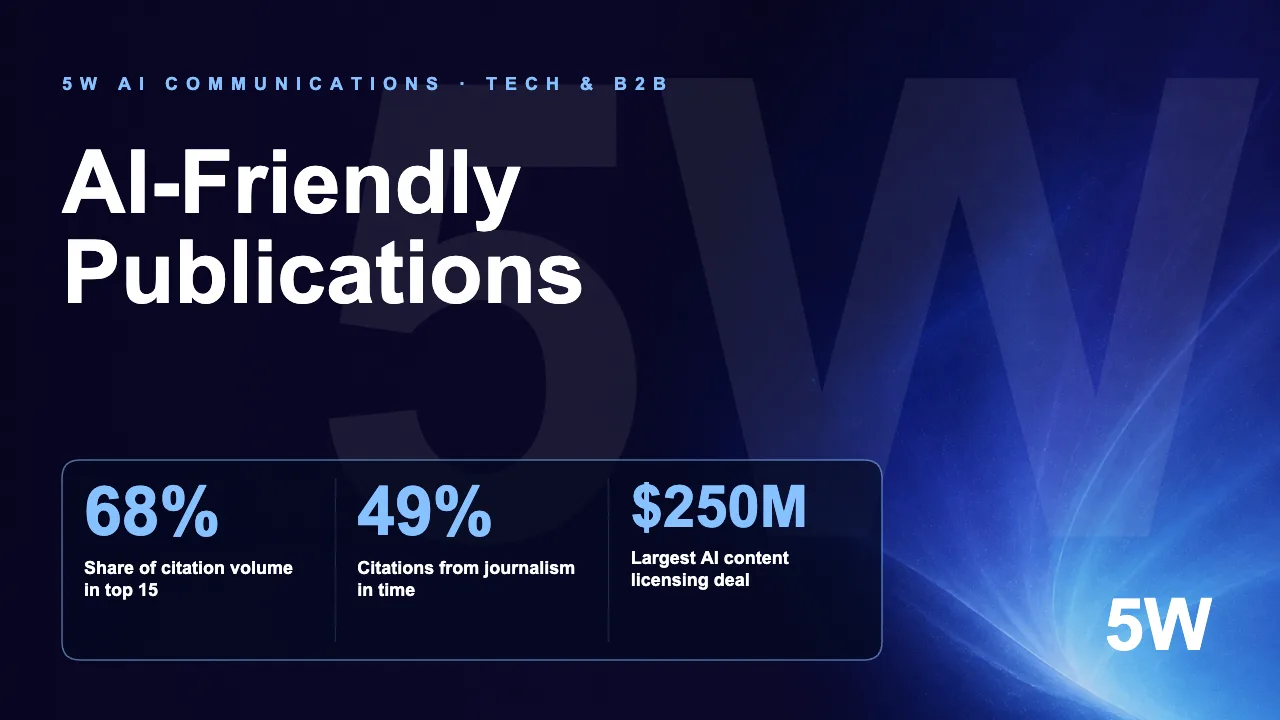
Proprietary Research
AI-Friendly Publications
5W scores the publications most likely to turn media coverage into AI citation value.
Read the researchRecognition






Frequently asked questions about AdTech PR
1. What services do PR agencies offer for AdTech companies?
AdTech PR agencies provide media relations, digital strategy, search optimization, and executive thought leadership. These programs help advertising technology platforms communicate their technical value to media buyers and investors.
2. How does public relations support AdTech growth?
Public relations builds third-party credibility through independent media coverage. This visibility helps AdTech companies differentiate their data capabilities, attract technical talent, and secure attention from capital markets during funding rounds.
3. Why is data important in digital media communications?
Communications teams use audience and platform data to prove a technology's effectiveness. Presenting hard metrics on campaign performance or audience behavior gives journalists the concrete evidence they need to cover an AdTech platform.
Conclusion
5W helps advertising technology and digital media companies build market authority and technical credibility.
5W runs AI Search (GEO) programs for brands across consumer, B2B, financial services, healthcare, and technology, building the machine-readable footprint that gets brands cited, not just ranked. Learn more at 5wpr.com/practice/geo-optimization.cfm.