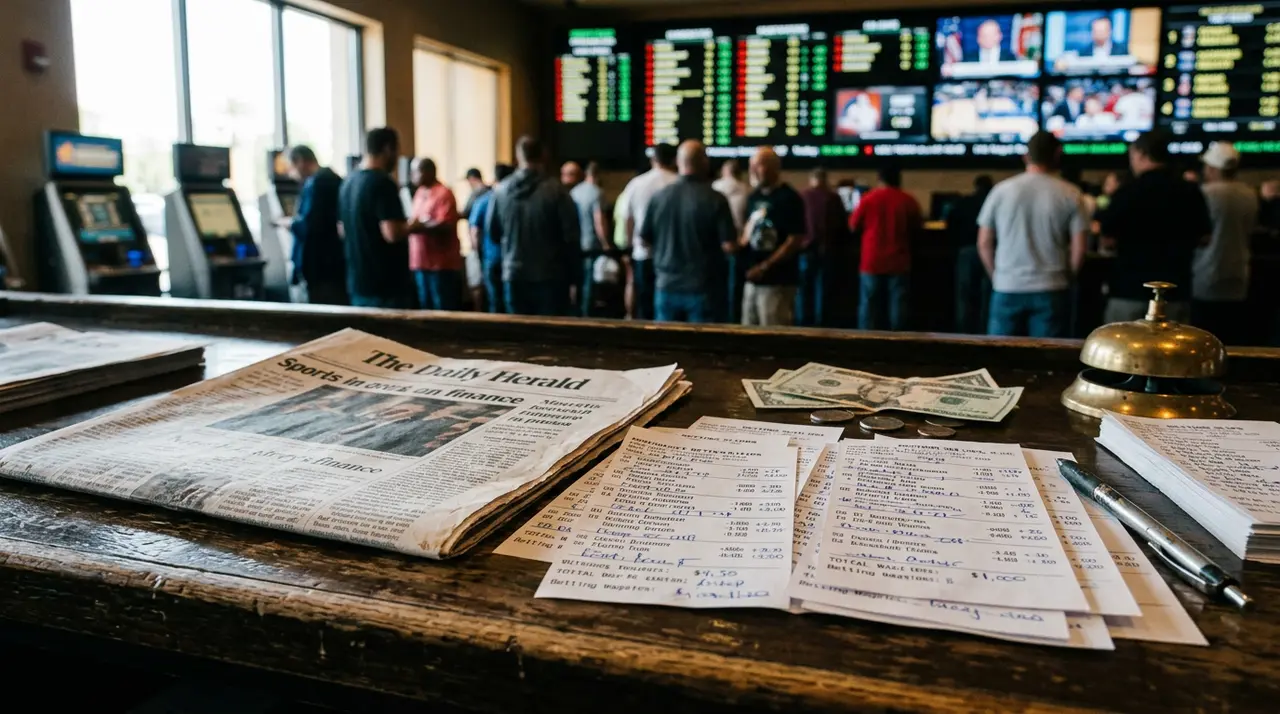
State-regulated sportsbooks generated $16.96 billion in revenue in 2025, up 22.8% on a $166.94 billion handle, according to the American Gaming Association. Sportsbook PR strategy has not kept pace with that growth. Operators that keep buying media instead of earning it are losing the trust fight with bettors and regulators before a single bet gets placed.
Why does sportsbook marketing spend so little on earned media?
Sportsbook and casino operators put $3.9 billion into advertising in 2025 but only $90 million, 2.3% of total spend, into earned media and responsible-gambling communications, according to 5WPR's 2026 Gaming Trust Index. Paid media buys guaranteed impressions for a launch. It does not build the media relationships or executive credibility that carry a sportsbook brand through its next state launch or its next news cycle.
Why it works: Search and AI answer engines weight earned coverage, the kind a reporter chooses to write rather than a placement a brand buys, differently than paid media when they assess how trustworthy a brand is. A sportsbook with almost no earned media footprint gives search engines and AI tools mostly third-party content, gambling review sites, regulatory filings, financial news, to describe it, according to 5WPR's Gaming Trust Index (2026). The operator does not control its own narrative in the channel where the next bettor is doing research.
iGaming and online casino brands face the same imbalance. Online gaming, iCasino, iPoker, and daily fantasy generated $12.8 billion in gross gaming revenue in 2025 and received the lowest communications investment per revenue dollar of any gambling segment, according to 5WPR's Gaming Trust Index (2026). Sportsbooks sit inside that same underinvested category, competing for player trust with a fraction of the earned-media budget their ad spend would suggest they need.
How does state-by-state legalization change sportsbook PR timing?
Sportsbook PR has to run ahead of legalization, not after it. Michigan's 2021 online sports betting launch showed operators that had built earned media presence before the market opened achieved faster initial user acquisition than operators that waited to start advertising after launch, according to 5WPR's Gaming Trust Index (2026). New York, Illinois, Indiana, and Virginia all have online gaming legislation under active consideration.
Why it works: A reporter covering a new state's launch defaults to the operator whose executives and story they already know. An operator with zero media history the week a state legalizes betting is starting the relationship from scratch, competing against operators who spent the prior year building it.
All 38 commercial gaming markets, including every sports betting state, posted revenue increases in 2025, according to the American Gaming Association's Commercial Gaming Revenue Tracker (February 2026). A market growing everywhere at once is exactly the environment where an operator's earned media history from the prior cycle carries into competitive advantage in the next one, rather than every operator starting fresh together.
What regulatory rules make sportsbook PR different from other verticals?
Sportsbook PR has to clear three regulatory hurdles that most consumer categories never face: platform certification, geofencing, and state-by-state ad-timing rules. Each rule operates independently, and a sportsbook can clear two of the three and still get shut down by the third. A national campaign built without geofencing runs ads in states where sports betting remains illegal, exposing the operator to the same enforcement risk state regulators use against unlicensed offshore books.
| Regulatory step | What it requires | Consequence of skipping it |
|---|---|---|
| Platform certification | Google and Meta require gambling advertisers to hold specific platform certification before running any paid campaign | A paused or rejected ad account mid-launch |
| Geofencing | Ads must serve only in states where sports betting is legal, built state-by-state rather than as one national push | A campaign that runs illegally in an unlicensed state |
| State ad-timing rules | Some states restrict broadcast gambling ads during daytime hours or within a set distance of schools | A pulled campaign at the exact moment a new market opens |
Why it works: A generalist PR or ad agency unfamiliar with these three rules risks a paused ad account or a pulled campaign right as a new market opens, the single worst moment for a launch to stall. 5WPR's casino and gambling PR agency team builds state-by-state launch playbooks around exactly these three rules.
How do athlete and celebrity endorsements work in sportsbook PR?
Athlete and celebrity endorsement deals are common in sportsbook marketing, and they carry a disclosure obligation the FTC enforces directly. The FTC's Guides Concerning the Use of Endorsements and Testimonials in Advertising, revised in June 2023, require that any material connection between an endorser and a brand, payment, free access, an ownership stake, be disclosed clearly and conspicuously.
Why it works: The disclosure liability runs to the sportsbook as the advertiser, not just to the athlete or influencer posting the endorsement. Sportsbook PR has to manage talent relationships and disclosure language before a partnership goes live, not clean it up after the FTC notices.
The FTC's guidance specifies that a disclosure has to sit in a location a consumer will actually see, not buried in a bio link or a string of hashtags at the end of a caption. A social post promoting a sportsbook needs the paid relationship stated in the post itself, in plain language, before the reader has to click through or scroll past unrelated content.
The American Gaming Association's Responsible Marketing Code for Sports Wagering adds an age rule: athletes, influencers and entertainers in sports wagering advertising should be at least 21 and verified by identification, and ads should run only where audience data shows a 21-plus audience (code update, March 2023). A managed influencer program can run the age checks, disclosures and approvals in one workflow.
What must a betting app have in place before launch PR starts?
A betting app needs a valid license in every location where it is offered, a geo-restriction that blocks every other location, and a free download before any launch PR starts. Apple's App Store Review Guideline 5.3.4 sets all three as conditions for real-money gaming apps, including sports betting, poker, casino and horse racing.
Match every claim in the press kit to the license list. If the app is live in four states, the release names four states. A launch story that implies wider availability than the license covers invites a correction from reporters and a rejection from App Review.
How should a betting app launch announcement be written?
A betting app launch announcement leads with checkable facts: the launch date, the licensed states, and one feature a reporter can test in the app. The release itself, not only the footer, carries the 21-plus age requirement and a responsible gaming message.
Cut "risk free" from every headline, subject line and caption, because the American Gaming Association's Responsible Marketing Code for Sports Wagering prohibits the phrase (code update, March 2023). Replace "best app" claims with a measurable one, such as the number of taps to place a straight bet. A media kit journalists will use holds the license list, screenshots, executive bios and a fact sheet, and the release itself follows the structure in a press release that isn't ignored.
How does a betting app win App Store search?
A betting app wins App Store search by matching its title, subtitle and keyword field to the terms bettors type, then converting the tap with its first screenshots. Apple says almost 65% of App Store downloads follow a search (Apple Ads, accessed October 2026).
Put the primary keyword in the title and the sport or bet type in the subtitle. Caption each of the first three screenshots with one task, such as "Place a bet in three taps", and use only a claim the screen can show. Ask every user for a rating at the same trigger in the app, because the FTC's Consumer Reviews and Testimonials rule (16 CFR Part 465, effective October 21, 2024) bans fake reviews, bought reviews and review suppression.
What launch timeline does a betting app need?
A betting app launch needs four dated phases: a licensed beta, embargoed briefings, launch day coverage, and a 30-day review. The timing below is a planning sequence, not a published benchmark.
| Phase | Actions | Output |
|---|---|---|
| Beta, about eight weeks before launch | Run a beta in licensed states only, collect feedback, record verified user comments with permission | Early reviews and a tested feature list |
| Briefings, about four weeks before launch | Brief reporters under embargo, send the media kit, confirm every partner's age and disclosure | Coverage ready for launch day |
| Launch day | Publish the release, the store listing and partner posts together | Coverage and installs in the same window |
| Day 30 | Review downloads by state, coverage quality, review sentiment and complaints | A decision on what to repeat or cut |
Report installs by state, because a download from an unlicensed location is a compliance problem, not a win. The guide to measuring PR effectiveness shows how to connect coverage to downstream results.
How should sportsbook brands measure PR success now?
Impression counts and ad reach no longer answer the question that matters: whether an AI engine names the sportsbook when a bettor asks which operator to trust. Most major casino and gambling operators' branded searches are dominated by third-party review sites, financial news, and regulatory coverage rather than the operator's own content, according to 5WPR's Gaming Trust Index (2026).
Why it works: ChatGPT, Perplexity, Gemini, and Google AI Overviews synthesize an answer from whatever content exists about a brand, and an operator with no owned or earned content ecosystem cedes that synthesis to whoever else is writing about it. Citation Share, the rate at which a brand's own content gets cited back in an AI-generated answer, is now a measurable PR outcome, not just a media-impressions count. 5WPR connects gambling PR directly to GEO optimization strategy for this reason, building the earned content and structured data an AI engine can retrieve when it answers a bettor's question, rather than leaving that answer to whichever review site ranks highest.
What does a real sportsbook PR program look like?
5WPR represents sportsbook and gambling technology clients including Circa Sports, 888, Soft2Bet, Gambling.com, and XLMedia, building media relations, launch strategy, and disclosure management across the category's advertising and platform restrictions. The same earned-media playbook, applied to 5WPR's Foxwoods Resort Casino anniversary program, generated 787.7 million-plus media impressions and 196 placements across national and regional outlets in a single year.
Sportsbook operators that win the next decade of legal expansion will be the ones running media relations and disclosure discipline before a state legalizes, not the ones still buying ads after every competitor already has a media history there.
Frequently asked questions about sportsbook PR strategy
What is sportsbook PR strategy?
Sportsbook PR strategy is the media relations, executive positioning, and disclosure management that builds a sportsbook's earned credibility, separate from its paid advertising, across the state-by-state launches and athlete partnerships unique to the category.
How much do sportsbooks spend on PR compared to advertising?
Sportsbook and casino operators spent $3.9 billion on advertising in 2025 and only $90 million, 2.3% of the total, on earned media and responsible-gambling communications, according to 5WPR's 2026 Gaming Trust Index.
Do sportsbooks need PR before a state legalizes betting?
Yes. Michigan's 2021 launch showed operators with earned media presence built before the market opened achieved faster initial user acquisition than operators that waited until after launch to advertise, according to 5WPR's Gaming Trust Index.
What FTC rules apply to sportsbook athlete endorsements?
The FTC's Endorsement Guides, revised in June 2023, require that any material connection between an athlete or influencer and a sportsbook, payment, free access, or an ownership stake, be disclosed clearly and conspicuously in the endorsement itself.
What does a betting app need before its launch PR starts?
A betting app needs a license in every location where it is offered, a geo-restriction that blocks all other locations, and a free download, under Apple's App Store Review Guideline 5.3.4. Every claim in the launch release should match the license list.
Can a betting app use athletes and creators in its ads?
Yes, if the partner is at least 21 and verified by identification, the audience is 21 or older, and every paid post discloses the material connection, under the American Gaming Association's Responsible Marketing Code (March 2023) and the FTC Endorsement Guides.
What Should Sportsbook Operators Do Next?
Sportsbook PR strategy is the discipline of earning the trust that a $16.96 billion, fast-growing category is still funding at 2.3 cents on the ad dollar: media relationships built before a state legalizes, disclosure management that clears FTC rules on athlete deals, and a media footprint that does not depend on the next paid campaign to exist.