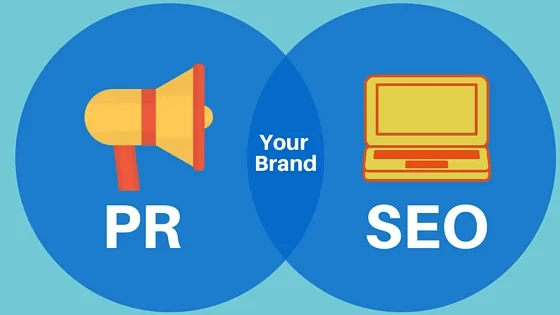
SEO and public relations work together when PR earns the media coverage that produces backlinks and brand mentions, and SEO tells PR which topics search engines and AI systems already reward. Brand mentions now correlate with AI Overview visibility three times more strongly than backlinks, per Ahrefs' 2025 study of 75,000 brands. That gap is why the two departments cannot plan separately anymore.
Last updated October 24, 2026.
Why Do PR and SEO Teams Need to Work Together?
PR and SEO teams need to work together because neither earned coverage nor keyword targeting moves rankings and AI citations as far alone as the two combined. SEMrush's ranking factor study, which reviewed the top 20 positions for more than 16,000 keywords, found that referring domains and backlink counts are among the strongest factors tied to ranking position, according to BuzzStream's 2025 analysis of the SEMrush data. PR is the department that generates those referring domains through press coverage; SEO is the department that knows which pages and topics need them most.
Why it works: Search engines and large language models both treat independent mentions from other domains as a trust signal they cannot get from a brand's own site copy. When a journalist links to or names a company, that mention counts as third-party validation, and Ahrefs' 2025 study of 75,000 brands found this kind of brand mention correlates with AI Overview visibility at 0.664, versus 0.218 for plain backlinks. A PR placement that a reporter chose to write, rather than a link a marketer built, is the type of signal both classic rankings and AI answers weight more heavily.
How Do Backlinks From Earned Media Improve Search Rankings?
Backlinks from earned media improve search rankings because the number of referring domains pointing at a page remains the single strongest measured correlation with Google position. The average first-place result carries 3.8 times more backlinks than the pages sitting in positions two through ten, per Instant Press's 2026 digital PR statistics report, which draws on Ahrefs data. Digital PR campaigns built around original research, data journalism, or a genuinely newsworthy angle are what earn those referring domains, not directory submissions or guest posts.
Why it works: Google's ranking systems count each unique domain that links to a page as a separate vote of confidence, and a page earning votes from many different authoritative sites outperforms one with the same number of links from a single source. That is why a single well-placed PR story picked up by multiple outlets, each publishing its own version with its own link, does more for a target page than a bulk link-building campaign concentrated on one site.
Why Does AI Search Make Digital PR More Important Than Backlinks Alone?
AI search makes digital PR more important than backlinks alone because earned media, not paid placement or a brand's own site, is what large language models cite most. Muck Rack's 2026 analysis found that 84 percent of AI citations trace back to earned editorial coverage, while paid and advertorial content accounts for just 0.3 percent. BrightEdge's 2026 data adds that only about 17 percent of the pages cited in Google's AI Overviews also rank in the organic top ten, meaning a page can earn an AI citation without ever winning a page-one ranking.
Why it works: Large language models build their answers from the sources that other credible sources reference, not strictly from search rank position, so a brand that earns coverage across many independent outlets builds the kind of citation trail an AI model can retrieve even when its own site does not rank highly. 5W tracks this exact shift in its own AI Visibility Index research, which measures how often consumer brands get cited across AI search tools. The guide to earned media in AI search explains the mechanism, and GEO optimization services cover the on-site side.
How Does E-E-A-T Translate Into AI Search Visibility for PR Content?
E-E-A-T translates into AI search visibility when a brand's earned coverage carries a consistent, verifiable expert identity rather than a one-off mention. Google's original Experience, Expertise, Authoritativeness, and Trustworthiness framework did not disappear when AI engines took over query answering; it got re-weighted, according to Everything-PR's 2026 analysis of the E-E-A-T framework inside GEO. The same named spokesperson quoted with a stable biography across several authoritative outlets carries more retrieval weight than one quote that appears once and disappears.
Why it works: AI engines build entity profiles for people and brands, then check whether a claim holds steady across differently phrased questions. A spokesperson quoted consistently across trade press, business media, and an owned research page gives the model repeated, matching evidence to retrieve, while a single unattributed mention gives it almost nothing to anchor to. PR teams that reuse the same named expert across placements, rather than rotating quotes for variety, are the ones building this signal on purpose. This is a coordination task, not a writing task, which is exactly why it sits between the PR and SEO teams rather than inside either one alone.
What Does a Successful PR and SEO Campaign Look Like in Practice?
A successful PR and SEO campaign looks like Digitaloft's work for the UK boiler brand BOXT, which combined a digital PR strategy with core SEO fixes after six months of declining organic visibility under a previous agency. Digitaloft earned close to 3,000 links for BOXT from national, energy, and regional publications, which drove a 61 percent increase in organic sessions in year one and a 23 percent year-over-year increase in non-brand clicks, according to Digitaloft's published BOXT case study. BOXT now holds consistent top-three rankings for competitive terms including "new boiler" and "boiler replacement."
Why it works: The campaign paired PR-earned links into BOXT's existing topic clusters and revenue pages with SEO fundamentals the previous agency had skipped, so the new coverage reinforced pages that were already structured to convert. Coverage without that underlying SEO structure produces brand awareness without a matching ranking gain; SEO structure without coverage has few authoritative links to rank on. The guide to hospitality SEO and PR shows the same pairing for hotels and restaurants.
How Should PR and SEO Teams Collaborate Day to Day?
PR and SEO teams should collaborate day to day by sharing keyword research before pitching, reviewing coverage for missed link opportunities, and feeding earned mentions back into content plans. Cision's 2025 State of the Media report found that 86 percent of journalists reject a pitch immediately if it does not fit their beat, so SEO's keyword and topic data is what helps PR choose an angle a reporter will actually take.
- SEO hands PR a short list of target keywords and the pages that need authority before a campaign starts.
- PR pitches data-led stories and original research built around those topics, since data-led campaigns are the most common tactic among digital PR practitioners today.
- SEO audits every piece of resulting coverage for a live, working link back to the right page, not just a brand mention.
- Both teams review which earned placements later show up as AI citations, using the same tracking 5W applies in its AI Visibility Index research.
Why it works: This loop turns each earned placement into a repeatable input for the next one: SEO tells PR where the site needs authority, PR generates the coverage, and the resulting links and mentions become the next round of SEO's baseline data.
Where Does the SEO and PR Partnership Model Break Down?
The SEO and PR partnership model breaks down when one side treats the other as a vendor instead of a co-owner of the same result. Google AI Overviews now sits above the organic results on more than 40 percent of U.S. queries, up from about 8 percent in early 2024, per Similarweb data cited in Everything-PR's 2026 report on how AI is changing SEO strategy. An SEO team optimizing pages for that answer layer without a PR partner generating the third-party coverage those answers pull from is optimizing for half the system.
Why it works: Ahrefs' 2025 study of 3.4 million ChatGPT answers found that the sources large language models cite most for consumer-decision queries are editorial outlets and reference sites, not landing pages or backlink networks, a pattern Everything-PR confirms holds across industries. Clear division of labor prevents duplicated effort, as the table shows.
| Team | Owns | Hands to the other team |
|---|---|---|
| SEO | Schema, technical structure, target pages and measurement | A short list of target pages and keywords |
| PR | Original research, expert commentary and journalist relationships | Coverage with confirmed live links |
The SEO and public relations practice page describes how the two programs run together, and the digital PR practice covers the outreach side. For how AI search differs from classic search, see the research on GEO versus SEO.
Frequently asked questions
Does PR still matter if a page already ranks well?
Yes. BrightEdge's 2026 data found only about 17 percent of pages cited in Google's AI Overviews also rank in the organic top ten, meaning a well-ranking page can still miss AI citations entirely without the earned coverage AI models cite most.
Which matters more for AI citations, backlinks or brand mentions?
Brand mentions matter more: Ahrefs' 2025 study of 75,000 brands found mentions correlate with AI Overview visibility at 0.664, compared to 0.218 for plain backlinks.
Who should own what in a combined PR and SEO program?
SEO should own schema, technical structure, and measurement, while PR should own original research, expert commentary, and the journalist relationships that produce citations SEO cannot manufacture on its own.
What Should PR and SEO Teams Do First?
PR and SEO teams should start with one shared list of target pages and one shared coverage report, reviewed every month. Earned media is now the mechanism behind both classic rankings and AI citations, so measuring PR and SEO separately means measuring half of the same campaign. 5W's digital PR practice builds that shared plan for brands that need coverage and rankings from one program.