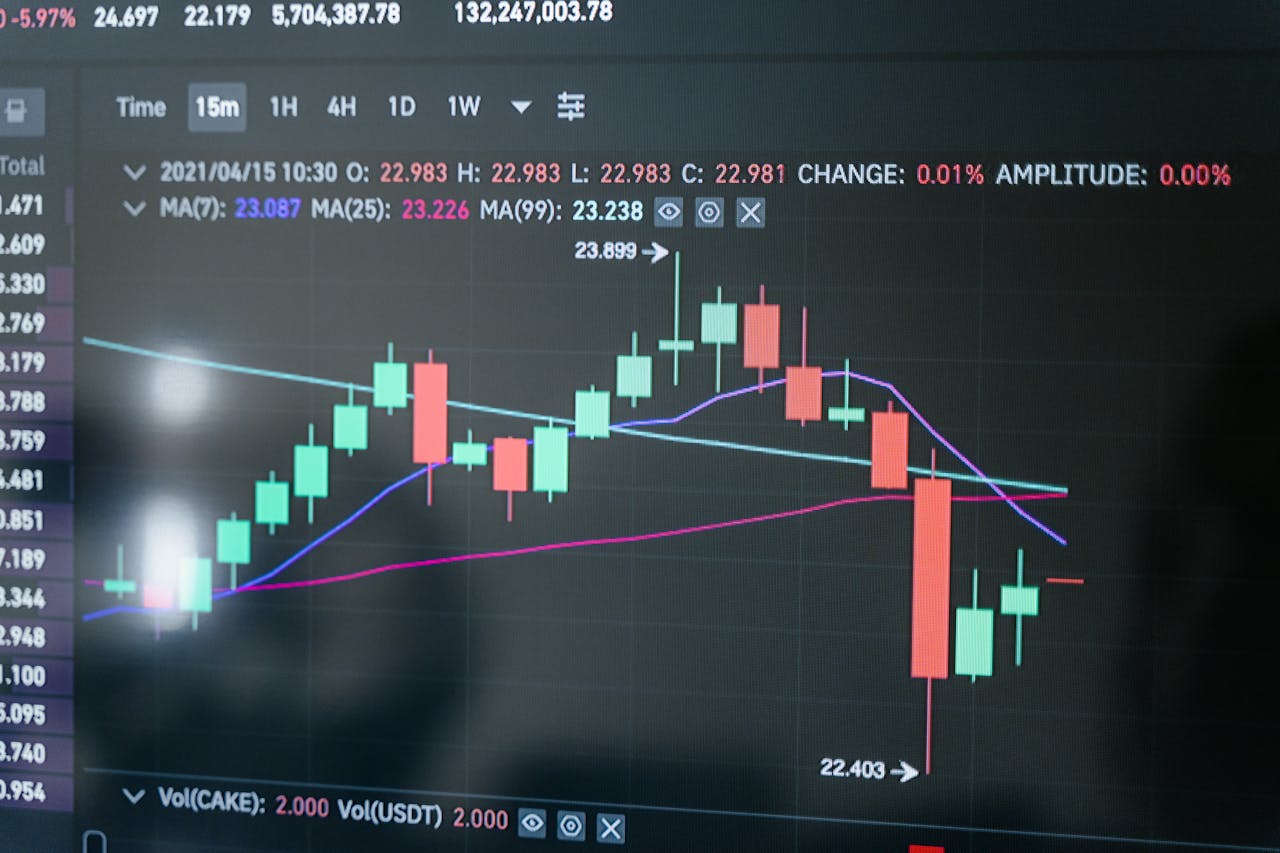
When markets plunge 3% before lunch and clients flood your phone lines demanding answers, the firms that survive aren’t the ones with the best investment thesis—they’re the ones that communicate first, clearly, and with conviction. I’ve watched competitors hemorrhage hundreds of millions in assets during volatility spikes not because their portfolios underperformed, but because they went silent when clients needed reassurance most. The 2025 volatility wave separated firms that treated communication as an afterthought from those that built it into their operational DNA, and the retention numbers tell a brutal story: silence costs you 10-15% of AUM while proactive messaging can boost loyalty by double digits.
Speed matters, but reckless speed destroys credibility. When geopolitical tensions flare or the Fed pivots unexpectedly, your first communication sets the tone for every interaction that follows. The most effective real-time messages rest on four non-negotiable principles: demonstrate your strategy conviction without wavering, educate clients on the underlying market dynamics they’re witnessing, present a balanced view of both risks and opportunities, and never—under any circumstances—promise specific outcomes or timelines.
Kitces research shows firms that send immediate emails explaining market events with historical context see measurably higher retention than those that wait for “all the facts.” Your clients don’t need perfection; they need perspective. When Middle East tensions spike oil prices, a two-paragraph email comparing current volatility to past geopolitical events—with concrete data on recovery timelines—does more to preserve relationships than a perfectly polished white paper delivered three days late.
Personalization separates adequate responses from exceptional ones. Use your CRM to segment by risk tolerance, account size, and investment timeline, then tailor your messaging accordingly. A retiree drawing income needs different reassurance than a 35-year-old accumulator. Script your team’s phone responses to sound calm and informed: “Your diversified holdings position you for rebound opportunities amid these tensions” lands better than generic market commentary. TIAA’s approach to segmented messaging during geopolitical shocks provides a blueprint worth studying—they match message urgency and detail level to client sophistication and emotional state.
Building Your Multi-Channel Delivery System
Email alone won’t cut it anymore. Your clients consume information across platforms, and your volatility response must meet them where they already spend attention. The most effective firms deploy a coordinated sequence: secure portal alerts for immediate visibility (these achieve 95% open rates according to ThinkAdvisor data), followed by mobile push notifications that link to deeper resources, then social media posts that address the broader narrative, and finally live webinars or Q&A sessions for interactive reassurance.
Channel selection should match message complexity and client preference. App banners work brilliantly for brief updates—”Markets down 2% on Fed comments; your portfolio positioning reviewed here”—while video emails handle more nuanced explanations. Ameriprise’s 2024 tactics included short video updates from portfolio managers explaining rate hike impacts, delivered via app notifications. Their social banners balanced fear with opportunity: “Volatility tests discipline—our models show 80% recovery within 12 months historically.” That messaging contributed to a 15% retention improvement during their most recent downturn.
Technology infrastructure determines whether you can execute at speed. Your stack needs video creation tools for rapid explainer content, email platforms with segmentation capabilities, analytics dashboards tracking opens and clicks by client segment, and social listening tools monitoring sentiment in real time. Charles Schwab’s approach demonstrates the power of measurement: they tracked 40% attendance uplifts in volatility webinars by refining topics based on previous engagement data. The firms that stumbled in 2025 relied on outdated static websites; RIA Biz reported these firms lost 12% of AUM while competitors with modern protocols gained ground.
Timing triggers should be predetermined, not improvised during chaos. Establish clear thresholds: alerts after 2% single-day drops, immediate responses to major Fed announcements within two hours, rumor debunking on social media within the same business day, and weekly research summaries regardless of market conditions. Investment News research on timing triggers shows that consistency matters as much as speed—clients learn to expect your perspective, which builds trust even when markets remain turbulent.
Framing Messages That Calm Rather Than Amplify Fear
The psychology of volatility communication demands you address emotion before logic. Your high-net-worth clients aren’t panicking because they don’t understand diversification—they’re panicking because their sense of financial security feels threatened. Frame every update to acknowledge the fear, then redirect to long-term goals and historical precedent. When clients worry about “portfolio wipeout,” your response should tie directly to their specific situation: “Your long-term retirement goals remain secure through diversification—90% of downturns recover within two years, and your allocation accounts for exactly these periods.”
Financial Planning’s psychology research provides a framework worth adopting. Match each common fear to a data-backed reassurance: concerns about “losing everything” get countered with diversification statistics showing 30% loss reduction, worries about “bad timing” receive historical charts demonstrating recovery patterns, and anxiety about “missing the recovery” connects to your rebalancing discipline. The specific numbers matter less than the pattern—you’re demonstrating that their concerns have been studied, quantified, and addressed in their portfolio construction.
Data support transforms abstract reassurance into concrete confidence. Share Vanguard’s historical volatility reports showing the S&P 500 experiences average 10% annual volatility with consistent long-term recoveries. Highlight that diversified portfolios historically outperform concentrated positions by 4% over full market cycles. Morningstar’s retention study found that 92% of clients value regular updates during shocks, and firms providing forward-looking scenarios retain high-net-worth clients 20% better than those offering only backward-looking analysis.
Differentiation comes from being proactive rather than reactive. Fidelity’s content approach during volatility includes weekly forward outlooks sent before markets open, scenario podcasts exploring potential paths for rates or geopolitical developments, and quarterly strategy reviews tied explicitly to individual client goals. This positions them as a steady partner rather than a firefighter. Your messaging should always include a forward component—not predictions, but frameworks for thinking about what comes next and how portfolios are positioned for multiple outcomes.
Measuring Impact and Refining Your Approach
You can’t improve what you don’t measure, and volatility communications generate clear signals if you track the right metrics. Monitor view rates, click-through rates, and reply rates across every channel and client segment. Advisory World’s metrics guide shows advisors average 35% click rates on volatility emails while institutional clients hit only 22%—that gap tells you where to adjust message complexity and channel preference. Run A/B tests on subject lines, video length, and call-to-action placement, then double down on what moves engagement.
Case studies from your own campaigns provide the most valuable learning. E*TRADE’s banner campaigns during 2025 volatility drove 18% of traffic to diversification tools by personalizing CTAs based on account type and recent activity. Their key insight: generic “Learn More” buttons underperformed specific prompts like “Review Your Bond Allocation” by more than 2x. Document what works in your environment—your client base has unique characteristics that generic best practices won’t capture.
Listening protocols matter as much as broadcasting. Scan social media hourly during high volatility for emerging rumors or narratives about your firm or the broader market. Set up always-on Google Alerts for your firm name plus terms like “withdrawals,” “problems,” or “concerns.” Compliance Week’s monitoring research demonstrates that firms deploying counter-narratives with data—”Geopolitical noise historically fades within quarters—focus on the rates trajectory that drives your fixed income positioning”—can neutralize damaging speculation before it reaches critical mass.
Failed communications teach as much as successes. The firms that lost significant AUM in 2025 share common patterns: they relied on static website updates instead of push notifications, they waited for complete information rather than providing timely perspective with appropriate caveats, and they treated volatility communication as a marketing function rather than a client service imperative. Your post-mortems after each volatility episode should be ruthlessly honest about response time, message clarity, and channel effectiveness.
Integration Into Daily Operations
Real-time communication during volatility can’t be bolted onto your existing operations as an afterthought—it requires systematic preparation before markets turn. Build message templates for common scenarios (Fed pivots, geopolitical flare-ups, sector-specific shocks) that your team can customize and deploy within minutes. Assign clear roles: who drafts, who approves, who sends, who monitors responses. Run quarterly drills where you simulate a market event and execute your full communication protocol, timing each step and identifying bottlenecks.
Your technology investments should prioritize speed and reliability over features. A simple email platform that works flawlessly under load beats a sophisticated marketing automation system that crashes when 500 clients need simultaneous updates. Test your systems at scale before you need them in crisis. Ensure your compliance team pre-approves message frameworks so you’re not waiting for legal review while clients panic.
Training determines whether your team executes your protocols with confidence or fumbles under pressure. Every client-facing employee should understand the core principles, know where to find approved messaging, and practice delivering reassurance in role-play scenarios. The difference between “I’m not sure what’s happening, let me check” and “Here’s what we’re seeing and how your portfolio is positioned” determines whether that client relationship strengthens or fractures during stress.
Market volatility will continue to test client relationships, and the firms that treat real-time communication as a competitive advantage rather than a cost center will capture the assets that nervous competitors lose. Your next downturn, rate shock, or geopolitical crisis is already forming somewhere in the global system. The question isn’t whether you’ll face client anxiety—it’s whether you’ll be the calm, informed voice they turn to or the silent firm they leave behind. Build your communication infrastructure now, train your team relentlessly, measure everything, and refine based on evidence. When markets next convulse, you’ll retain the relationships you’ve built while others scramble to explain why they went dark when it mattered most.